What Makes Year of the Sheep Baby Names Special
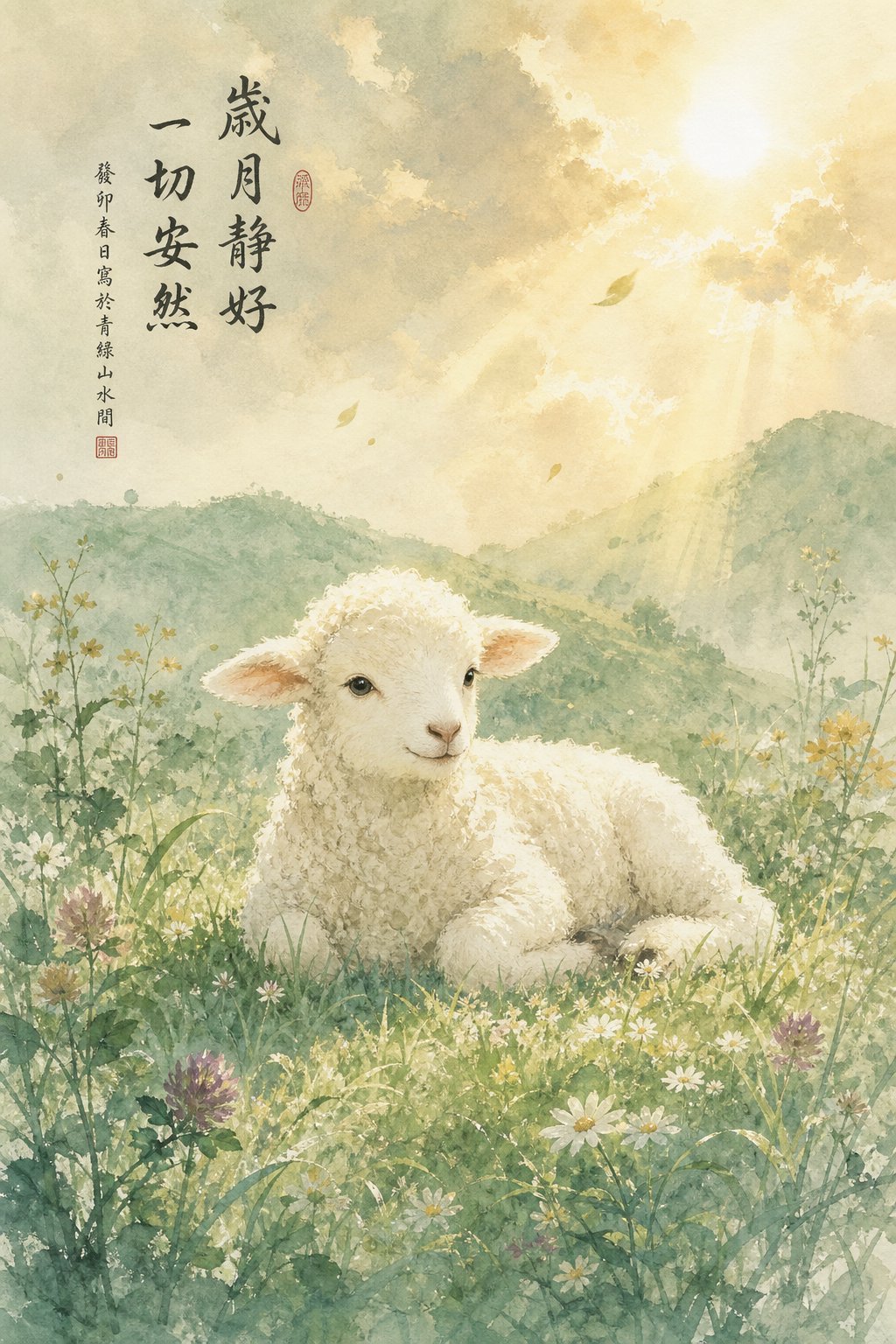
Imagine choosing a name that does more than sound pleasant. In Chinese naming tradition, a baby's birth year shapes which characters carry the most fortune, and for children born in the Year of the Sheep, that connection runs deep. The Chinese zodiac doesn't just assign personality traits. It actively guides parents toward specific radicals, tones, and meanings believed to harmonize with the child's innate energy. Selecting chinese baby names for a Sheep year baby means working with a rich symbolic system where every stroke of the brush matters.
Why the Sheep Zodiac Shapes Baby Names
Chinese zodiac naming is rooted in the idea that a child's birth year creates a foundational energy pattern. Parents then select characters that either complement or strengthen that pattern. For Sheep babies, this means choosing chinese baby names and meanings that resonate with the animal's core nature: gentleness, artistic sensitivity, and quiet inner strength. The goal isn't decoration. It's alignment. A well-chosen name is thought to smooth the child's path through life by reinforcing favorable qualities and softening potential vulnerabilities.
The Sheep occupies the eighth position in the twelve-year cycle, following the Horse. Recent and upcoming Sheep years include 1991, 2003, 2015, and 2027. Each carries its own elemental signature, but all share the foundational Sheep energy that parents draw upon when selecting names for chinese new year babies born under this sign.
Sheep, Goat, or Ram: Understanding 羊 in Naming
Here's something that trips up many parents, especially in diaspora families: is it the Year of the Sheep, Goat, or Ram? The Chinese character 羊 (yang) is actually a generic term. It can refer to a sheep (绵羊), a goat (山羊), a ram (公羊), or even an antelope (羚羊). There's no single "correct" English translation because Chinese history never drew a hard line between them.
Most Chinese folklore experts lean toward "goat" as the primary reference, partly because goats were more widely raised by Han Chinese communities. But for naming purposes, this ambiguity is a gift. It expands the pool of symbolic imagery parents can draw from: the softness of sheep's wool, the sure-footedness of a mountain goat, the protective strength of a ram. All of these qualities become fair game when building a name's meaning.
Key Sheep personality traits to consider when selecting a name: gentle and mild-mannered, strongly creative with a natural artistic flair, compassionate and nurturing toward others, calm on the surface with tough inner resilience, reserved yet deeply thoughtful, and drawn to beauty and cultural refinement.
These traits, drawn from centuries of zodiac interpretation, give parents a clear direction. A Sheep baby's name might emphasize artistic talent, echo the tranquility of nature, or reinforce that hidden inner strength. The personality profile acts as a compass, pointing toward characters that will feel like a natural fit rather than an arbitrary label.
Of course, personality is only one layer of the naming puzzle. The Sheep's energy also interacts with elemental forces that shift from one Sheep year to the next, creating distinct sub-types that call for different character choices entirely.
Five Elements Theory and Sheep Baby Naming
Not all Sheep babies are born equal, at least not in elemental terms. The Chinese Five Elements system (五行 Wu Xing) layers an additional energy signature onto each zodiac year, meaning a baby born in 2015 carries fundamentally different elemental needs than one born in 2027. This distinction directly shapes which characters belong in a name and which ones would throw the child's energy off balance.
How the Five Elements Change Sheep Year Naming
The Five Elements are Wood, Fire, Earth, Metal, and Water. They cycle through the zodiac in pairs of consecutive years, determined by the Heavenly Stems (天干). Each element has a generating relationship (where one element produces another) and an overcoming relationship (where one element controls another). Wood fuels Fire. Fire forms Earth. Earth contains Metal. Metal carries Water. Water feeds Wood. That's the generating cycle. The overcoming cycle works in reverse tension: Water quenches Fire, Fire melts Metal, Metal penetrates Wood, Wood separates Earth, and Earth absorbs Water.
Every Sheep baby already carries Earth as their fixed zodiac element, since the Goat/Sheep sign is inherently an Earth sign. The year's cycling element then stacks on top of that base, creating either harmony or excess. When you're choosing lunar new year names for a Sheep child, the goal is to identify what's missing or overloaded and select characters that restore balance.
Matching Characters to Your Baby's Element Year
Imagine a Fire Sheep baby (born in 2027). Fire generates Earth, and the Sheep already carries Earth as its fixed element. That's a lot of grounding, stabilizing energy, potentially too much. Characters containing the water radical (氵) or metal radical (金) can introduce cooling, flowing qualities that prevent stagnation. A Wood Sheep baby (born in 2015), on the other hand, carries Wood energy that naturally overcomes the Sheep's base Earth. Here, Fire characters work beautifully as a bridge, since Wood generates Fire and Fire generates Earth, creating a smooth productive chain.
The table below maps each Sheep year type to its favorable naming elements:
| Element Type | Years | Elemental Profile | Favorable Name Elements | Balancing Logic |
|---|---|---|---|---|
| Wood Sheep | 1955, 2015 | Wood + Earth (fixed) | Fire, Metal | Fire bridges Wood and Earth in the generating cycle; Metal controls excess Wood |
| Fire Sheep | 1967, 2027 | Fire + Earth (fixed) | Water, Metal | Water tempers Fire; Metal provides structure and draws energy from abundant Earth |
| Earth Sheep | 1979, 2039 | Earth + Earth (fixed) | Wood, Metal | Wood activates stagnant double-Earth; Metal draws off excess Earth through the generating cycle |
| Metal Sheep | 1991 | Metal + Earth (fixed) | Water, Wood | Water channels Metal's sharpness into flow; Wood adds vitality and creative growth |
| Water Sheep | 2003 | Water + Earth (fixed) | Wood, Fire | Wood harmonizes Water and Earth by receiving Water and grounding into Earth; Fire adds warmth |
In practice, this means a Metal Sheep child (born in 1991) benefits from characters with the water radical like 泽 (ze, "grace, marsh") or 涵 (han, "contain, encompass"), since Metal generates Water in the productive cycle, creating smooth energetic flow rather than conflict. An Earth Sheep child (born in 1979 or 2039) with double-Earth energy might feel heavy or overly cautious, so characters carrying Wood energy, like those with the grass radical (艹) or tree radical (木), introduce movement and growth.
This elemental layer is what separates a generically pleasant name from one that's been calibrated to a specific child's birth energy. Two Sheep babies born twelve years apart may share zodiac personality traits, yet their ideal name characters could look entirely different based on which element year they arrived in. The element tells you what to add. The radicals and character components tell you how to add it.
Auspicious Characters and Radicals for Sheep Babies
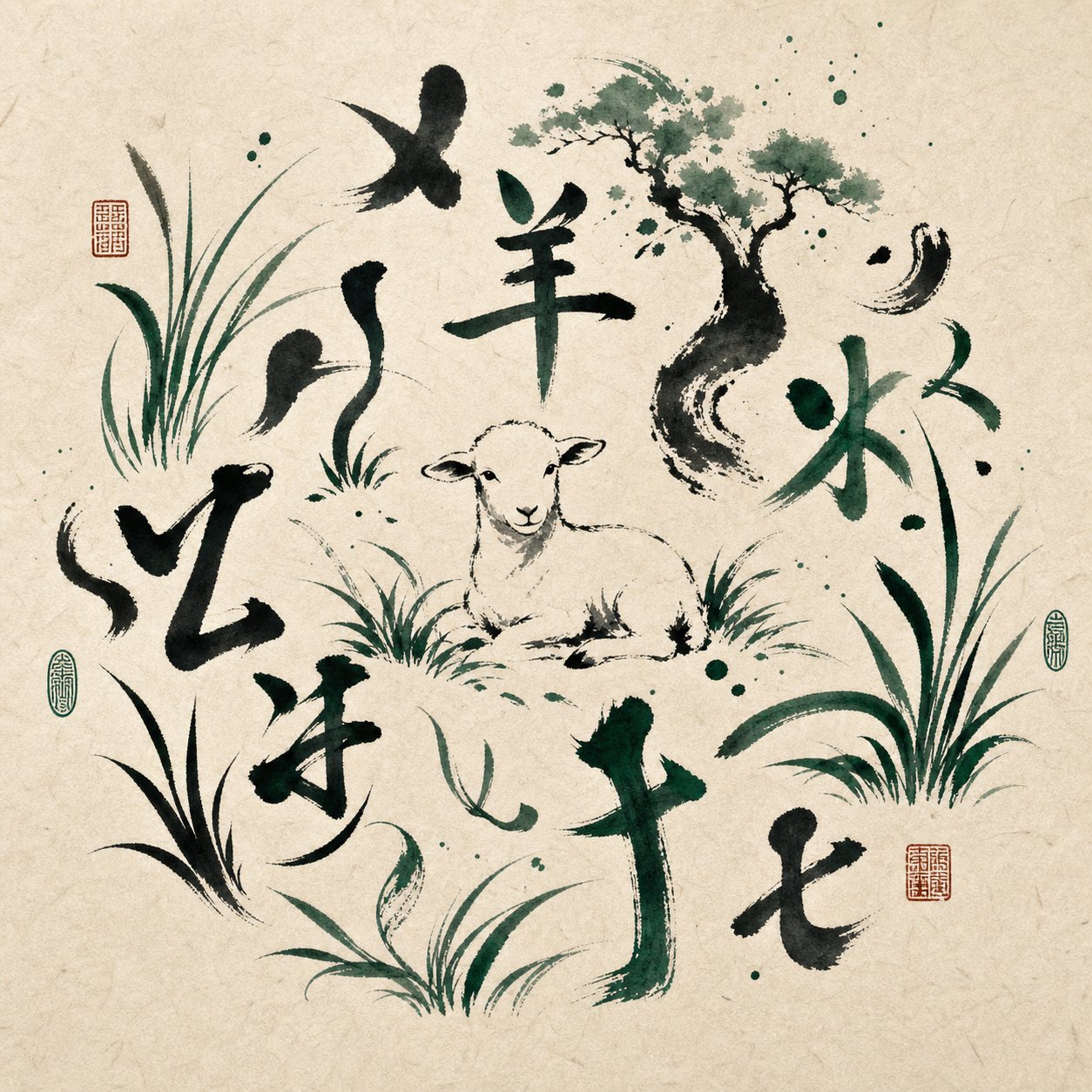
Radicals are the building blocks of Chinese characters, and each one carries its own symbolic weight. When you're searching for a chinese name related to luck for a Sheep baby, the radical hidden inside a character matters just as much as the character's dictionary definition. Think of it this way: the radical is the character's DNA, and for Sheep babies, certain DNA strands activate fortune while others trigger conflict.
The logic is surprisingly literal. Chinese naming tradition asks: what does a sheep need to thrive? Food, shelter, open space, companionship. Characters containing radicals that symbolize these needs are considered auspicious because they signal a life of abundance and safety. Characters containing radicals that evoke danger to a sheep, like blades or predators, carry the opposite energy.
Favorable Radicals and Their Symbolic Meaning
Each favorable radical connects back to what sustains and protects the Sheep in nature. Here's what to look for when building a chinese name with meaning for your Sheep baby:
- Grass radical (艹) — Sheep are herbivores, so characters with this radical symbolize endless nourishment and abundance. Examples: 芳 (fāng, "fragrant"), 萱 (xuān, "daylily"), 茗 (míng, "tea leaves"), 蓉 (róng, "lotus"), 莉 (lì, "jasmine"), 菁 (jīng, "essence of plants"). A Sheep surrounded by grass will never go hungry.
- Wood radical (木) — Trees provide shade and shelter. Characters with this radical suggest protection and a stable home. Examples: 梓 (zǐ, "catalpa tree"), 森 (sēn, "forest"), 枫 (fēng, "maple"), 杰 (jié, "outstanding"), 楚 (chǔ, "clear, distinct"), 栋 (dòng, "ridgepole").
- Grain radicals (米, 禾, 豆) — The five cereals represent prosperity and sustenance. A Sheep with access to grain lives a rich life. Examples: 秀 (xiù, "elegant"), 秋 (qiū, "autumn"), 稻 (dào, "rice paddy"), 粟 (sù, "millet").
- Enclosure and shelter radicals (口, 宀, 门) — These suggest a safe resting place, a pen or home where the Sheep is protected from the elements. Examples: 安 (ān, "peace"), 宏 (hóng, "grand"), 家 (jiā, "home"), 容 (róng, "tolerance"), 富 (fù, "wealth"), 园 (yuán, "garden").
- Foot radical (足) — Sheep enjoy roaming and leaping freely. This radical suggests freedom of movement and an active, healthy life. Examples: 跃 (yuè, "leap"), 路 (lù, "path").
- Zodiac-compatible radicals — Characters linked to the Sheep's zodiac allies (Pig, Rabbit, Horse) bring social harmony. The earthly branches 亥 (Pig), 卯 (Rabbit), and 午 (Horse) form a supportive triad. Examples: 骏 (jùn, "fine horse"), 逸 (yì, "leisurely"), 豪 (háo, "heroic").
You'll notice many of these chinese names and their meanings circle back to one core idea: a Sheep that is fed, sheltered, and free is a Sheep that thrives. The symbolism is practical, not abstract.
Characters and Radicals to Avoid for Sheep Babies
The flip side is equally important. Some radicals carry associations that put the Sheep in symbolic danger, even when the character itself looks positive on the surface.
- Knife and blade radicals (刀, 刂) — These evoke slaughter. The Sheep is historically one of the three sacrificial animals in Chinese ritual, so blade-related characters suggest a life cut short or lived in service to others at great personal cost.
- King and authority radicals (王, 大, 君) — Characters like 玲 (líng), 瑜 (yú), or 琦 (qí) contain the jade/king radical. While they seem elegant, the reasoning is grim: a Sheep that grows large and impressive becomes the first chosen for sacrifice. Prominence attracts danger.
- Colorful clothing radicals (巾, 衣, 糸) — Characters related to decoration and fine garments, such as 彩 (cǎi, "colorful") or 裕 (yù, "abundant"), are considered risky. In traditional practice, sheep were adorned before being offered as sacrifices. Beautiful clothing on a Sheep signals preparation for an unfortunate fate.
- Conflicting zodiac radicals (丑, 牛, 子, 鼠) — The Ox (丑/牛) clashes directly with the Sheep, and the Rat (子/鼠) harms it. Characters like 牡 (mǔ), 学 (xué), or 存 (cún) carry these hidden conflicts. Even if the surface meaning is positive, the radical creates tension.
- Vessel and blade-related radicals (皿, 酉, 车) — These suggest containment, cutting, or being transported away, none of which bode well for the Sheep's freedom and safety.
The pattern is clear: anything that makes a Sheep more visible, more decorated, or more confined works against it. The safest names keep the Sheep nourished, sheltered, and moving freely, never on display.
With these radical guidelines in hand, the next step is seeing how they come together in complete names. The right radical is the foundation, but the real artistry lies in combining characters so their meanings amplify each other into something greater than the sum of their parts.
Beautiful Chinese Girl Names for Sheep Babies
Knowing which radicals carry fortune is one thing. Seeing them come alive inside a complete name is where the real magic happens. For parents searching for chinese girl names and meanings that align with Sheep zodiac energy, the art lies in pairing two characters whose individual meanings amplify each other. A nature character beside a virtue character. A shelter radical grounding a creativity radical. Each combination tells a tiny story about who this child might become.
The names below are built specifically around auspicious Sheep radicals: grass (艹) for nourishment, wood (木) for shelter, grain (禾) for prosperity, and enclosure (宀) for safety. Every name also reflects core Sheep personality traits, whether that's gentleness, artistic sensitivity, or quiet inner strength.
Gentle and Elegant Girl Names for Sheep Babies
Sheep babies carry a natural softness and grace. These beautiful chinese names for girl with meaning lean into that energy, combining characters that evoke tranquility, natural beauty, and emotional depth. You'll notice each name uses at least one auspicious Sheep radical, creating both phonetic harmony and symbolic protection.
| Chinese Characters | Pinyin | Individual Character Meanings | Combined Name Meaning |
|---|---|---|---|
| 若萱 | Ruò Xuān | 若 = like, as if (grass radical 艹); 萱 = daylily, "forget-worry grass" (grass radical 艹) | Gentle as the daylily — a life free from sorrow, blessed with ease |
| 梓安 | Zǐ Ān | 梓 = catalpa tree, homeland (wood radical 木); 安 = peace, safety (shelter radical 宀) | Rooted peace — a child sheltered like a tree protecting its home |
| 芷宁 | Zhǐ Níng | 芷 = angelica, fragrant herb (grass radical 艹); 宁 = tranquil, serene (shelter radical 宀) | Fragrant serenity — inner calm with natural elegance |
| 秀蓉 | Xiù Róng | 秀 = elegant, flourishing (grain radical 禾); 蓉 = lotus flower (grass radical 艹) | Elegant lotus — graceful refinement blooming from rich soil |
| 茗荷 | Míng Hé | 茗 = tea leaves, fine tea (grass radical 艹); 荷 = lotus, to carry (grass radical 艹) | Tea and lotus — pure, understated beauty with quiet strength |
| 宛芙 | Wǎn Fú | 宛 = gentle, winding (shelter radical 宀); 芙 = hibiscus (grass radical 艹) | Gently blooming — soft grace unfolding like a flower |
Notice how 若萱 doubles down on the grass radical, giving the Sheep baby abundant symbolic nourishment from both characters. Meanwhile, 梓安 pairs wood (shelter) with the roof radical in 安, creating a layered sense of protection. This is the kind of deliberate pairing that elevates a name from pleasant-sounding to deeply auspicious.
Creative and Artistic Girl Names Inspired by Sheep Traits
The Sheep zodiac is one of the most artistically gifted signs. Creativity, imagination, and a love of beauty run through its core energy. These chinese girl names with meaning channel that artistic spirit while maintaining radical-level auspiciousness. They're ideal for parents who want a name reflecting the Sheep's dreamy, expressive nature.
| Chinese Characters | Pinyin | Individual Character Meanings | Combined Name Meaning |
|---|---|---|---|
| 诗茵 | Shī Yīn | 诗 = poetry, verse; 茵 = green cushion, soft grass (grass radical 艹) | Poetry on green grass — a creative soul grounded in nature |
| 艺萌 | Yì Méng | 艺 = art, skill (grass radical 艹); 萌 = sprout, budding (grass radical 艹) | Budding artistry — creative talent just beginning to bloom |
| 梦莲 | Mèng Lián | 梦 = dream, vision (wood radical 木); 莲 = lotus (grass radical 艹) | Dream lotus — imagination rising pure from still waters |
| 菁容 | Jīng Róng | 菁 = essence of plants, brilliance (grass radical 艹); 容 = appearance, tolerance (shelter radical 宀) | Brilliant composure — inner radiance held with graceful poise |
| 蕊宁 | Ruǐ Níng | 蕊 = stamen, pistil, heart of a flower (grass radical 艹); 宁 = peaceful (shelter radical 宀) | Peaceful bloom — the quiet center where creativity grows |
| 萱歌 | Xuān Gē | 萱 = daylily, forget-worry grass (grass radical 艹); 歌 = song, to sing | Daylily's song — joyful expression rooted in carefree spirit |
The layered symbolism here rewards a closer look. Take 诗茵 (Shī Yīn): the first character brings intellectual creativity through poetry, while the second grounds it in the physical world with soft grass underfoot. It's a name that says "this child will create beautiful things while staying connected to the earth." That combination of imagination and groundedness mirrors the Sheep's personality perfectly.
Or consider 梦莲 (Mèng Lián). The lotus grows from muddy water yet emerges spotless, a classic symbol of purity through adversity. Paired with "dream," it suggests a child whose visions and creative impulses will rise above ordinary circumstances. The wood radical in 梦 provides shelter energy, while the grass radical in 莲 ensures nourishment. Both Sheep needs, met in two characters.
These names work as starting points. The specific surname your family carries will influence which combinations flow best tonally and visually. A name that reads beautifully on paper still needs to sound right when spoken aloud across three characters, surname included, which brings its own set of considerations around tonal patterns and stroke balance.

Meaningful Chinese Boy Names for Sheep Babies
When choosing chinese names with meaning for a Sheep year boy, parents face a philosophical fork in the road. Do you complement the Sheep's gentle nature by adding strength and resilience? Or do you enhance it, leaning fully into creativity and compassion? Both approaches have deep roots in Chinese naming philosophy, and neither is wrong. The choice depends on what you envision for your child's path.
Complementing means introducing qualities the zodiac sign lacks. The Sheep is soft, artistic, and sometimes conflict-averse. A name carrying strength or determination acts as a counterweight, giving the child symbolic armor for moments when gentleness alone won't suffice. Enhancing, on the other hand, doubles down on the Sheep's gifts. It says: this child's sensitivity and creativity are superpowers, and the name should amplify them. Many families blend both strategies, pairing one character that strengthens with one that nurtures.
Strong and Balanced Boy Names for Sheep Babies
These chinese names with meanings introduce resilience, steadfastness, and ambition while keeping auspicious Sheep radicals at the foundation. Each name contains at least one character with a favorable radical (wood 木, grass 艹, or shelter 宀), ensuring zodiac harmony even as the meaning pushes toward strength.
| Chinese Characters | Pinyin | Individual Character Meanings | Combined Name Meaning |
|---|---|---|---|
| 柏毅 | Bǎi Yi | 柏 = cypress, evergreen (wood radical 木); 毅 = perseverance, tenacity | Evergreen resolve — enduring strength rooted in steady growth |
| 梓恒 | Zǐ Heng | 梓 = catalpa tree, homeland (wood radical 木); 恒 = constancy, perseverance | Rooted constancy — unwavering like a tree through all seasons |
| 宏骏 | Hong Jun | 宏 = grand, vast (shelter radical 宀); 骏 = fine horse, excellence | Grand steed — sheltered ambition galloping toward greatness |
| 森睿 | Sēn Rui | 森 = forest, dense (wood radical 木); 睿 = sage wisdom, farsighted | Forest wisdom — deep insight growing from quiet strength |
| 栋哲 | Dong Zhe | 栋 = ridgepole, pillar (wood radical 木); 哲 = philosophy, wisdom | Pillar of wisdom — structural strength that holds everything together |
| 茂坚 | Mao Jiān | 茂 = luxuriant, thriving (grass radical 艹); 坚 = firm, steadfast | Thriving firmness — abundant growth anchored by unshakable resolve |
Look at 宏骏 (Hong Jun) as an example of layered strategy. The shelter radical in 宏 gives the Sheep baby a symbolic home, while 骏 references the Horse, one of the Sheep's zodiac allies. That alliance energy adds social support and forward momentum to the name's meaning. It's strength through connection, not isolation.
Names That Complement the Sheep's Gentle Nature
These new year names lean into the Sheep's artistic soul and compassionate heart. Rather than counterbalancing softness, they celebrate it, choosing characters that evoke creativity, cultural refinement, and emotional depth.
| Chinese Characters | Pinyin | Individual Character Meanings | Combined Name Meaning |
|---|---|---|---|
| 蕴安 | Yun Ān | 蕴 = contain, nurture, accumulate (grass radical 艹); 安 = peace, safety (shelter radical 宀) | Nurtured peace — deep inner richness held in quiet safety |
| 萧逸 | Xiāo Yi | 萧 = artemisia, dignified (grass radical 艹); 逸 = leisurely, elegant, free | Dignified ease — artistic freedom carried with natural grace |
| 秉文 | Bǐng Wen | 秉 = uphold, grasp (grain radical 禾); 文 = literature, culture, refinement | Upholds culture — a scholar's spirit grounded in tradition |
| 茂林 | Mao Lin | 茂 = luxuriant, thriving (grass radical 艹); 林 = forest, grove (wood radical 木) | Thriving grove — creative abundance growing in sheltered community |
| 艺宁 | Yi Ning | 艺 = art, skill, craft (grass radical 艹); 宁 = tranquil, serene (shelter radical 宀) | Tranquil artistry — creative mastery born from inner calm |
| 荣泽 | Rong Ze | 荣 = glory, flourish (grass radical 艹); 泽 = grace, benevolence (water radical 氵) | Flourishing grace — compassion that nourishes like rain on fertile ground |
Notice how 萧逸 (Xiāo Yi) works. The character 萧 carries the grass radical for nourishment while its meaning, "dignified" or "clear," adds a scholarly air. Paired with 逸, which suggests effortless elegance and freedom, the name paints a portrait of someone whose creativity flows without strain. It's a name that doesn't fight the Sheep's nature. It trusts it.
The character 荣泽 (Rong Ze) demonstrates another smart pairing: the grass radical in 荣 feeds the Sheep, while the water radical in 泽 introduces elemental balance, particularly useful for Fire Sheep babies (born in 2027) who benefit from cooling, flowing energy in their names.
Whether you choose the strength path or the creative path, the underlying architecture stays the same: auspicious radicals form the skeleton, and meaning builds the personality on top. Some families find that a single name can do both, pairing one grounding character with one expressive character. That middle path works especially well for parents who see their son as both gentle and strong, not one or the other.
Of course, not every family wants a name that signals gender at all. The Sheep's core qualities, creativity, compassion, connection to nature, belong to no single gender, and a growing number of modern families are choosing names that reflect exactly that openness.
Gender-Neutral Chinese Names for Sheep Year Babies
The Sheep's defining qualities, creativity, compassion, love of beauty, don't belong to any one gender. And increasingly, parents are choosing names that reflect that truth. Gender neutral chinese names have gained real momentum in urban China and across diaspora communities, driven by families who want a name's meaning to speak louder than its gendered associations.
Chinese characters are inherently flexible in this regard. Unlike many Western languages, Chinese has no grammatical gender. A character like 云 (yun, "cloud") or 安 (an, "peace") carries no built-in masculine or feminine marker. What makes a name feel gendered is cultural convention, not linguistic structure, and conventions shift. For Sheep babies, this opens a wide field of cute chinese names rooted in nature, virtue, and artistry that work beautifully regardless of gender.
Nature-Inspired Gender-Neutral Sheep Baby Names
These chinese gender neutral names draw on imagery that aligns with the Sheep's zodiac energy: lush landscapes, gentle movement, quiet strength. Each contains at least one auspicious radical for Sheep babies, keeping the zodiac harmony intact.
- 蕴川 (Yun Chuān) — 蕴 = contain, nurture (grass radical 艹); 川 = river, flowing water. A deep spirit flowing freely, like a river through green meadows.
- 茗安 (Ming Ān) — 茗 = fine tea (grass radical 艹); 安 = peace (shelter radical 宀). The calm of a quiet tea ceremony, nourished and sheltered.
- 林悦 (Lin Yuè) — 林 = forest, grove (wood radical 木); 悦 = joy, delight. Joyful spirit finding home among the trees.
- 秋宁 (Qiū Ning) — 秋 = autumn (grain radical 禾); 宁 = tranquil (shelter radical 宀). Harvest-season serenity, abundant and at rest.
- 芮泽 (Ruì Zé) — 芮 = small, flourishing (grass radical 艹); 泽 = grace, marsh (water radical 氵). Quiet flourishing nourished by deep waters.
- 森逸 (Sēn Yì) — 森 = forest, dense (wood radical 木); 逸 = leisurely, free. Effortless freedom found in sheltered depths.
- 萱和 (Xuān Hé) — 萱 = daylily (grass radical 艹); 和 = harmony, gentle. Carefree harmony, the forget-worry grass in bloom.
- 宇茗 (Yǔ Míng) — 宇 = universe, eaves (shelter radical 宀); 茗 = tea leaves (grass radical 艹). A vast spirit grounded in simple, nourishing beauty.
You'll notice these names avoid the radicals flagged as risky for Sheep babies, no blades, no king radicals, no ornamental clothing components. They stay within the safe symbolic territory of grass, wood, grain, and shelter while carrying meanings that feel fresh and ungendered.
Balancing Tradition and Modern Naming Preferences
Choosing a gender-neutral name doesn't mean abandoning tradition entirely. It means adapting it. In Chinese naming culture, one of the oldest conventions is generational naming (辈分命名), where all children born in the same generation of a family share one character in their given name. A village in Jinhua, Zhejiang Province, still follows an 80-character poem that assigns a shared character to each five-year cohort of descendants. Every villager's name connects them to a lineage stretching back centuries.
Many modern families, especially in cities, have relaxed or dropped this practice. Post-1990 generation parents increasingly draw from classical poetry and philosophy rather than family genealogies when naming their children. A name like "Yanzhou" (inkstone and boat), inspired by a Northern Song Dynasty poem, reflects this shift toward personal cultural expression over strict lineage markers. The generational character, if used at all, might become the more flexible of the two given-name characters, with the second character chosen freely for meaning and zodiac alignment.
For families who do maintain generational naming, gender-neutral options become especially practical. If the assigned generational character is something like 文 (wen, "culture") or 安 (an, "peace"), it pairs naturally with Sheep-auspicious characters regardless of the baby's gender. The tradition bends without breaking.
This flexibility matters because the next challenge many families face isn't choosing between tradition and modernity. It's choosing between languages, finding a name that carries meaning in Chinese while also working smoothly alongside an English name in daily life.
Cross-Cultural Naming for Diaspora Families
Living between two languages means your child's name has to do double duty. It needs to carry zodiac meaning and radical-level auspiciousness in Chinese while also sounding natural when called out in an English-speaking classroom, doctor's office, or playground. For diaspora families choosing Sheep year baby names, this isn't a compromise. It's a design challenge with elegant solutions.
The good news: Chinese phonetics and English phonetics overlap more than you might expect. Certain syllables travel well across both languages, and meaning-based pairing strategies let you honor the Sheep's energy in Chinese while giving your child a name that flows effortlessly in English-speaking environments.
Pairing Chinese Sheep Names with English Names
Families in bilingual households often navigate competing priorities: grandparents who want a culturally rooted Chinese name, daily life that demands something pronounceable in English, and the zodiac considerations that make certain characters more favorable than others. The trick is finding where these circles overlap rather than treating them as separate decisions.
There are two main strategies. The first is phonetic bridging, where the Chinese name and English name share similar sounds. The second is meaning echoing, where both names point toward the same concept from different linguistic directions. Both preserve Sheep zodiac auspiciousness while creating a cohesive identity across languages.
Phonetic bridging looks like this: a girl named 安娜 (Ān Nà) goes by Anna in English. The shelter radical in 安 is auspicious for Sheep babies, and the sound maps almost perfectly to the English name. A boy named 林恩 (Lín Ēn) pairs naturally with Liam or Lynn. The wood radical in 林 provides Sheep-favorable shelter energy, and the phonetic similarity makes both names feel like they belong to the same person.
Meaning echoing works differently. A child named 萱乐 (Xuān Lè, "joyful daylily") might carry the English name Joy or Felicity, capturing the same emotional tone without sharing any sounds. A boy named 森睿 (Sēn Ruì, "forest wisdom") could go by Sage in English, echoing the wisdom element through a nature-connected word.
Phonetic Harmony Across Languages
Not every Chinese syllable translates gracefully into English pronunciation. Sounds like "qi," "xu," or "zhi" trip up English speakers consistently, while syllables like "mei," "lin," "an," and "kai" cross over with minimal friction. When you're building a name that needs to work in both worlds, prioritizing these crossover sounds saves your child years of corrections and mispronunciations.
As Temple University's Center for Chinese Language Instruction notes, tones are crucial for conveying intended meaning in Chinese. A mispronounced tone can turn a beautiful name into an unfortunate homophone. For diaspora families, this means choosing characters whose meaning stays intact even when English speakers flatten the tones, as they inevitably will in casual conversation.
Here's a step-by-step approach for cross-cultural name selection that maintains Sheep zodiac alignment:
- Start with the Chinese name. Choose characters with auspicious Sheep radicals (grass 艹, wood 木, shelter 宀, grain 禾) and confirm elemental balance for your child's specific Sheep year type. The zodiac foundation comes first because it's harder to retrofit.
- Check the pinyin for English-friendly sounds. Read the full name aloud as an English speaker would. If the syllables map to recognizable English sounds (an, mei, lin, kai, rui, yi), you have natural crossover potential.
- Test for unfortunate English associations. Say the pinyin quickly, slurred, and with a flat American accent. Does it accidentally sound like an English word with negative connotations? This catches problems that formal pronunciation misses.
- Select or derive the English name. Either find an English name that shares phonetic DNA with the Chinese name, or choose one that echoes its meaning. Both approaches create coherence between the child's two names.
- Verify tonal flow with your surname. Speak the full combination: English first name + surname, and Chinese surname + given name. Both sequences need to sound natural in their respective language contexts.
- Run it past native speakers of both languages. What sounds elegant to a Mandarin speaker might carry unintended humor for a Cantonese speaker, and vice versa. Get feedback from people who live in both linguistic worlds.
Some families take a different path entirely: they choose a single name that functions in both languages simultaneously. Names like 美 (Měi, "beautiful") doubling as May, or 凯 (Kǎi, "triumph") pairing with Kai, collapse the two-name system into one. This works especially well when the shared syllable happens to contain an auspicious Sheep radical or meaning.
Whatever strategy you choose, the underlying principle stays constant: the Chinese name carries the zodiac weight, the cultural depth, and the family's aspirations. The English name is its traveling companion, making sure those aspirations are heard clearly no matter which language fills the room.
Yet even the most phonetically graceful name can stumble if it clashes with the family surname. Tonal patterns, stroke count balance, and meaning coherence between surname and given name form their own layer of the naming puzzle, one that often determines whether a name merely looks good on paper or actually sounds right when spoken as a complete unit.
How Your Surname Shapes Given Name Choices
You've found the perfect given name characters: auspicious radicals, balanced elements, beautiful meaning. Then you say the full name aloud, surname included, and something feels off. Maybe the tones land flat. Maybe the characters look lopsided when written together. Maybe the surname's meaning accidentally contradicts the given name's intention. This is the layer most parents discover last but should consider early: your family name isn't just a prefix. It's the first note in a three-character chord, and it shapes everything that follows.
A chinese name for beautiful meaning falls apart if the surname creates tonal monotony or visual imbalance. The surname is fixed, inherited, non-negotiable. So the given name must adapt to it, not the other way around. Think of it like composing music where the first note is already chosen for you.
Tonal Flow and Stroke Count Balance
Mandarin has four tones plus a neutral tone, and the sequence of tones across a full name determines whether it sounds musical or monotonous. Imagine introducing yourself across a crowded room. A name where all three characters share the same tone, say three fourth-tone characters in a row, sounds abrupt and percussive. Three first-tone characters feel flat and droning. The ear craves variety.
A well-crafted full name moves through at least two different tones across its three characters, creating a natural rise-and-fall rhythm when spoken aloud. The ideal pattern avoids three identical tones in sequence and ensures the final character ends on a tone that feels resolved rather than suspended.
For example, if your surname is Wang (王, second tone), pairing it with a given name like Mùlín (沐林, fourth tone + second tone) creates the pattern 2-4-2, a satisfying arc that rises, drops, and rises again. But Wang Wénlín (王文林, 2-2-2) would flatten into tonal sameness, losing all rhythmic interest despite each character being individually lovely.
Stroke count adds a visual dimension to this balance. As ThoughtCo explains, Chinese characters are classified as Yin (even strokes) or Yang (odd strokes), and a balanced name should alternate between them rather than clustering all heavy or all light characters together. A surname like Li (李, seven strokes) is relatively simple. Pairing it with two equally simple characters, say Yi Ān (一安, one stroke + six strokes), can look visually sparse. But pairing it with two extremely complex characters risks making the surname feel like an afterthought. The sweet spot is proportional contrast: if the surname is light, at least one given-name character should carry moderate visual weight.
The traditional system goes further. The total stroke count of the full name (called zhōng gé 忠格) should ideally land on specific auspicious numbers, and the Yin-Yang pattern across all three characters should follow one of four favorable sequences: Yang-Yang-Yin, Yin-Yin-Yang, Yang-Yin-Yin, or Yin-Yang-Yang. This isn't arbitrary superstition. It reflects the same principle of dynamic balance that runs through all Chinese aesthetic philosophy: contrast creates energy, and energy creates fortune.
Meaning coherence is the third pillar. The surname and given name should read as a harmonious unit, not a collision of unrelated concepts. Some surnames carry strong inherent meanings: 林 (Lín) means "forest," 金 (Jīn) means "gold," 白 (Bái) means "white." A Sheep baby surnamed 林 already has the wood radical built into their identity, which is auspicious. Their given name can lean into that shelter energy or introduce complementary elements. But a surname like 马 (Mǎ, "horse") paired with a given name referencing sheep imagery could create an awkward conceptual clash, even though Horse and Sheep are zodiac allies.
When to Consult a Naming Master
Some families handle all of this intuitively, especially those with strong cultural knowledge and a good ear for tonal patterns. Others reach a point where the variables feel overwhelming: radicals, elements, tones, strokes, meaning layers, surname interactions. That's when a naming master (取名师 qǔ míng shī) becomes valuable.
A naming master isn't just someone who picks pretty characters. They analyze the baby's full BaZi (八字) birth chart, identify elemental gaps, cross-reference the surname's tonal and stroke properties, and propose names that satisfy all four dimensions simultaneously: sound, form, meaning, and element. As one traditional saying puts it: 赐子千金,不如赐子好名, "giving your child a good name surpasses giving them a thousand pieces of gold."
When does consulting a professional make sense? Consider it if your surname has an unusual tonal pattern or very high stroke count that limits pairing options. Consider it if your baby's BaZi chart shows complex elemental imbalances that simple radical selection can't resolve. And consider it if you're navigating competing family expectations, perhaps grandparents insisting on a generational character that doesn't naturally harmonize with Sheep-auspicious radicals.
A reputable naming master, as Moon Feng Shui notes, will typically require the baby's exact birth time, the parents' chinese female names and meaning or male names, and any preferred characters or pinyin sounds. They'll produce a shortlist of options with full analysis rather than a single take-it-or-leave-it answer. The best ones balance firmness with flexibility, offering expert guidance while respecting that parents ultimately choose the name their child will carry.
Whether you work with a naming master or navigate the process independently, the principle remains the same: a name is only as strong as its weakest interaction. The most auspicious given-name characters in the world can't compensate for a tonal trainwreck or a visual mismatch with the surname. Test the full name as a complete unit, spoken aloud, written in calligraphy, and checked against the elemental chart, before committing.
Even with perfect surname harmony, there's one more layer of due diligence that catches many parents off guard: characters that look ideal on the surface but carry hidden conflicts with Sheep energy, unfortunate homophones, or unintended meaning combinations that only reveal themselves under closer scrutiny.
Common Naming Mistakes to Avoid for Sheep Babies
A name can look perfect in isolation, every radical auspicious, every meaning poetic, and still carry problems that only surface when you dig deeper. Hidden homophones, clashing energies, and unintended character interactions trip up even well-researched parents. Whether you're browsing female chinese names and meanings or building a boy's name from scratch, these pitfalls deserve a careful second look before you commit ink to the birth certificate.
Characters That Seem Lucky but Clash with Sheep Energy
Some characters feel intuitively right but work against the Sheep's symbolic needs. The issue isn't that these characters are bad in general. They're bad specifically for Sheep babies because of the zodiac logic outlined earlier: anything that makes a Sheep more visible, decorated, or confined invites symbolic danger.
- 玲 (ling, "delicate jade sound") and 琪 (qi, "fine jade") — Both contain the king/jade radical (王). They appear constantly in lists of chinese names for girls with meaning, and they sound elegant. But for Sheep babies, the king radical signals prominence, and a prominent Sheep historically becomes a sacrificial offering. The beauty of jade works against the Sheep's need to stay nourished rather than displayed.
- 彤 (tong, "red, vermillion") and 彩 (cǎi, "colorful") — Characters related to bright colors and adornment carry the clothing/decoration radical. A decorated Sheep is a Sheep prepared for ritual sacrifice. Despite their cheerful surface meaning, these characters introduce risk for Sheep-year children.
- 梓涵 (Zǐ Han) as a combination — Individually, both characters are Sheep-friendly: 梓 has the wood radical, 涵 has the water radical. The problem? This combination became so overwhelmingly popular in China during the 2010s that it lost all distinctiveness. A name shared by thousands of children in the same birth cohort carries diluted personal energy, regardless of its radical-level auspiciousness.
- Characters with hidden "knife" components — 利 (li, "sharp, benefit") looks positive, meaning profit or advantage. But its right side contains the knife radical (刂). For a Sheep baby, that blade energy lurks beneath the surface meaning like a hidden threat. Similarly, 刚 (gāng, "firm") and 则 (ze, "principle") carry blade radicals that conflict with the Sheep's need for safety.
- Homophone traps — As Chinese Name Translator notes, Chinese is rich in homophones that can turn a beautiful name unfortunate. The character 思 (sī, "to think") paired with certain characters can echo 死 (sǐ, "death"). For female chines names, 芳华 (Fāng Hua, "fragrant splendor") sounds poetic but echoes 芳华 meaning "youth that fades," carrying a bittersweet literary connotation of beauty lost to time.
- Zodiac-clashing hidden radicals — 学 (xue, "study") contains the 子 component, which represents the Rat. Rat and Sheep carry a harm relationship (相害) in Chinese astrology. Parents often choose 学 for its scholarly meaning without realizing the zodiac tension embedded in its structure.
How to Verify Your Chosen Name Is Auspicious
Finding a name you love is only half the work. Verification catches the problems that enthusiasm misses. Here's a practical checklist for confirming your Sheep baby's name holds up under scrutiny:
- Decompose every character into its radicals. Look beyond the dictionary meaning. Does any component contain a blade, king, clothing, or zodiac-clashing element? Even a single problematic radical buried inside an otherwise beautiful character introduces friction.
- Say the full name aloud quickly and casually. Homophones reveal themselves at conversational speed, not in careful pronunciation. Slur the tones slightly, the way a busy teacher or nurse would. Does the name accidentally sound like an unfortunate word or phrase?
- Check the tonal sequence across all three characters (surname + given name). Three identical tones in a row creates monotony. Two falling tones followed by another falling tone sounds harsh. Aim for tonal variety that gives the name a natural musical arc.
- Search the name on Chinese social media and baby-name databases. If thousands of children born in the same year share your chosen combination, the name has lost its individuality. Popularity isn't inherently bad, but extreme overuse weakens a name's personal resonance.
- Test across dialects. A name that sounds graceful in Mandarin might carry an awkward or vulgar homophone in Cantonese, Hokkien, or your family's regional dialect. This matters especially for families who maintain connections across dialect groups.
- Verify stroke count balance with the surname. As discussed in the previous chapter, the Yin-Yang stroke pattern and total stroke count carry their own layer of auspiciousness. A beautiful meaning paired with an inauspicious stroke total creates internal contradiction.
- Consult someone outside your immediate circle. Parents fall in love with names and develop blind spots. A native speaker with no emotional attachment to the name will catch connotations, slang associations, or cultural references you might miss. As BaZi Naming emphasizes, even characters with beautiful meanings can carry problematic radicals that undermine the chart's elemental needs.
The verification process isn't about finding a "perfect" name, because perfection is a moving target across regions, generations, and family contexts. It's about eliminating hidden conflicts so the name you choose works as hard for your child as you intend it to. A Sheep baby's name should feel like a meadow: open, nourishing, and free of anything sharp hiding in the grass.
Frequently Asked Questions About Year of the Sheep Chinese Baby Names
1. What radicals are lucky for babies born in the Year of the Sheep?
The most auspicious radicals for Sheep babies include the grass radical (艹) symbolizing abundant nourishment, the wood radical (木) representing shelter and protection, grain radicals (米, 禾, 豆) for prosperity, and enclosure radicals (宀, 口, 门) suggesting a safe home. These radicals reflect what a sheep needs to thrive: food, shelter, and security. Characters containing these components are believed to smooth the child's life path by reinforcing favorable conditions.
2. What characters should you avoid in a Sheep baby's Chinese name?
Parents should avoid characters containing the knife radical (刀, 刂) as they evoke slaughter, the king/jade radical (王) since a prominent sheep becomes a sacrificial target, and colorful clothing radicals (巾, 衣, 糸) because adorned sheep were historically prepared for ritual offerings. Characters with conflicting zodiac radicals tied to the Ox (丑, 牛) or Rat (子, 鼠) also introduce hidden tension, even when the surface meaning appears positive.
3. How do the Five Elements affect naming a baby born in the Year of the Sheep?
Each Sheep year carries a different cycling element (Wood, Fire, Earth, Metal, or Water) that stacks on top of the Sheep's fixed Earth energy. This creates distinct elemental profiles requiring different balancing characters. A Wood Sheep (2015) benefits from Fire and Metal characters, while a Fire Sheep (2027) needs Water and Metal to prevent energetic excess. Identifying your baby's specific element year helps you choose characters that restore harmony rather than amplify imbalances.
4. Can you use gender-neutral Chinese names for a Sheep year baby?
Absolutely. Chinese characters carry no grammatical gender, so what makes a name feel masculine or feminine is cultural convention rather than linguistic structure. Characters like 安 (peace), 茗 (tea), 林 (forest), and 逸 (leisurely) work beautifully for any gender while maintaining Sheep-auspicious radicals. Many modern families, especially in urban China and diaspora communities, now prefer names rooted in nature, virtue, and artistry that avoid gendered associations entirely.
5. How do you pair a Chinese Sheep baby name with an English name?
Two main strategies work well. Phonetic bridging selects Chinese and English names that share similar sounds, like 安娜 (An Na) pairing with Anna, where the shelter radical in 安 remains Sheep-auspicious. Meaning echoing chooses names that point to the same concept across languages, such as 森睿 (forest wisdom) paired with the English name Sage. Start by building the Chinese name with proper zodiac radicals first, then find an English counterpart that matches phonetically or thematically.