What Reading Chinese Calligraphy Seals Actually Requires
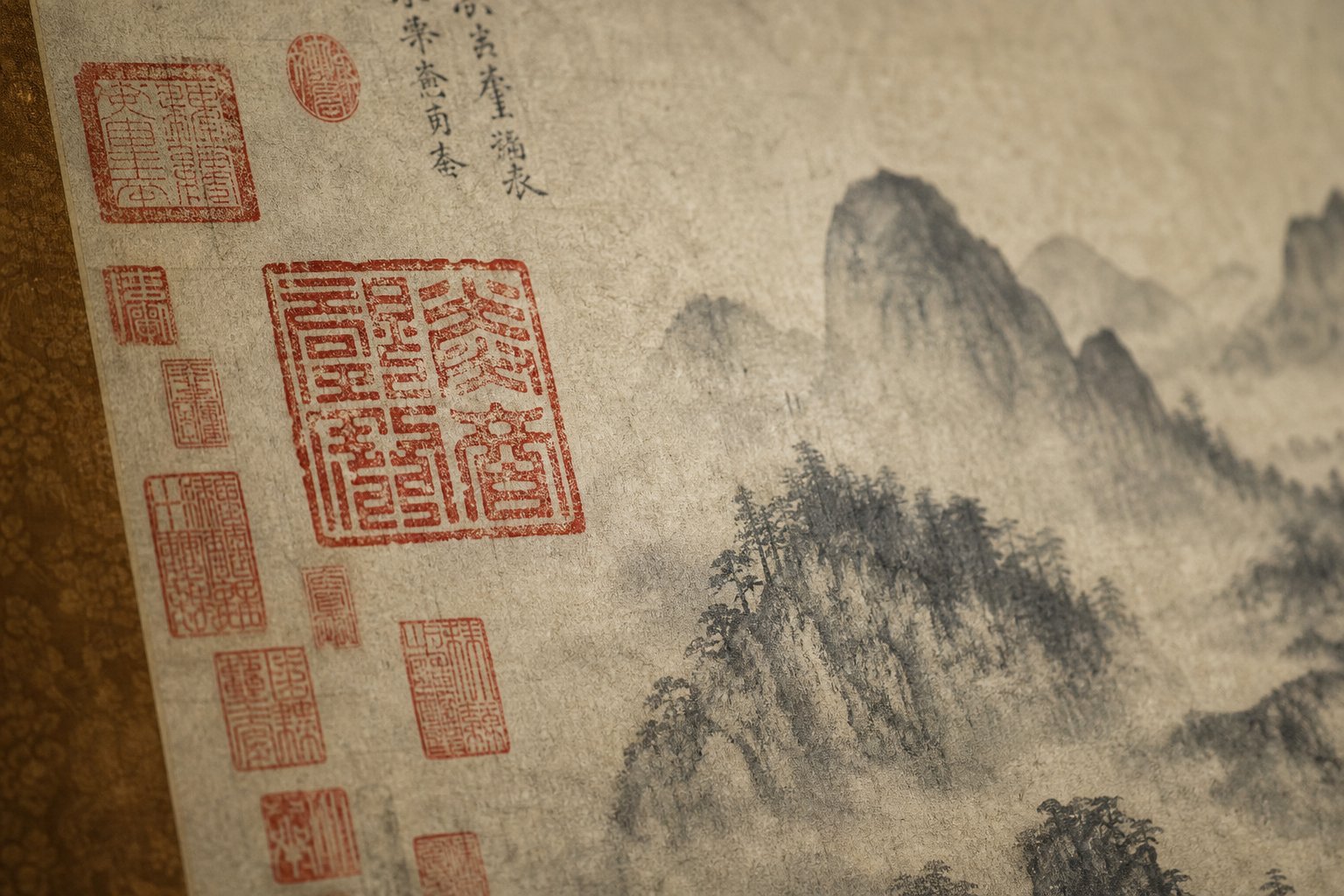
You are standing in front of a Song-dynasty scroll at a museum. The brushwork is stunning. Then your eye drifts to the small red impressions clustered near the signature or scattered along the margins. You know they mean something. A name, maybe. A date. A collector who once treasured this piece. But the characters inside those crimson squares look nothing like the Chinese you might recognize from a textbook or a restaurant menu. They are written in seal script, an ancient writing system over two thousand years old, and they resist casual reading the way medieval Latin resists someone who only knows modern Italian.
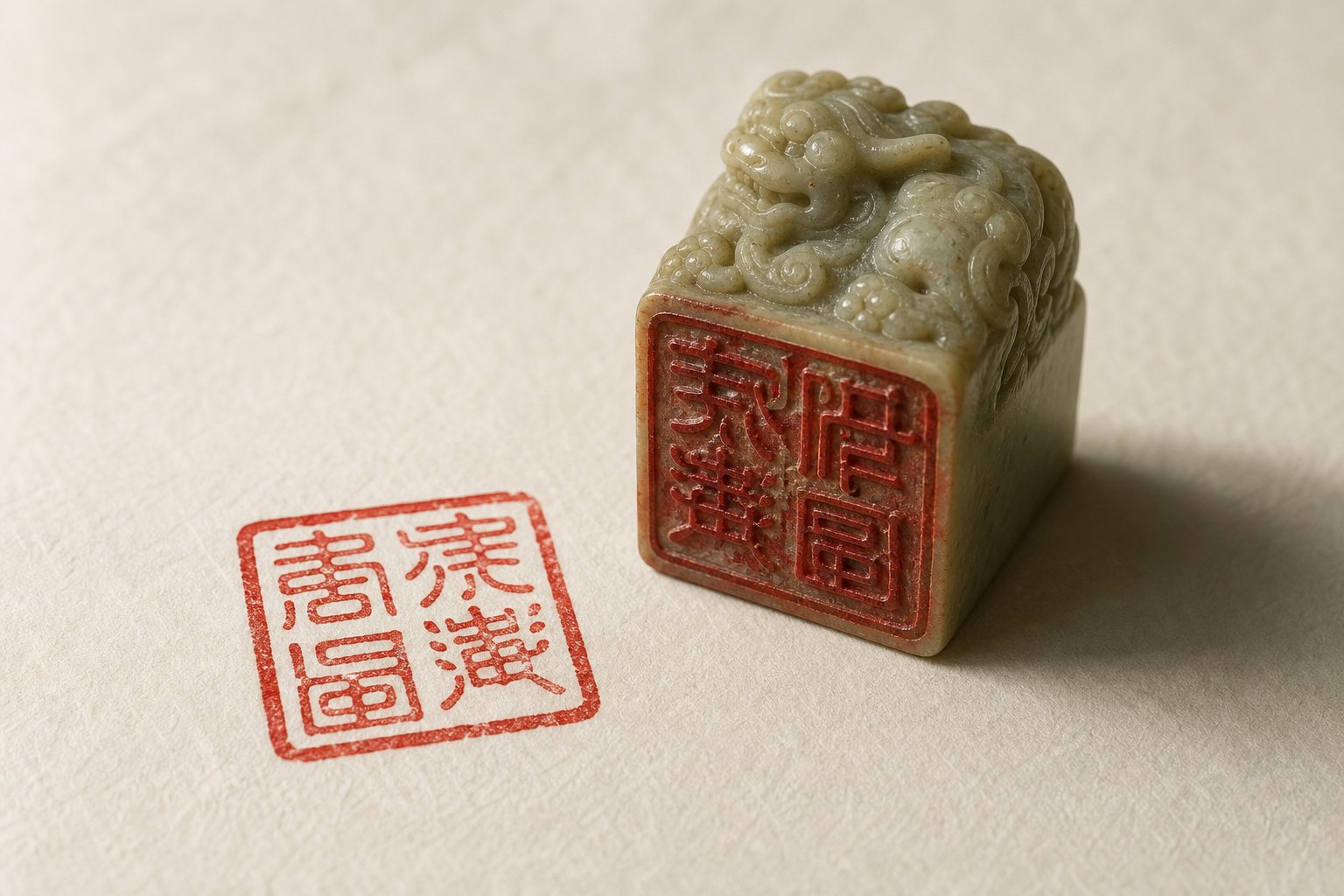
Each Chinese seal, or yinzhang (印章), is a carved stone or wood block stamped in vermillion paste onto the artwork. The content might be an artist's name, a studio name, a poetic motto, or a collector's mark added centuries after the painting was created. A single major work can carry ten or twenty of these impressions, each one a small puzzle encoded in archaic script.
Why Reading Seals Is a Distinct Skill
Owning a seal, carving a seal, and reading a seal in Chinese art are three entirely different abilities. Most English-language resources focus on the first two. They teach you how to commission a name chop or appreciate the craftsmanship of carved stone. But knowing how to read Chinese seals, actually decoding the characters pressed into paper or silk, requires a separate toolkit: familiarity with seal script forms, knowledge of reading direction conventions, and contextual awareness of where and why specific seal types appear on artwork.
Seal script characters retain the pictographic logic that modern Chinese has largely abandoned. A character you recognize instantly in its standard form may be unrecognizable in its seal script equivalent, even to native Mandarin speakers.
Who This Guide Serves
This guide is for Western collectors evaluating a silk painting's attribution, museum visitors who want to read beyond the wall label, auction attendees assessing provenance from catalog images, and calligraphy students tracing artistic lineage through stamped impressions. You do not need to speak Chinese fluently. You need a systematic method for visual decoding, and that is exactly what the following sections provide. Even partial seal literacy transforms how you engage with Chinese art, turning mysterious red marks into readable signatures, dates, and stories of ownership that span centuries.
Types of Seals Found on Chinese Artwork
Before you can decode any individual character, you need to know what kind of seal you are looking at. The category tells you what to expect inside the impression: a personal name, a place, a philosophical phrase, or a record of ownership. Each type follows its own conventions for content, shape, and position on the artwork, and recognizing the category first dramatically narrows the range of possible readings.
Seals on Chinese paintings and calligraphy fall into four major categories:
- Name seals (姓名印) - Identify the artist by personal name, courtesy name, or pen name. These function as the artist's signature and are typically found near the written inscription or at the end of a calligraphy piece.
- Studio seals (齋號印) - Reference the artist's studio, study, or workspace by its literary name. Since the Tang dynasty, it has been popular for scholars to give poetic names to their studios, and a studio seal communicates that identity.
- Leisure seals (閒章) - Contain poetic phrases, philosophical sentiments, or personal mottos rather than names. Typical inscriptions include sayings like "Respect fate" or "Attain wisdom," functioning much like a personal credo stamped onto the work.
- Collector seals (收藏印) - Added by subsequent owners, connoisseurs, or viewers as a record of appreciation or possession. These accumulate over centuries, creating a visible provenance trail directly on the artwork's surface.
Name Seals and Studio Seals
A chinese name seal is the most direct form of attribution on any artwork. It tells you who made the piece. But here is the complication: Chinese literati commonly used multiple names throughout their lives, including birth names, courtesy names, and various pen names. A single artist might own several name seals, each bearing a different appellation. When you encounter a name seal, the characters inside could be a surname and given name, or just a two-character pen name that requires cross-referencing with biographical records.
Studio seals work differently. Instead of identifying the person directly, they identify the creative space associated with that person. Imagine finding a seal that reads "Hall of Quiet Contemplation" rather than a personal name. The studio name still points to a specific artist, but only if you know which artist claimed that studio. These seals tend to use more literary, evocative language, and their shapes are often less strictly square than formal name seals.
Leisure Seals and Collector Seals
Leisure seals are where artistry and philosophy merge. The characters inside are not identifiers but expressions: a line of poetry, a Confucian principle, a Buddhist concept, or a personal aspiration. You might encounter phrases equivalent to "use loyalty and humanity in your affairs" or a quote from a classical text. These seals reveal the intellectual world of the artist rather than a name, and their shapes are frequently irregular or oval rather than square.
Collector seals tell a different story entirely. They document who owned, viewed, or authenticated the work after its creation. The famous Qing-dynasty connoisseur Liang Qingbiao (1620-1690), for example, stamped a square seal reading "endorsed by Jiaolin" on paintings he had viewed and collected as a kind of certificate of quality. Old chinese seals from imperial collections carry particular weight. Paintings acquired by the Qing court received imperial seals, and famous works from the Forbidden City bear impressions from generations of successive emperors, each stamp adding another layer of documented history.
How Seal Type Affects Placement
Placement is not random. The types of chinese seals on paintings follow spatial conventions that have been refined over centuries. Name seals appear near the artist's written signature or colophon, typically at the end of the composition. Studio seals often function as "introduction seals" placed at the starting point of a work, especially on horizontal handscrolls. Leisure seals occupy corners, edges, or open spaces where they help balance the visual composition without competing with the main image.
Collector seals follow a different logic. The principle is to avoid disrupting the original compositional balance, though this rule was frequently broken as successive owners each wanted their mark visible. On long handscrolls, collectors sometimes stamped seals in the margins between joined sheets of paper, serving double duty as ownership marks and "indent seal impressions" that prevented the scroll from being cut apart and sold in pieces.
Recognizing which category a seal belongs to is your first interpretive move. A seal near the signature is almost certainly a name seal. A seal in the upper-right corner of a hanging scroll is likely a leisure or studio seal. A cluster of seals along the margins, especially in varied sizes and styles, signals generations of collector marks. This positional logic becomes your entry point for the deeper work of deciphering the actual characters, which requires understanding the ancient script system those characters are written in.
Understanding Seal Script and the Radical System
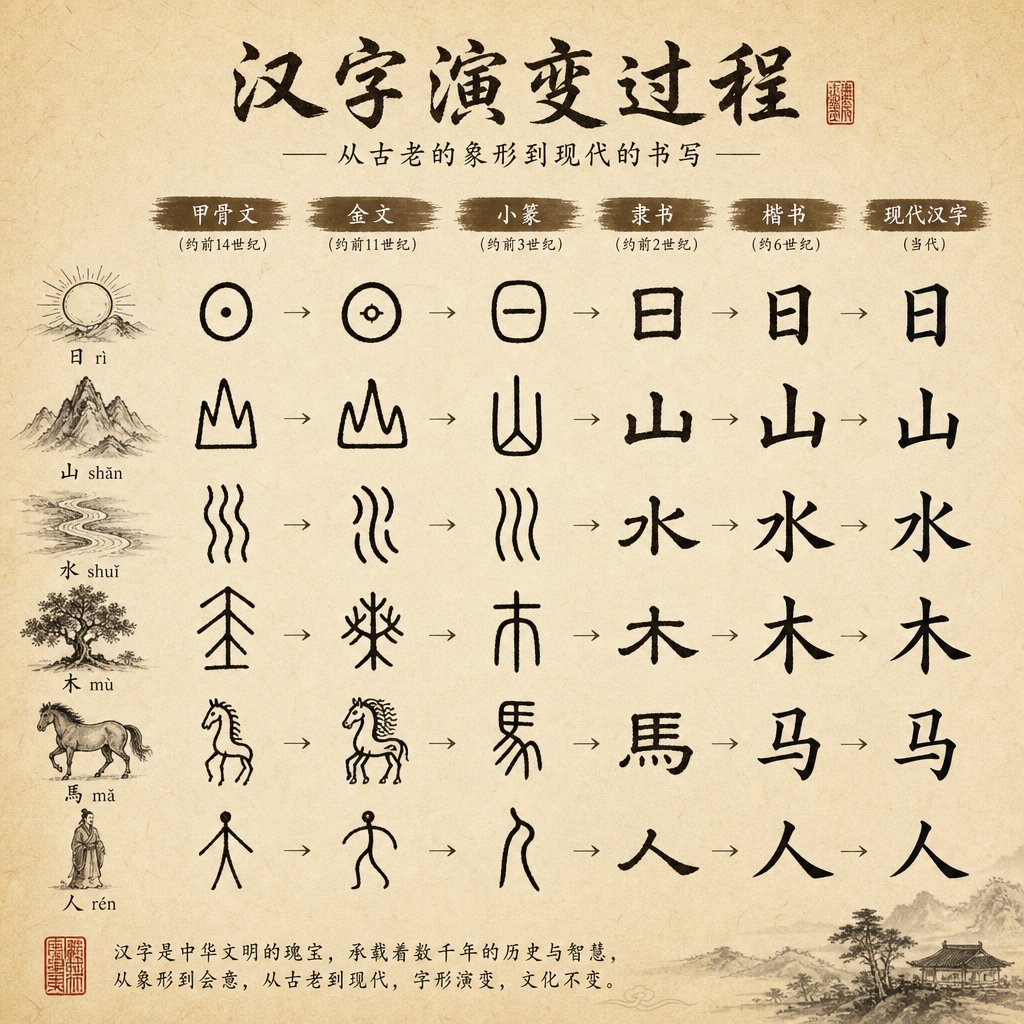
The characters inside those red impressions look alien for a reason. They are written in seal script (篆書, zhuanshu), a writing system that predates modern Chinese by more than two thousand years. Seal script became the standardized form of writing during the Qin Dynasty around 221 BCE, but its roots stretch back even further to inscriptions on bronze vessels from the Shang and Zhou dynasties. When you look at a seal stamp on a painting and cannot match a single character to anything in a modern dictionary, you are experiencing the full weight of that historical distance.
How Seal Script Differs from Modern Chinese
Imagine taking a word you know in English and encountering its Old English ancestor. You might recognize a letter or two, but the overall shape feels foreign. Chinese seal script presents a similar challenge, except the transformation is visual rather than phonetic. Modern standard characters (楷書) evolved through several intermediate stages, including clerical script and cursive forms, each one simplifying and abstracting the original pictographic shapes.
Seal script characters tend to be taller and more symmetrical than their modern equivalents. Strokes are rounded and relatively uniform in thickness, lacking the sharp angles and varied stroke weights you see in standard script. Most critically, the internal structure of characters often looks completely different. The modern character for "horse" (马) bears almost no visual resemblance to its seal script ancestor, which still shows something closer to a four-legged animal with a mane. Research into ancient Chinese character evolution confirms this pattern: characters from the Oracle Bone Inscription period through seal script retain far more pictographic logic than their modern standardized forms.
This gap means that even fluent Mandarin readers cannot casually read seal script. It is a specialized visual vocabulary that must be learned separately, which is precisely why chinese seal script literacy is a distinct skill worth developing for anyone serious about engaging with traditional artwork.
The Radical System as a Decoding Tool
Here is the good news: you do not need to memorize thousands of seal script characters from scratch. Chinese characters, in every era, are built from smaller components called radicals. A radical is a recurring graphical element that carries meaning and helps categorize characters in dictionaries. The modern system uses 214 radicals inherited from the Kangxi Dictionary of 1716, and these same structural components exist in seal script, just rendered in their older, more pictographic forms.
Think of radicals as the building blocks of a character. When you encounter an unfamiliar seal script character, your first move is to decompose it visually into its component parts. Can you spot a recognizable radical on the left side? The top? The bottom? Even identifying one radical within a complex character narrows your search dramatically. If you recognize the water radical on the left, you know the character likely relates to liquid, rivers, or flowing. If you spot the wood radical, expect something connected to trees, timber, or wooden objects.
The radical-based identification method is considered the most effective approach for decoding seal script. You identify the radical first, then look up characters grouped under that radical to find a match. This is exactly how traditional seal script dictionaries are organized, and it works because radicals maintain their core visual identity across eras, even when the overall character shape has shifted considerably.
Recognizing Common Seal Script Radicals
Seal script radicals are more pictographic than their modern counterparts. Where modern simplified radicals have become abstract shorthand, seal script versions often retain a visual logic that connects directly to the thing they represent. The water radical in seal script looks like flowing streams. The person radical resembles a figure in profile with visible limbs. The tree radical shows branching forms that genuinely suggest a plant.
This pictographic quality is actually an advantage once you train your eye. Instead of memorizing arbitrary shapes, you can often reason about what a radical depicts. Below is a reference guide for seal script radicals you will encounter most frequently on calligraphy seals:
| Modern Radical | Meaning | Seal Script Appearance | Where You Will See It |
|---|---|---|---|
| 氵(水) | Water | Three flowing curved lines resembling streams or waves, more fluid and wavy than the modern three-dot shorthand | Characters related to rivers, pools, clarity, ink |
| 木 | Wood / Tree | A vertical trunk with symmetrical branches extending upward and roots below, clearly tree-shaped | Characters for forest, plum, pine, brush handles |
| 人 (亻) | Person | A full figure shown in profile with visible head, torso, and legs, more recognizably human than the modern two-stroke form | Name characters, verbs involving people |
| 口 | Mouth | A rounded or oval opening rather than the modern sharp square, sometimes wider at the top | Characters for speech, names, enclosures |
| 山 | Mountain | Three peaked forms rising from a base, more rounded and naturalistic than the angular modern version | Studio names referencing landscapes |
| 日 | Sun | A circle or rounded rectangle with a dot or line in the center, clearly representing the solar disc | Characters for time, brightness, seasons |
| 心 (忄) | Heart / Mind | A shape resembling an anatomical heart with curved lobes, far more organic than the modern three-dot abbreviation | Characters for emotions, thought, virtue |
| 手 (扌) | Hand | Five spread fingers extending from a wrist, visibly depicting a hand rather than the modern abstract strokes | Characters for grasping, making, skill |
| 石 | Stone | A cliff-like form with a square or rounded mass beneath, suggesting a rock face | Seal-carving references, studio names |
| 金 (钅) | Metal / Gold | A form suggesting nuggets or ingots beneath a cover, more elaborate than the modern simplified version | Characters for bronze, mirror, appreciation |
When you approach a seal script stamp for the first time, start by scanning for any radical you can identify. Even spotting one familiar component gives you a foothold. Suppose you see the water radical on the left side of a character and something resembling the mouth radical on the right. You have just narrowed thousands of possibilities down to a manageable list of characters that combine water and mouth, which might lead you to a character like "river" or "name" depending on the exact configuration.
This decomposition habit is the single most important skill in your seal script radicals guide. Practice it on every seal you encounter, even when you cannot complete the identification. Over time, your eye learns to parse the rounded, symmetrical forms of seal script into their component radicals almost automatically. And once you can isolate individual characters and their radicals, the next challenge becomes reading them in the correct order, because seal layouts follow specific directional rules that differ based on character count and seal shape.
Reading Direction and Layout Patterns in Seals
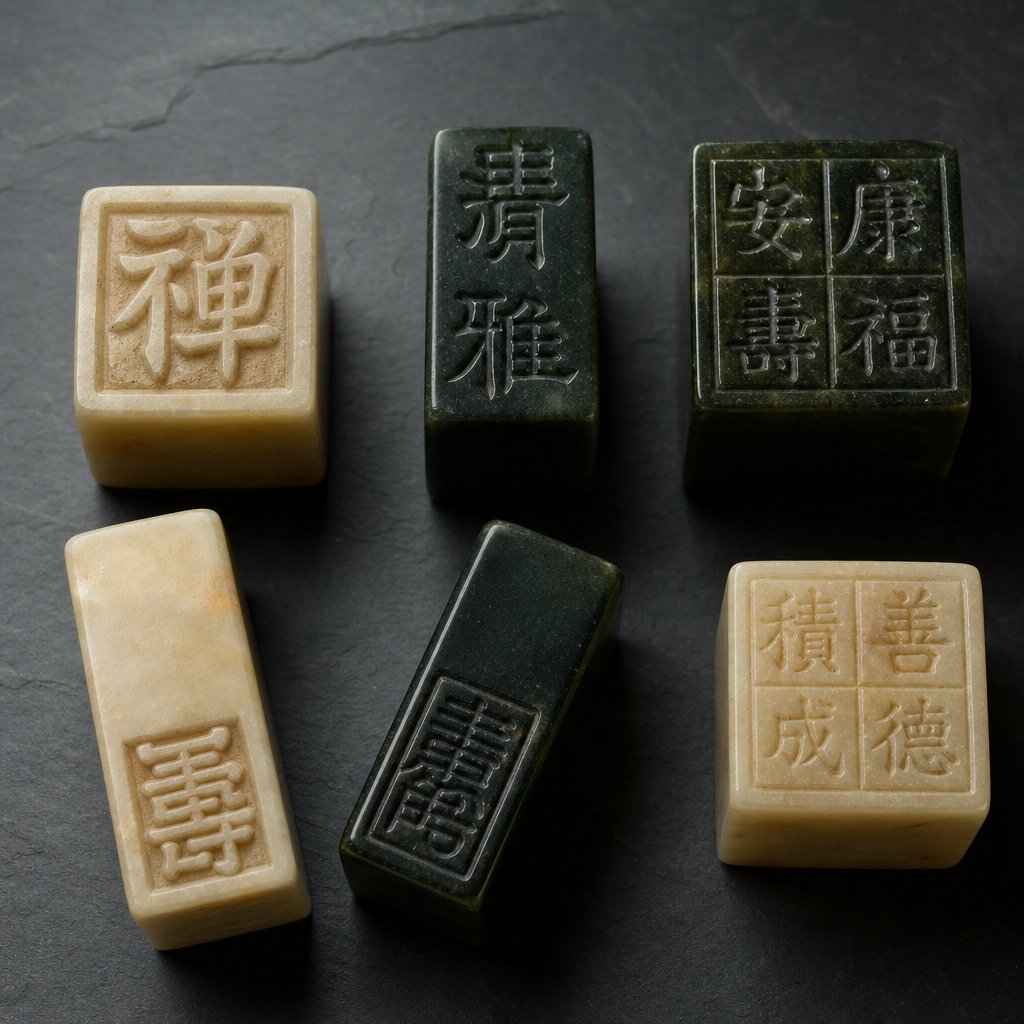
You have identified the radicals. You can isolate individual characters within the impression. But if you read them in the wrong order, you will get a nonsensical result or, worse, a plausible but incorrect name. Misreading the chinese seal reading direction is the single most common mistake beginners make, and it happens because seal layouts do not follow one universal rule. The reading order shifts depending on how many characters the seal contains and whether they are arranged vertically, horizontally, or in a grid.
Modern Chinese text reads left to right. Classical Chinese reads top to bottom, right to left. Seals follow the classical convention, but the compact space inside a small square or rectangle creates configurations that can trip you up if you are not prepared for them.
Reading Order Rules by Character Count
The number of characters inside a seal determines its layout, and each layout has a predictable reading pattern. Here is the taxonomy you need:
| Configuration | Layout Description | Reading Order | Example Context |
|---|---|---|---|
| Single character | One character fills the entire seal face | No direction needed | Surname-only seals, single-word mottos |
| Two characters, vertical | Characters stacked top over bottom in a tall rectangle | Top to bottom | Given names, two-character pen names |
| Two characters, horizontal | Characters placed side by side in a wide rectangle | Right to left | Given names, short studio names |
| Four characters, 2x2 grid | Characters arranged in two columns of two within a square | Top-right, bottom-right, top-left, bottom-left (column-first, right to left) | Full name plus 印, four-character phrases |
| Multi-line (3+ columns) | Characters arranged in multiple vertical columns | Right column first, top to bottom within each column, then move left | Leisure seals with poetic phrases, longer inscriptions |
Notice the pattern: vertical reading always goes top to bottom, and when multiple columns exist, you always start from the rightmost column and move left. This mirrors how classical Chinese books were read, page by page from right to left, line by line from top to bottom.
Four-Character Grid Layouts Explained
The four-character square seal deserves special attention because it is the most common format for formal name seals. Imagine a square divided into four equal quadrants. Your instinct might be to read it like an English page: top-left, top-right, bottom-left, bottom-right. That instinct is exactly wrong.
The correct reading order is column-first, right to left. Start at the top-right quadrant, drop down to the bottom-right, then jump to the top-left, and finish at the bottom-left. So a seal containing the characters for "Zhang" "Ming" "Zhi" "Yin" (Zhang Ming's seal) would be arranged with "Zhang" in the top-right, "Ming" in the bottom-right, "Zhi" in the top-left, and "Yin" in the bottom-left.
When you encounter a four-character seal during chinese seal identification, try reading it column-first. If the result produces a recognizable name followed by 之印 (meaning "seal of"), you have confirmed the correct direction.
How Character Orientation Confirms Direction
What if you are still unsure which way to read? The characters themselves offer a built-in compass. Many seal script characters have an inherent vertical orientation, a clear top and bottom. Asymmetrical radicals like the person radical (人) lean in a specific direction. If characters appear upside down or sideways when you read in one direction, you are reading the wrong way.
Another confirmation technique: look for structural characters you already recognize. If you spot 印 (seal) or 氏 (clan) at what you believe is the end of the reading sequence, your direction is likely correct, because these characters conventionally appear last. If they show up at the beginning of your reading, reverse your order.
Learning how to read chinese seal characters is largely about building these directional reflexes. After a few dozen seals, the layout recognition becomes automatic. You glance at the shape, count the characters, and your eye moves in the correct sequence without conscious effort. That fluency frees your attention for the harder work of identifying unfamiliar characters, which becomes much easier once you know which specific characters appear on seals most frequently.
Common Characters Found on Calligraphy Seals
Certain characters appear on Chinese calligraphy seals so frequently that learning to recognize them gives you an outsized advantage. Think of it like learning the twenty most common words in a foreign language: suddenly, you can parse the structure of sentences even when individual words remain unfamiliar. The same principle applies here. A small vocabulary of common chinese seal characters lets you identify seal types, confirm reading direction, and extract names even when other characters in the impression remain unresolved.
High-Frequency Seal Characters You Will See Repeatedly
Some characters function as signposts. They tell you what kind of information the seal contains and how to interpret the characters around them. When you spot one of these high-frequency characters, you immediately know whether you are looking at a name seal, a collector's mark, or a reference to calligraphy or painting.
The following reference table covers the characters you will encounter most often when examining chinese art signatures and collector marks:
| Modern Character | Function on Seals | Seal Script Appearance |
|---|---|---|
| 印 (yin) | Means "seal" or "stamp." Appears at the end of name seals to indicate ownership, as in "[Name] 印" | A kneeling figure on the left pressing down on an object on the right, representing the act of pressing a seal. More pictographic than the modern angular form |
| 章 (zhang) | Means "seal" or "chapter." Used interchangeably with 印 in some name seals | A vertical composition with a standing needle or stylus form above a base element, taller and more symmetrical than the modern character |
| 之 (zhi) | Possessive particle meaning "of." Connects a name to 印, forming "seal of [Name]" | A flowing S-curve or zigzag stroke, one of the simplest seal script forms and easy to recognize by its minimal structure |
| 氏 (shi) | Means "clan" or "family." Follows a surname to indicate family lineage | A curved form resembling a spoon or ladle tilted to one side, with a distinctive downward hook |
| 書 (shu) | Means "writing" or "calligraphy." Indicates the seal relates to a calligraphic work | A hand holding a brush above a mouth radical, with the brush element clearly visible as vertical strokes at the top |
| 畫 (hua) | Means "painting." Identifies the seal as belonging to a painter or referencing a painted work | A complex form with a hand holding a brush on one side and a bordered field below, more elaborate than 書 |
| 藏 (cang) | Means "collection" or "to store." Appears on collector seals indicating ownership | A grass radical on top with a complex lower structure suggesting something hidden beneath a cover |
| 鑒 (jian) | Means "appreciation" or "authentication." Found on connoisseur seals indicating the work has been examined and approved | A metal radical on the left with a figure looking downward on the right, suggesting the act of careful inspection |
You will notice that 印 and 章 serve nearly identical functions. Both mark a seal as a name seal. If you spot either character at the end of a reading sequence, you can be confident the preceding characters form a personal name.
Structural Characters That Frame Names
Two combinations deserve special attention because they act as grammatical frames around names. Once you recognize these frames, the name inside becomes much easier to isolate.
The combination 之印 (zhi yin, meaning "seal of...") typically follows a full name. When you see a four-character seal and the last two characters are 之印, you know the first two characters are the artist's name. This is one of the most reliable patterns in chinese painters signatures. For example, a seal reading "Wang Wei Zhi Yin" means "Seal of Wang Wei," and the structure tells you exactly where the name begins and ends.
The character 氏 (shi) works differently. It follows a single surname character to indicate clan identity. A seal reading "Li Shi" means "the Li family" or "of the Li clan." When you spot 氏 at the end of a two-character seal, the first character is almost certainly a surname. This pattern is especially common on older seals where family identity carried more weight than individual given names.
Similarly, combinations like 書畫 (shu hua, meaning "calligraphy and painting") or 珍藏 (zhen cang, meaning "treasured collection") appear as compound phrases on collector and leisure seals. Recognizing these pairs speeds up your reading because you can treat them as single units rather than decoding each character independently.
Common Surname Characters in Seal Script
Chinese surnames are drawn from a relatively small pool. The top hundred surnames cover the vast majority of the population, and the same concentration applies to artists throughout history. When you are trying to identify chinese art signatures, knowing how a handful of common surnames look in seal script gives you a powerful head start.
Surnames you will encounter frequently on artwork include 王 (Wang), 李 (Li), 張 (Zhang), 趙 (Zhao), 陳 (Chen), 吳 (Wu), and 黃 (Huang). In seal script, 王 appears as three horizontal lines crossed by a vertical stroke, very similar to its modern form and therefore one of the easiest surnames to spot. 李 retains its tree-over-child structure but with rounder, more flowing lines. 張 shows a bow radical on the left with an elongated form on the right.
The practical strategy is straightforward: when you encounter a name seal, check whether the first character matches any common surname in its seal script form. If it does, you have identified the family name, and the remaining characters are the given name or pen name. Cross-reference that combination against known artists from the period suggested by the artwork's style, and you often arrive at a confident attribution.
Recognizing these high-frequency characters and structural patterns gives you a working vocabulary for seal reading. But characters alone do not tell the whole story. The physical context surrounding a seal, its position on the artwork, its shape, its color, and its relationship to the artist's written signature, all provide additional clues that either confirm or challenge your character-level reading.
Using Contextual Clues to Decode Seals
You do not always need to read every character inside a seal to understand what it says. The seal's surroundings, its position on the artwork, its shape, its color, and its relationship to other marks on the same piece, all feed you information before you even attempt to decode the script. Think of it like arriving at a crime scene: the physical evidence narrows the suspect list long before forensic analysis begins.
Here are the major contextual clue categories and what each reveals:
- Position on the artwork - Tells you the seal's category (name, studio, leisure, or collector) and therefore what kind of content to expect inside it.
- Seal shape - Indicates formality level and seal type. Square seals are formal; oval or irregular shapes suggest leisure or artistic expression.
- Paste color and intensity - Confirms authenticity context and can suggest age. Bright vermillion is standard; faded or brownish-red tones often indicate older impressions.
- Number of characters - Narrows content possibilities. Two characters usually mean a given name; three to four suggest a full name plus a structural marker like 印.
- Relationship to the written signature - Directly constrains which name or phrase the seal likely contains.
What Seal Position Tells You
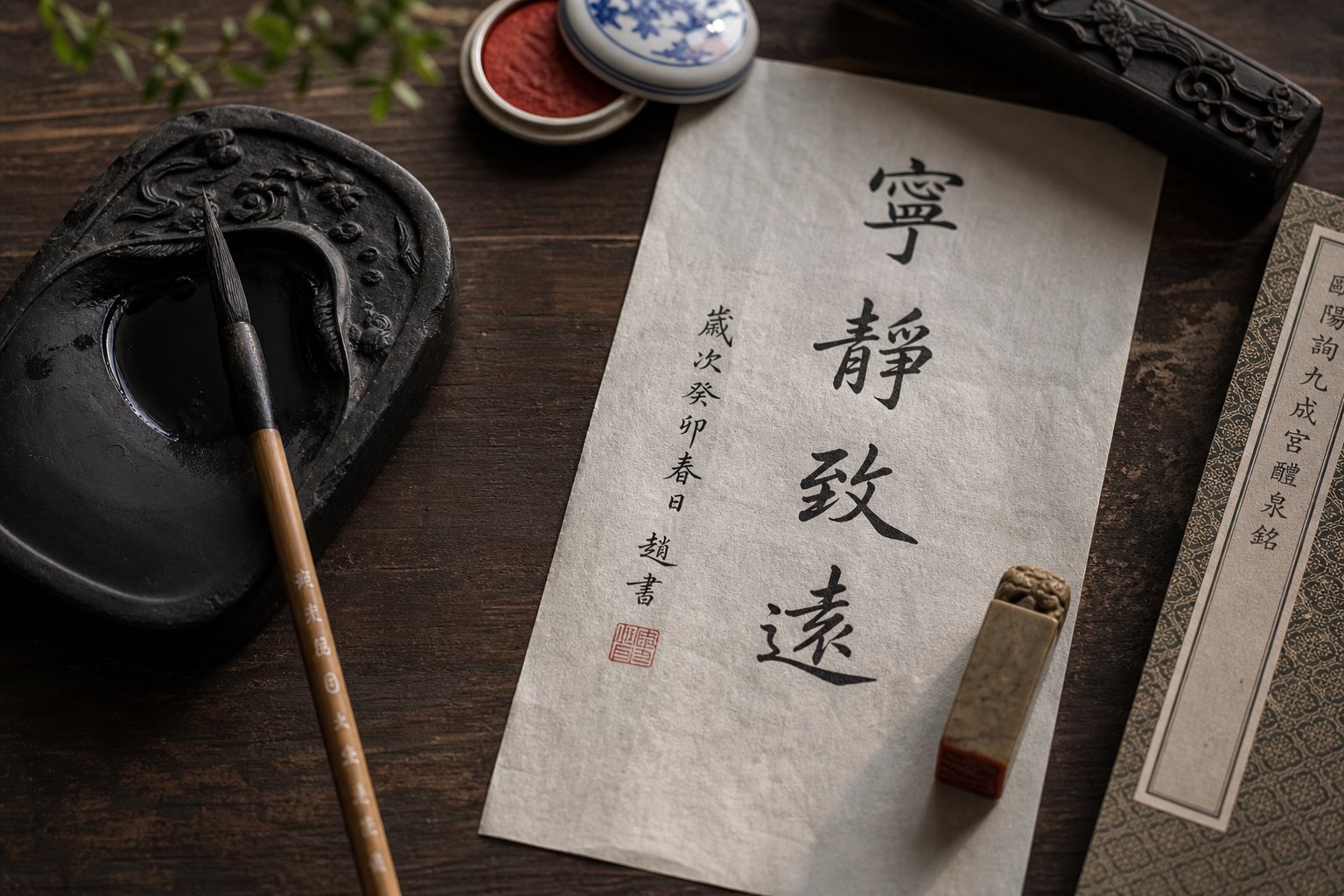
Chinese seal placement on paintings follows conventions refined over centuries. When you spot a seal stamped directly below or beside the artist's written inscription, you are almost certainly looking at a name seal. This is the most common position for the artist's formal identifier, forming a visual unit with the calligraphic signature above it.
Leisure seals behave differently. They gravitate toward corners, upper margins, or open spaces within the composition. As noted by the Kiln & Ink journal, painters placed seals as compositional elements, balancing heavy brushwork on the opposite side or anchoring an empty corner. A seal floating in the upper-right corner of a hanging scroll, far from any signature, is almost certainly a leisure seal containing a poetic phrase rather than a name.
Collector seals cluster along edges, in margins between mounted sections, or in blank areas that do not disrupt the original composition. On handscrolls, they often appear at the very beginning or end of the scroll, or stamped across the seams where sheets of paper join. The Hong Kong Museum of Art notes that these "indent seal impressions" served a dual purpose: marking ownership while also preventing the scroll from being cut apart and sold in pieces.
Shape and Color as Identification Clues
Square seals signal formality. A perfectly square impression with crisp borders is the standard format for name seals and official collector marks. When you see a square seal near a signature, expect a personal name inside. Oval, round, or irregularly shaped seals lean toward leisure content: mottos, poetic lines, or playful studio references. The shape itself is a declaration of intent, formal versus expressive.
Color tells a subtler story. Standard seal paste uses cinnabar (朱砂), producing a vivid red-orange impression. Fresh cinnabar paste looks bright and saturated. Over decades and centuries, the paste oxidizes slightly, shifting toward a deeper, sometimes brownish tone. This is not a precise dating method, but when you see a seal impression that looks noticeably faded or muted compared to others on the same work, it may have been stamped earlier. Conversely, a suspiciously bright seal on an otherwise aged painting warrants closer scrutiny.
Character count offers another fast filter. A two-character seal near the signature almost always contains a given name or pen name. Three characters might be a full name (surname plus two-character given name). Four characters in a square grid frequently follow the pattern of a full name plus 印 or 之印, confirming it as a name seal. Longer seals with five or more characters are typically leisure seals carrying phrases or quotations.
Using the Signature to Narrow Seal Readings
Here is one of the most practical techniques for anyone trying to identify a chinese artist signature: read the written inscription first. Artists typically sign their work in running script or standard script, both far easier to read than seal script. The signature gives you the artist's name in legible characters. Then look at the seal stamped beside it. The seal almost certainly contains the same name, a courtesy name, or a closely related pen name, just rendered in seal script.
This is what the Qi Ming Calligraphy guide calls the "contextual association method," and it is the most direct path to decoding a name seal. You already know what the seal should say. Your task becomes matching the seal script forms to characters you have already identified in the inscription. Even without formal seal script training, this comparison often yields a confident reading.
Multiple seals on a single work create a system of mutual constraint. If you can read one seal confidently, it limits what the others can say. A name seal identifies the artist, which means a nearby second seal is likely a studio name or pen name associated with that same artist. A collector seal from a known figure (say, Emperor Qianlong's distinctive marks) dates the work's provenance and tells you the painting predates that collector's lifetime. Each decoded seal tightens the interpretive frame around the ones you have not yet cracked.
Contextual reading is not a shortcut around character identification. It is a parallel channel of evidence that works alongside your script-decoding skills. Position, shape, color, character count, and signature relationships all point you toward the right answer before you finish parsing every radical. And when you combine these external clues with attention to how the seal was physically carved, the relief style and line quality of the impression itself, you gain yet another layer of diagnostic information.
How Carving Techniques Reveal Era and Purpose
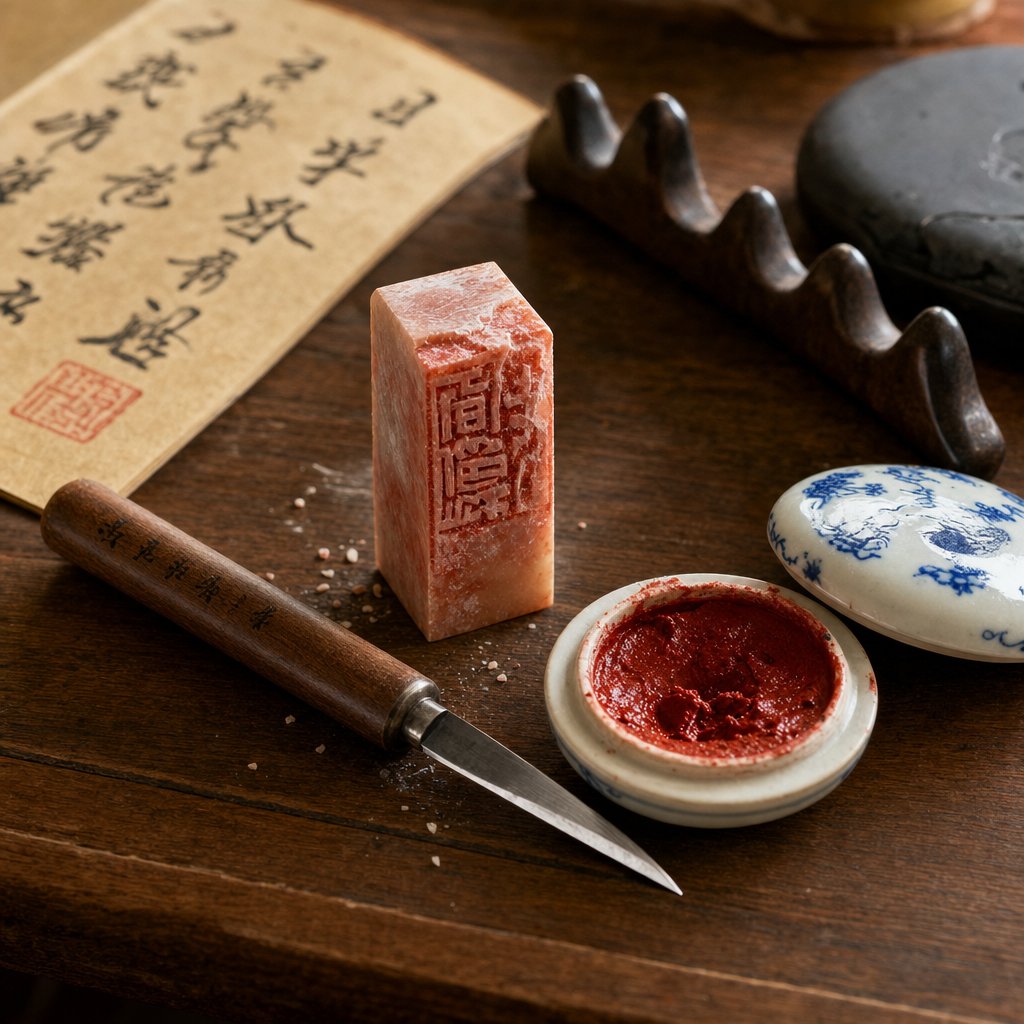
The relief style of a seal impression, whether characters appear raised in red or sunken into a red background, is not a random aesthetic choice. It carries historical, functional, and interpretive weight. When you examine an old chinese seal on a painting, the carving technique itself tells you something about when the seal was made, how formal its purpose was, and whether it was cut by a professional artisan or by the artist's own hand. These physical attributes form a diagnostic layer that works alongside your character-reading skills.
Zhuwen vs Baiwen and What Each Indicates
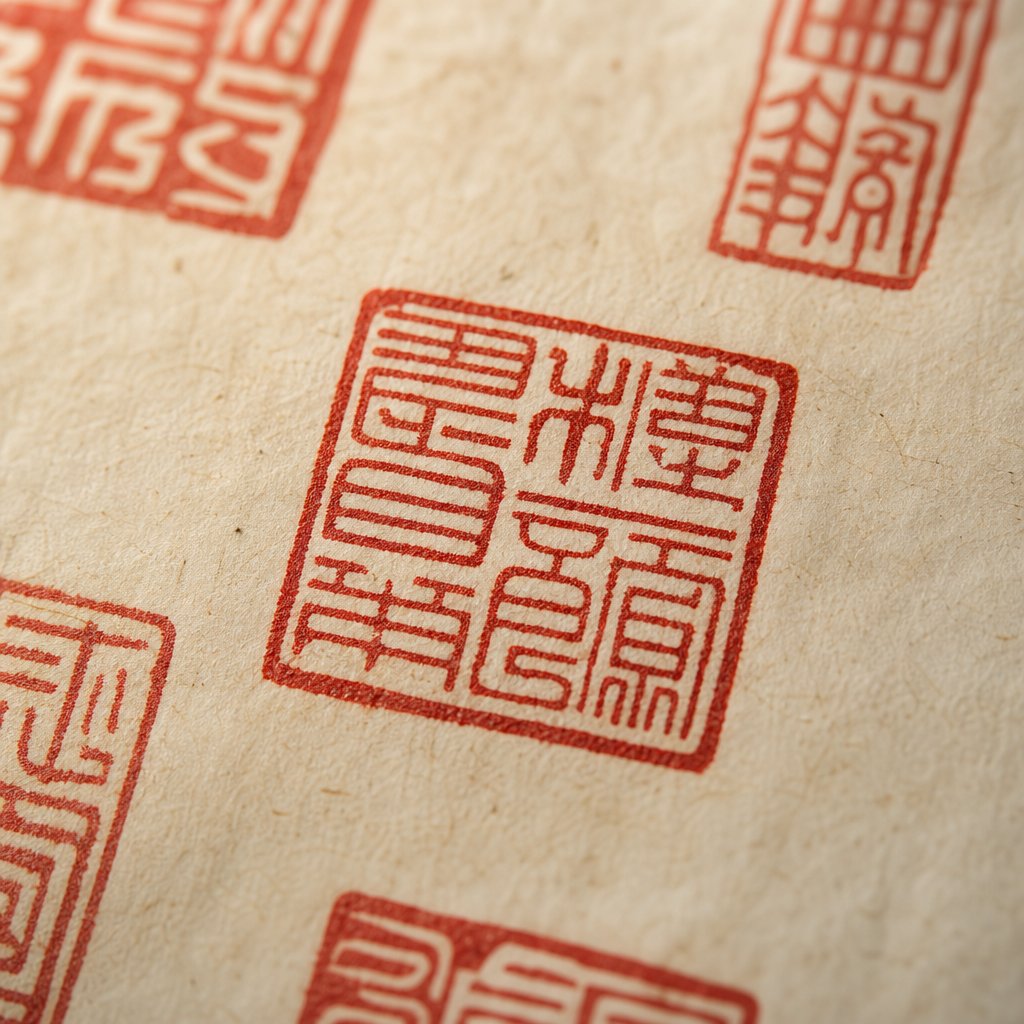
Every chinese artist stamp you encounter falls into one of two fundamental carving categories. In zhuwen (朱文), also called yang carving, the characters are carved in relief. The stone around the characters is cut away, leaving the letterforms raised. When stamped, the characters print in red against a white background. In baiwen (白文), also called yin carving, the characters themselves are incised into the stone. When stamped, the background prints in red and the characters appear as white negative space.
As seal carving expert Chen Hongmian explains, the zhuwen or Red Character style means the seal is carved in relief with imprints of character lines in red ink, while the baiwen or White Character style has characters incised and imprinted lines in white with a red background. In terms of the classic yin/yang dichotomy, zhuwen is yang carving and baiwen is yin carving.
The distinction matters for dating and interpretation. Baiwen seals are generally older and more formal. During the Han Dynasty and earlier periods, when seals were carved into hard materials like bronze, jade, and ivory, incising characters into the surface (baiwen) was the technically simpler method. These seals served official and administrative functions, proof of authority and identity. Zhuwen seals became more common after softer stones gained popularity in the Yuan Dynasty (13th-14th centuries), because carving away the background material was easier in stone than in metal.
| Characteristic | Zhuwen (Red Character / Yang) | Baiwen (White Character / Yin) |
|---|---|---|
| Appearance when stamped | Red characters on white background | White characters on red background |
| Carving method | Background cut away; characters in relief | Characters incised into the stone surface |
| Typical era of dominance | More common from Yuan Dynasty onward (post-13th century) | Dominant from Qin through Tang dynasties (3rd century BCE - 10th century CE) |
| Formality level | Moderate to informal; popular for leisure and studio seals | High formality; associated with official and name seals |
| Common uses | Leisure seals, artistic expression, paired with baiwen name seals | Formal name seals, official seals, collector authentication marks |
| Visual weight | Lighter, more delicate impression | Heavier, bolder impression with more red ink visible |
Many artists used both styles as a complementary pair: a baiwen seal for their formal name and a zhuwen seal for a studio name or leisure phrase. When you see two seals stamped together near a signature, one heavy with red and one showing fine red lines on white, you are likely looking at this traditional pairing.
Border Styles and Line Quality as Dating Clues
Beyond the zhuwen-baiwen distinction, the border and line characteristics of a seal impression help narrow its period. Han Dynasty seals typically feature thick, even borders with relatively uniform line weight inside. The characters sit within a clearly defined frame, and the overall impression feels architectural, solid and contained. Song and Yuan period seals begin showing thinner borders and more variation in stroke thickness, reflecting the growing influence of calligraphic aesthetics on seal design.
By the Ming and Qing dynasties, border treatment became a deliberate artistic choice. Some seals have no border at all, letting the characters float freely. Others use intentionally uneven borders that mimic the weathered look of ancient bronze seals, a technique called "mimicking antiquity" (仿古). The arrangement, density and spacing, lightness or heaviness of the structure, and the judicious leaving of blank areas all heighten the effect of the impression.
Line quality tells its own story. Thin, precise lines with consistent width suggest a skilled carver working with sharp tools on quality stone. Wobbly lines, uneven spacing, or characters that crowd one corner while leaving another empty may indicate a less experienced hand. On genuinely old seals, you will also notice slight irregularities caused by wear: chipped borders, partially filled strokes, or faint areas where the stone surface has eroded over centuries of use. These imperfections are actually markers of authenticity. A modern reproduction tends to look too clean, too uniform, lacking the organic wear patterns that accumulate over time.
Distinguishing Professional from Amateur Carving
Professional seal carvers, known as zhuanke jia (篆刻家), trained for years in both calligraphy and knife technique. Their work shows several hallmarks: characters are proportionally balanced within the available space, stroke endings are deliberate and controlled, and the overall composition feels unified rather than assembled character by character. The aesthetic value of a seal can be evaluated on its meaning, the calligraphy, the format of the letters, and the skill of the carving.
Self-carved seals, by contrast, often reveal charming imperfections. An artist who carved their own seal might produce slightly uneven character sizes, less precise stroke endings, or a composition that prioritizes personal expression over technical perfection. These are not flaws in the negative sense. They are diagnostic markers. A self-carved seal on a painting suggests the artist had direct involvement in every aspect of the work's presentation, which can actually strengthen attribution.
Modern reproductions present a different challenge. Machine-cut seals or laser-engraved stones produce unnaturally perfect lines with no variation in depth or width. The characters look correct but lifeless, lacking the subtle push-and-pull of a hand-guided knife. When evaluating whether a seal is a period original or a later addition, look for that organic quality: slight variations in line depth where the carver adjusted pressure, tiny chips at stroke intersections where the knife changed direction, and an overall sense that a human hand negotiated between the design and the resistance of the stone.
These physical observations do not require you to read a single character. They operate as a separate evidence channel, telling you whether the seal is likely old or new, formal or personal, professionally carved or self-made. Combined with your growing ability to decode the characters themselves, carving analysis gives you a remarkably complete picture of any seal you encounter. The next step is assembling all these skills, character recognition, directional reading, contextual clues, and physical analysis, into a single repeatable workflow you can apply to any seal, anywhere.
How to Decode Chinese Seal Script Step by Step
You now have the individual tools: radical recognition, directional reading rules, high-frequency character knowledge, contextual clues, and carving analysis. Separately, each skill gives you partial information. Together, applied in sequence, they form a repeatable method for chinese artist seal identification that works on virtually any impression you encounter. The process below is how experienced collectors and scholars approach an unfamiliar seal, and it becomes faster every time you use it.
Here is the complete seven-step workflow for decoding a seal on any calligraphy scroll, painting, or document:
- Determine the seal type from position and context. Look at where the seal sits on the artwork. Is it beside the signature? In a corner? Along the margin? Match its position to the conventions covered earlier: name seals near inscriptions, leisure seals in compositional spaces, collector seals along edges. Also note the shape and relief style. A square baiwen seal near the signature is almost certainly a formal name seal. An oval zhuwen impression in the upper corner is likely a leisure seal. This first step tells you what category of content to expect.
- Identify the reading direction from layout and character count. Count the characters inside the impression. Two characters stacked vertically? Read top to bottom. Two side by side? Read right to left. A 2x2 grid? Read column-first, starting from the top-right. Multiple columns? Start at the rightmost column, read top to bottom, then move left. Getting the direction right at this stage prevents you from assembling characters into a nonsensical sequence later.
- Isolate individual characters within the seal impression. Seal carvers divide the available space evenly among characters, so look for the natural grid lines. In a four-character square seal, an invisible cross divides the space into quadrants. In a six-character seal, two vertical columns of three create a clear structure. Mentally draw those dividing lines and treat each section as a separate character to decode. If the boundaries are unclear, look for the gaps between strokes: characters rarely share strokes across boundaries.
- Decompose each character into its radical components. Take each isolated character and break it into its structural parts. Is there a recognizable radical on the left, right, top, or bottom? Seal script characters are built from the same radical system as modern Chinese, just rendered in older, more pictographic forms. Look for the flowing lines of the water radical, the branching shape of the tree radical, or the profile figure of the person radical. Even identifying one radical within a complex character dramatically narrows your options.
- Cross-reference radicals against known seal script forms. Once you have identified a radical or two within a character, consult a seal script dictionary or reference organized by radical. The radical-based lookup method remains the most effective approach: find the radical section, then scan the characters grouped under it for a visual match. Online seal script databases allow you to search by radical and stroke count, which speeds this process considerably. You are looking for the character whose seal script form matches what you see in the impression.
- Use high-frequency character recognition to identify familiar elements. Before spending time on every character, scan the entire seal for any of the common characters you already know: 印, 章, 之, 氏, 書, 畫, 藏, 鑒. Spotting one of these structural markers immediately tells you how to interpret the surrounding characters. If you see 之印 at the end, the preceding characters are a name. If you spot 藏 or 鑒, you are looking at a collector seal. These anchor points give you a framework for the characters you have not yet identified.
- Verify the reading against the artwork's signature and known artist information. Read the written inscription on the artwork. Does the name in the inscription match what you have decoded from the seal? If the signature says "painted by Chen Hongshou" and your seal reading produces characters consistent with "Chen" plus a courtesy name associated with that artist, your reading is confirmed. If the result does not match any known name or phrase, revisit your radical decomposition or reading direction. Cross-reference with published seal catalogs or artist biographies when available.
Steps One Through Three: Orientation and Isolation
The first three steps are about getting oriented before you attempt any character-level decoding. Imagine you are looking at a hanging scroll with three red seal impressions. One sits directly below the artist's calligraphic signature. Another floats in the upper-right corner. A third appears along the left margin in a different style.
You immediately categorize them: the first is a name seal, the second is likely a leisure seal, and the third is probably a collector's mark. You count characters in the name seal and see four arranged in a square grid, so you know to read column-first from the right. You mentally divide the square into four quadrants and isolate each character.
None of this requires reading a single character of seal script. You have already eliminated most of the guesswork. You know the seal contains a name, you know the reading order, and you know where each character sits. The actual decoding work that follows is now constrained to a manageable problem: identify four specific characters that together form a personal name plus a structural marker.
Steps Four Through Six: Decomposition and Matching
This is where your radical knowledge and character vocabulary do the heavy lifting. Take the first character in your reading sequence (top-right quadrant of the grid). You notice a component on the left that looks like three flowing lines, the water radical. On the right, you see a more complex structure. You consult your mental catalog or a reference tool for characters that combine the water radical with that right-side component.
Move to the second character. You spot something that resembles the person radical on the left. The right side has a distinctive shape you have seen before. Cross-referencing narrows it to two or three possibilities.
Then you scan the remaining two characters and immediately recognize 之印, the "seal of" combination you have memorized. That recognition alone confirms your reading direction was correct and tells you the first two characters form the artist's name. Even if you cannot fully identify the second character, you now know the surname (from the water-radical character) and the structural frame (之印). A partial reading like this is still enormously useful for attribution research.
The radical decomposition method works because seal script, despite its visual complexity, follows the same compositional logic as modern Chinese. Characters are assembled from a finite set of recurring components. The more radicals you can recognize in their ancient forms, the faster this matching process becomes.
Step Seven: Verification and Confidence Building
Verification is what separates a guess from a reading. Your decoded characters should make sense in context. A name seal should produce a plausible Chinese name. A leisure seal should yield a coherent phrase. A collector seal should match a known historical figure or collection.
The most reliable verification method is comparing your seal reading against the artwork's written inscription. If the artist signed the piece "Wu Changshuo" in running script, and your seal decoding produces characters consistent with Wu Changshuo's known courtesy name or studio name, you have strong confirmation. Published seal catalogs, which reproduce the known seals of major artists, provide another verification layer. Many museum databases now include seal impression images alongside artist biographies, making cross-referencing faster than ever.
What if your reading does not match? Go back to step two and check your reading direction. A surprisingly common error is reading a 2x2 grid in the wrong column order. If direction is correct, revisit your radical identification in step four. A misidentified radical cascades into a wrong character, which produces a nonsensical result. The process is self-correcting: when the output does not make sense, the error is usually traceable to a specific step.
Confidence builds through repetition. Your first few attempts at how to identify chinese artist seals will be slow, requiring constant reference lookups and second-guessing. By your twentieth seal, you will recognize common radicals instantly. By your fiftieth, the entire seven-step process compresses into a few seconds of visual scanning followed by targeted lookup of one or two unfamiliar characters. Even partial readings, where you identify the seal type, reading direction, and two out of four characters, provide actionable information for attribution and provenance research.
A partial seal reading is not a failure. Identifying the seal type, confirming the reading direction, and recognizing even one character gives you more information than you had before, and often enough to guide further research.
This systematic approach transforms seal reading from an intimidating mystery into a structured problem-solving exercise. Each step reduces uncertainty, and each seal you practice on sharpens the skills that make the next one easier. The real test, of course, comes when you apply this method outside of study conditions, in museums, at auctions, or while evaluating a newly acquired scroll.
Practical Scenarios Where Seal Reading Matters
Skills practiced in isolation only matter when they work under real conditions. A museum gallery, an online auction listing, a newly purchased scroll unrolled on your table, a calligraphy class where your teacher references lineage: these are the moments where your ability to decode seals pays off. Each scenario demands a slightly different emphasis, and each tolerates a different level of certainty.
Reading Seals in Museums and Galleries
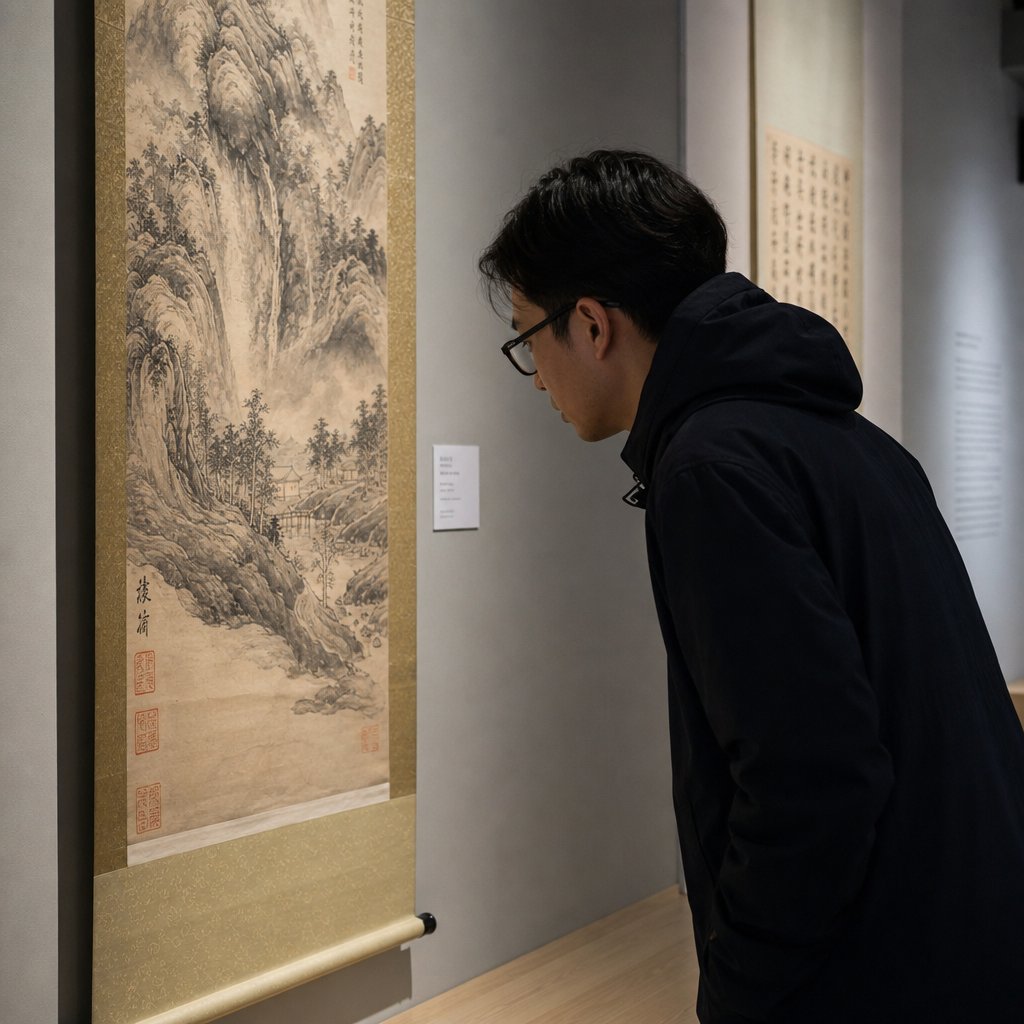
Imagine standing before a Southern Song landscape at a major museum. The wall label identifies the artist and approximate date, but says nothing about the six red impressions scattered across the silk. With even basic seal literacy, you can now ask sharper questions. Which seal is the artist's name seal? Which ones are collector marks added centuries later? Does the presence of an imperial collector seal confirm the provenance the label claims?
In this setting, your primary skill is seal-type identification through position and shape. You are not expected to decode every character under gallery lighting. But recognizing that the small square baiwen impression beside the signature is the artist's name seal, while the cluster of varied impressions along the margin represents generations of collectors, transforms a passive viewing experience into an active investigation. You start reading the painting's biography directly from its surface.
Evaluating Seals on Purchased Artwork
When you bring home a chinese silk painting or calligraphy scroll, the stakes shift. You are no longer a visitor; you are an owner trying to identify chinese artist signatures and assess whether the attribution is credible. Here, the full seven-step method applies. You have time, good lighting, and the ability to examine the impression closely with a magnifying glass.
Focus on matching the seal to the written signature. If the inscription names the artist in legible script, your seal should contain the same name, a known courtesy name, or a documented studio name for that artist. Cross-reference against published seal catalogs when possible. Pay attention to carving quality and paste color: does the seal impression look consistent with the claimed period? A suspiciously crisp, bright impression on a supposedly centuries-old work warrants skepticism. Chinese seal provenance authentication at this level combines character reading with physical analysis of the impression itself.
Seals in Auction Catalogs and Calligraphy Study
Auction catalogs often reproduce seal impressions in photographs, sometimes with transcriptions and sometimes without. When transcriptions are missing, your ability to read the seal independently becomes a competitive advantage. You can assess whether the seals support the catalog's attribution or raise questions about it. The key skill here is recognizing high-frequency structural characters (印, 藏, 鑒) and common surnames to quickly determine whether the seals are consistent with the claimed artist and provenance chain.
For calligraphy students, seal reading serves a different purpose entirely. Understanding the seals on historical works connects you to artistic lineage. When you recognize a teacher's seal on a student's early work, or trace a collector seal that links two pieces in the same tradition, you are reading the social and intellectual network that produced the art. This is not about authentication; it is about belonging to a tradition and understanding its transmission.
Here is a quick reference for matching each scenario to its most critical skill:
- Museum viewing - Seal-type identification by position and shape; distinguishing artist seals from collector marks
- Evaluating purchased scrolls or silk paintings - Full character decoding using the seven-step method; cross-referencing seals against the written signature
- Auction catalog assessment - High-frequency character recognition and surname identification for rapid provenance evaluation
- Calligraphy study and practice - Understanding seal content as lineage markers; recognizing teacher-student and collector relationships across works
Even at the most basic level, seal literacy changes how you engage with Chinese art. You stop seeing those red impressions as decorative mysteries and start reading them as what they are: signatures, ownership records, philosophical statements, and compositional choices, all stamped directly onto the work in an unbroken tradition stretching back thousands of years. Every seal you decode, even partially, brings you closer to the artwork and the people who made, owned, and treasured it.
Frequently Asked Questions About Reading Chinese Calligraphy Seals
1. What direction do you read Chinese seals?
Chinese seals follow classical reading conventions, but the exact direction depends on character count and layout. Two-character vertical seals read top to bottom. Two-character horizontal seals read right to left. Four-character grid seals read column-first from right to left: top-right, bottom-right, top-left, bottom-left. Multi-line seals start at the rightmost column, read top to bottom within each column, then move left. Misreading direction is the most common beginner mistake, so always count characters and identify the layout pattern before attempting to decode.
2. How can you tell the difference between an artist's seal and a collector's seal on a painting?
Position is the strongest indicator. Artist name seals appear directly beside or below the written signature, forming a visual unit with the inscription. Collector seals cluster along margins, edges, or blank areas away from the main composition. Shape and accumulation also help: a single square seal near the signature is typically the artist's, while multiple seals of varying sizes and styles scattered along the borders indicate generations of collectors. Collector seals often contain characters like 藏 (collection) or 鑒 (appreciation) rather than personal names followed by 印 (seal).
3. Do you need to know Chinese to read calligraphy seals?
You do not need fluency in modern Chinese. Seal script is a separate visual system that even native Mandarin speakers cannot read without specialized training. What you need is familiarity with seal script radicals, knowledge of high-frequency seal characters like 印, 章, 之, and 氏, and a systematic decoding method. The radical decomposition approach lets you break unfamiliar characters into identifiable components and cross-reference them in seal script dictionaries, regardless of your spoken language ability.
4. What is the difference between zhuwen and baiwen seals?
Zhuwen (red character) seals show characters printed in red against a white background, created by carving away the surrounding stone and leaving characters in relief. Baiwen (white character) seals show white characters against a solid red background, created by incising the characters directly into the stone. Baiwen is generally older and more formal, dominant from the Qin through Tang dynasties, while zhuwen became popular after softer carving stones emerged in the Yuan Dynasty. Many artists used both as a complementary pair: baiwen for their formal name seal and zhuwen for a studio or leisure seal.
5. What are the most common characters found on Chinese art seals?
The most frequently encountered characters include 印 (seal/stamp), 章 (seal/chapter), 之 (possessive particle meaning 'of'), 氏 (clan/family), 書 (writing/calligraphy), 畫 (painting), 藏 (collection), and 鑒 (appreciation/authentication). Structural combinations like 之印 (seal of...) frame personal names, while 氏 follows a surname to indicate family lineage. Recognizing these high-frequency characters lets you quickly identify seal types and isolate the name or phrase contained within the impression.