What the Chinese Character 天 Actually Means
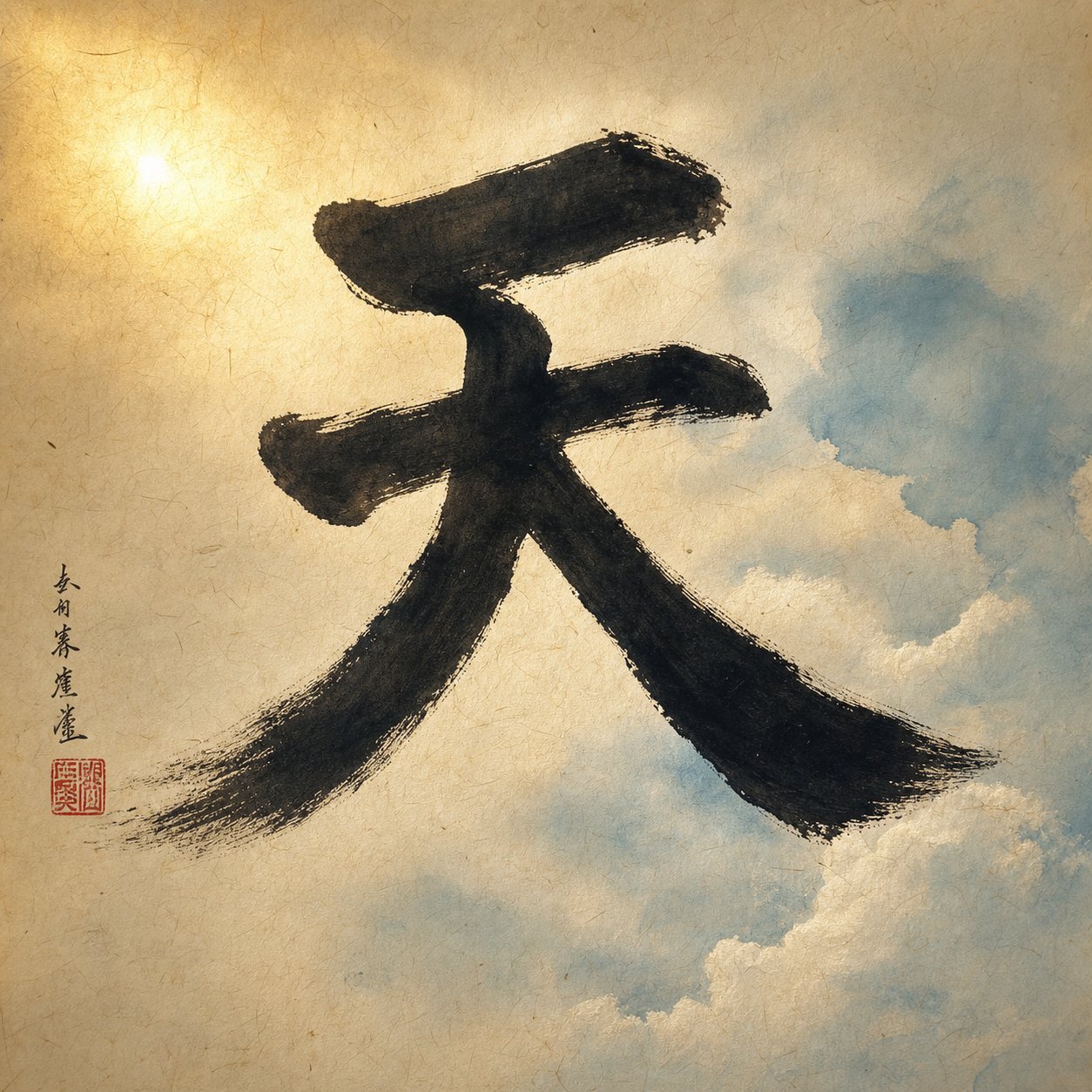
What does tian mean in Chinese? The short answer: almost everything above you and beyond you. The character 天 (tiān) is one of the most foundational building blocks in the Chinese language, carrying three interconnected meanings: sky, heaven, and day. That single character does the work of three separate English words, and understanding why reveals something essential about how Chinese encodes meaning.
What Does 天 Mean in Chinese
The tian meaning in Chinese spans both the concrete and the abstract. At its most literal, 天 refers to the physical sky overhead. In a philosophical or spiritual context, it means heaven or the divine cosmic order. And in everyday conversation, it simply means "day" as a unit of time. The tian definition shifts depending on context, but all three senses trace back to one original idea: the vast expanse above humanity.
For Spanish-speaking learners searching for the tian en ingles equivalent, the closest translations are "sky," "heaven," or "day," though no single English or Spanish word captures the full 天 meaning.
Why 天 Is One of the First Characters Learners Encounter
You'll find 天 everywhere in daily Mandarin. It appears in words for weather (天气), today (今天), tomorrow (明天), genius (天才), and paradise (天堂). As a high-frequency character, it ranks among the most commonly encountered in both spoken and written Chinese, making it an early priority for learners building functional vocabulary.
天 bridges the physical (the sky above) and the metaphysical (heaven and the divine) in Chinese thought, which is why one character holds so many meanings and appears in so many compound words.
Its role as a building block for dozens of compounds means that learning this one character unlocks an entire family of related vocabulary. But how did a simple four-stroke character come to carry so much weight? The answer lies in its ancient origins, where a stick figure standing beneath the open sky became the word for everything above.
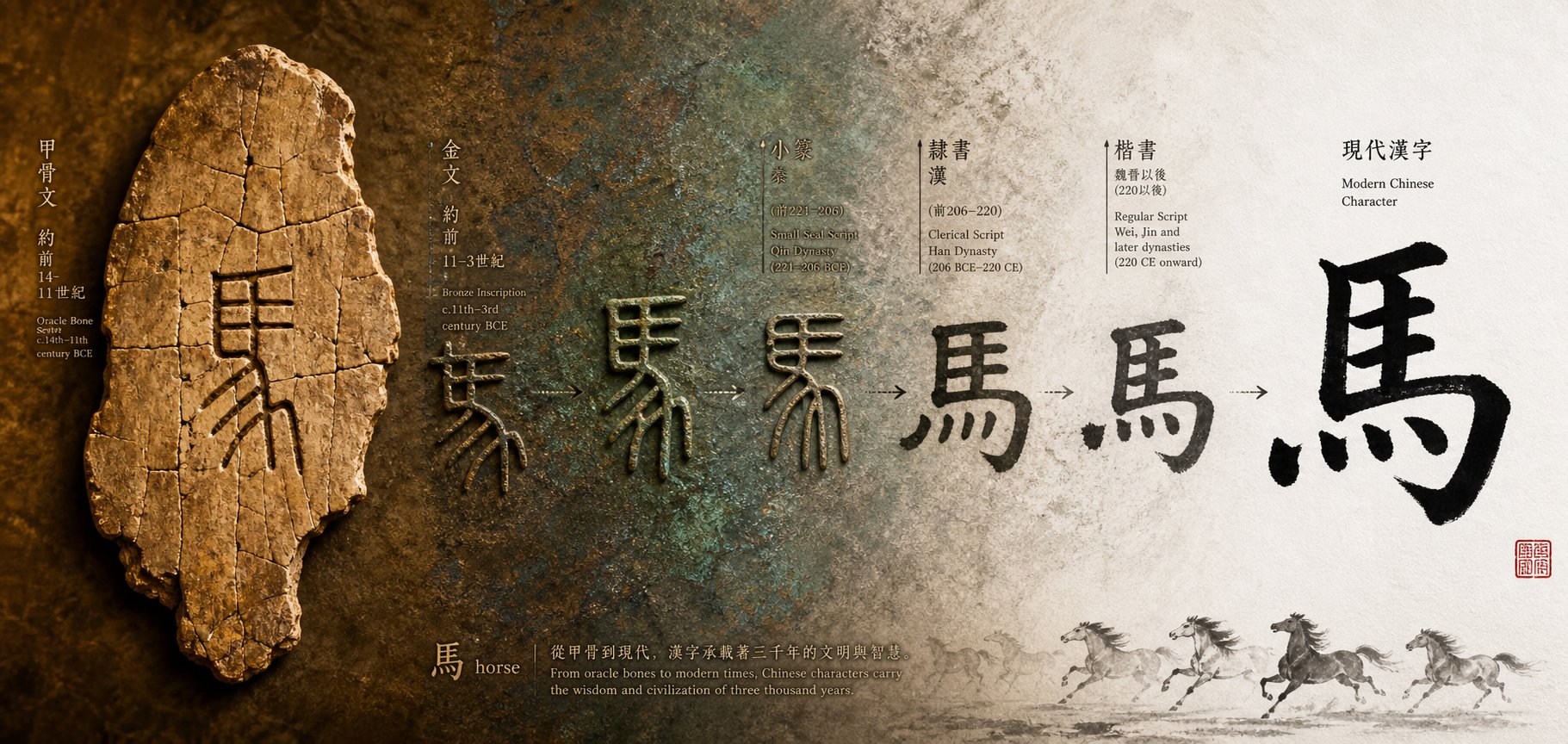
The Ancient Origin Story Behind the Tian Chinese Character
Every Chinese character started as a picture. Some began as drawings of trees, mountains, or rivers. The chinese character tian started as something far more personal: a human being looking up.
Over three thousand years ago, scribes carved the earliest known form of 天 into turtle shells and animal bones during Shang dynasty divination rituals. These oracle bone inscriptions, dating to roughly the 14th century BCE, give us a direct window into how ancient Chinese people visualized the concept of sky and heaven. What they drew was not an abstract symbol. It was a story told in a single image.
From Oracle Bones to Modern Strokes
Imagine a stick figure with an oversized head. That is what the oldest version of the chinese character for heaven looked like. On oracle bone inscriptions, 天 depicted a person standing upright with a large circle or square shape above the shoulders, emphasizing the head or the space directly above a human figure. Some variants showed a person with outstretched arms, the area above the head marked or exaggerated to draw attention upward.
Why the big head? Scholars interpret it two ways. One reading sees the enlarged head as representing the top of a person, the highest point of the human body, which then extended metaphorically to mean the highest point of everything: the sky itself. Another interpretation suggests the mark above the figure was not a head at all but a deliberate indicator pointing to the space above a person, the vast canopy overhead.
As centuries passed, the character evolved through bronze inscriptions during the Zhou dynasty and into seal script during the Qin period. The round head gradually flattened into a horizontal stroke. The human body simplified into the familiar shape of 大 (da, meaning big or person with arms spread wide). By the time the Han dynasty scholar Xu Shen compiled the Shuowen Jiezi around 100 CE, the oldest surviving Chinese character dictionary, he analyzed 天 as composed of two elements: 一 (one) and 大 (great). His definition was concise and revealing: "the summit, the highest point which nothing can surpass."
How a Stick Figure Became the Word for Sky
Here is the visual logic that makes the chinese character heaven so elegant and memorable. Look at the modern form of 天 and you can still see the original picture hiding in plain sight:
- 大 (da) on the bottom represents a person standing with arms stretched wide, feet planted on the ground.
- 一 (yi) on the top represents the single, unbroken expanse above that person: the sky, the limit, the heavens.
Put them together and you get a pictographic sentence: a person beneath the great space above. That which is higher than the highest point of a human being. The sky.
This is not a random pairing of strokes. It is a visual argument. The ancient scribes reasoned that the sky is defined by its relationship to people standing beneath it. You cannot point to the sky without first acknowledging the ground-level observer looking up. The tian chinese character encodes that relationship permanently into its structure.
The Shuowen Jiezi, China's first systematic character dictionary from 100 CE, defines 天 as "the summit, the highest point which nothing can surpass," composed of "one" and "great."
What makes this etymology powerful for learners is its memorability. You do not need to memorize an arbitrary shape. You just need to see a person standing under the open sky, arms wide, with one clean line marking everything above. That image has survived over three millennia of simplification, and it still works today. Knowing how the character was built makes writing it correctly far easier, which is exactly where the stroke-by-stroke breakdown comes in.
How to Write 天 Step by Step
Seeing the picture inside the character is one thing. Putting brush to paper (or stylus to screen) is another. The good news: writing the chinese symbol for heaven requires only four strokes, making it one of the simplest characters you will practice as a beginner.
Radical Breakdown of 一 Plus 大
The character 天 has a clean top-bottom structure built from two elements you likely already know:
- 一 (yi) on top, meaning "one," represented by a single horizontal line.
- 大 (da) below, meaning "big" or depicting a person with arms outstretched.
The official radical is 大 (big), and the total stroke count is four. If you can write "one" and "big" separately, you already have the muscle memory for heaven in chinese writing. You are simply stacking one on top of the other.
Stroke Order for Writing 天 Correctly
Chinese stroke order follows consistent rules: top before bottom, left before right, horizontal before vertical. For 天, the sequence is straightforward:
- First horizontal stroke - draw a short horizontal line across the top, moving left to right. This is the "one" element.
- Second horizontal stroke - draw a longer horizontal line through the middle, again left to right. This forms the arms of the "person."
- Left-falling stroke (pie) - starting from where the two horizontals intersect, sweep downward to the lower left.
- Right-falling stroke (na) - from the same center point, press and sweep downward to the lower right with a slight thickening at the end.
That is it. Four strokes, and you have written the chinese for sky, heaven, and day all at once.
One common stumbling point: confusing 天 with the visually similar character 夫 (fu, meaning husband). The key difference is that in 夫, the left-falling stroke extends above and cuts through the top horizontal line, while in 天, both horizontal strokes sit cleanly on top with the falling strokes positioned entirely below them. When you write 天, no stroke should cross above that first horizontal line.
Teachers often introduce the chinese character for earth, 地 (di), alongside 天 as a natural pair. Together, 天地 (tiandi) means "heaven and earth" or "the world," and learning them side by side reinforces both characters through contrast. The chinese word for earth uses the radical 土 (tu, soil) on the left, grounding it visually to the land, while 天 reaches upward with its open, spreading strokes. This pairing, sky above and earth below, is one of the oldest conceptual pairs in Chinese thought.
With the symbol for heaven committed to muscle memory, the next challenge is getting it to sound right. Writing 天 correctly is half the battle; pronouncing its first tone without wavering is where many learners trip up.

How to Pronounce Tian Like a Native Speaker
You can write 天 with perfect stroke order and still be misunderstood if the tone is off. In Mandarin, tian pronunciation lives or dies on one thing: pitch. The syllable tiān carries the first tone, which means your voice needs to stay high and flat for the entire duration of the sound. No rising, no falling, no dipping. Just a sustained, level pitch at the top of your comfortable vocal range.
Producing the First Tone Correctly
Imagine you are at the dentist and the doctor asks you to open wide and say "aah." That steady, held-out note you produce without thinking about it? That is close to what the first tone feels like. You pick a high pitch and hold it there like a single note on a piano key that never releases.
For English speakers, this feels unnatural. In English, a flat high pitch almost never occurs in normal conversation. Your voice constantly rises and falls to signal questions, emphasis, or emotion. When you say the word "sky" in English, your pitch probably dips slightly or trails off at the end. With the t i a n syllable in Mandarin, you cannot let that happen. The pitch must remain level from the moment the "t" releases to the moment the "n" finishes.
A helpful way to calibrate: hum a single note at a comfortable high point in your range. Not falsetto, not straining, just a clear sustained hum. Then open your mouth and say "tian" at that exact pitch without letting it waver. If you can hold a note while singing, you can produce the first tone. The challenge is not physical. It is psychological. Your English-trained brain wants to add movement to the pitch, and you have to override that instinct.
Common Pronunciation Mistakes to Avoid
The most frequent error learners make with tian pronunciation is letting the voice drop at the end of the syllable. Even a slight downward drift turns the first tone into something resembling the fourth tone (a sharp fall from high to low). To a native listener, that small drop can shift meaning entirely. The second most common mistake is adding a slight rise, which pulls the sound toward the second tone territory.
Here is a quick diagnostic checklist:
- Voice drops at the end? You are drifting toward fourth tone. Focus on sustaining energy through the final "n."
- Voice rises slightly? You are creeping into second tone. Keep the pitch locked at one height.
- Voice dips then rises? You are producing a third tone shape. Start higher and stay flat.
- Sound too short or clipped? Give the syllable its full duration. First tone needs time to register as flat.
The good news about the first tone is its stability in compound words. Unlike the third tone, which changes shape depending on what follows it, the first tone remains consistent before most other tones. When you say 天气 (tianqi, weather) or 天才 (tiancai, genius), the tian syllable keeps its high flat pitch regardless of whether the next syllable rises, falls, or dips. This makes first-tone words like 天 relatively predictable once you lock in the correct production.
One tone sandhi rule worth noting: the word 一 (yi, one) changes to a fourth tone before first-tone syllables, so 一天 (yi tian, one day) is actually pronounced "yi tian" with a falling tone on yi. But 天 itself stays flat and high. Your job with this character never changes.
For learners studying across East Asian languages, the same character carries different sounds in different systems. In Japanese, 天 is read as "ten" (the on'yomi or Chinese-derived reading) or "ama" and "ame" (the kun'yomi or native Japanese reading). In Korean, it is pronounced "cheon" (천). These cross-references can be useful if you are studying multiple languages, but for Mandarin specifically, the target is always that steady, unwavering first tone: tian, high and flat, held like a note that refuses to bend.
Getting the sound right is essential because 天 appears in so many daily expressions. Mispronouncing it once is forgivable. Mispronouncing it in every sentence where you mention the weather, the day, or the sky creates a compounding problem that native speakers notice quickly. The tone is the character's voice, and 天 speaks in one clear, level pitch. Master that, and you are ready to explore the full range of meanings this single syllable carries.
Three Core Meanings of 天 and When to Use Each
A single character with one pronunciation and four strokes, yet 天 carries three distinct meanings that show up in completely different conversations. You might use it to talk about the weather at breakfast, reference a philosophical concept in a university lecture, and ask what day it is, all with the same syllable. How does one character stretch so far without breaking?
The answer lies in how ancient Chinese thought connected these ideas. The sky overhead marks the passage of days as the sun crosses it. That same sky represents the highest possible authority, the realm beyond human reach. Physical space, cosmic power, and the rhythm of time all converge in a single upward glance. To define tian is to trace that chain of logic from the concrete to the abstract.
天 as Sky and Physical Space
The most literal meaning of tian in chinese is the physical sky: the blue expanse you see when you look up, the atmosphere where clouds form and weather happens. This is the meaning closest to the character's pictographic origin, a person standing beneath the open space above.
In modern Mandarin, you will encounter this meaning constantly in weather-related vocabulary. The word 天气 (tianqi) combines 天 (sky) with 气 (air/energy) to mean "weather." When someone asks 今天天气怎么样? (How is the weather today?), both instances of 天 are doing different jobs: the first 天 in 今天 means "day," while the 天 in 天气 means "sky." Context makes the distinction effortless for native speakers.
Other physical-sky compounds include 天空 (tiankong, the sky as visible space), 天黑 (tianhei, sky getting dark), and 天亮 (tianliang, sky getting light/dawn). In each case, 天 anchors the expression to something you can literally see and feel overhead.
天 as Heaven and the Divine
Step beyond the physical, and 天 becomes something far more powerful. In Chinese philosophy and cosmology, the meaning of tian expands to encompass heaven as a moral and cosmic force, not merely a place above the clouds but an ordering principle that governs the universe.
This interpretation has deep roots. During the Zhou dynasty (1046-256 BCE), rulers introduced the concept of 天命 (tianming), the Mandate of Heaven, which held that political authority flows from heaven itself. A ruler governed legitimately only as long as heaven approved. If the state fell into chaos, it signaled that the mandate had been withdrawn. This was not a metaphor. It was the foundational political philosophy of imperial China for over two thousand years.
Confucian thinkers developed this further. For Confucius and his successors, 天 represented the natural moral order of the world, the forces and circumstances beyond human control that nevertheless shape human obligations. Chinese for heaven in this philosophical sense does not map neatly onto the Western Christian concept of heaven as a paradise. It is closer to a cosmic authority, impersonal yet morally significant, that sets the terms for how life unfolds.
Over time, particularly during the Han (206 BCE-220 CE) and Tang (618-907 CE) dynasties, 天 absorbed additional religious meanings as Buddhism spread through China. The character began to carry connotations of a paradisiacal afterlife alongside its older philosophical weight. This layering of meanings, from supreme deity to natural force to paradise, is why heaven in chinese remains a complex and sometimes ambiguous concept even today.
天 as a Unit of Time
The third meaning surprises many learners: 天 simply means "day." When you say 今天 (jintian, today), 明天 (mingtian, tomorrow), 昨天 (zuotian, yesterday), or 每天 (meitian, every day), the character 天 functions as a time marker with no spiritual or atmospheric connotation at all.
Why would "sky" also mean "day"? Because before clocks existed, the sky was the clock. One full cycle of light and darkness overhead, one rotation of the sun across the visible heavens, equals one day. The connection is not arbitrary. It is observational. Ancient people measured time by watching the sky, so the word for sky became the word for the unit of time it measured.
You can also define tian in this temporal sense through quantity expressions: 三天 (san tian, three days), 几天 (ji tian, how many days), 天天 (tiantian, day after day/every day). In these constructions, 天 behaves like a pure counting word, as neutral and functional as "day" in English.
| Meaning Category | Core Sense | Example Words | English Translation |
|---|---|---|---|
| Sky / Physical Space | The visible atmosphere and weather above | 天空 (tiankong), 天气 (tianqi), 天黑 (tianhei) | Sky, weather, getting dark |
| Heaven / The Divine | Cosmic moral order, supreme authority, paradise | 天命 (tianming), 天堂 (tiantang), 上天 (shangtian) | Mandate of Heaven, paradise, the heavens above |
| Day / Time | One full cycle of daylight and darkness | 今天 (jintian), 明天 (mingtian), 每天 (meitian) | Today, tomorrow, every day |
These three meanings are not separate accidents of language. They are branches of the same root idea. The sky is the highest physical reality. The highest authority is heaven. The sky's daily cycle gives us the unit of a day. One concept, viewed from three angles, produces three meanings that remain connected beneath the surface.
Recognizing which meaning applies in a given sentence is rarely difficult in practice. The surrounding words do the work. If 天 appears next to weather or color words, it means sky. If it sits inside a philosophical or religious expression, it means heaven. If it follows a time word like 今 (now) or 明 (bright/next), it means day. The character itself stays the same. Context does the sorting.
This semantic flexibility is exactly what makes 天 so productive as a building block. It generates dozens of compound words across all three meaning categories, each one drawing on a different facet of the original concept. Those compounds are where the character truly comes alive in daily conversation.
Essential Compound Words Built from 天
Knowing what 天 means in isolation is useful. Knowing how it behaves inside compound words is what actually lets you speak Mandarin. This single character generates an enormous family of everyday vocabulary, from the first words beginners learn to expressions that carry centuries of cultural weight. Here is the practical vocabulary you need, organized by difficulty level with real sentences you can use immediately.
Everyday Compound Words with 天
These are the compounds you will encounter in your first weeks of study. Each one appears in the HSK vocabulary lists at the beginner level, meaning they show up constantly in textbooks, apps, and daily conversation:
- 天空 (tiankong) - sky, the visible expanse above. Example: 天空很蓝。(Tiankong hen lan. / The sky is very blue.)
- 天气 (tianqi) - weather. Example: 明天天气怎么样?(Mingtian tianqi zenmeyang? / What's the weather like tomorrow?)
- 今天 (jintian) - today. Example: 今天我的朋友不能工作,他在医院!(Jintian wo de pengyou bu neng gongzuo, ta zai yiyuan! / Today my friend can't work, he's in the hospital!)
- 明天 (mingtian) - tomorrow. Example: 我明天坐飞机去北京。(Wo mingtian zuo feiji qu Beijing. / I'm flying to Beijing tomorrow.)
- 昨天 (zuotian) - yesterday. Example: 昨天上午商店开了。(Zuotian shangwu shangdian kaile. / The store opened yesterday morning.)
- 每天 (meitian) - every day. Example: 她每天早上跑步。(Ta meitian zaoshang paobu. / She runs every morning.)
- 天才 (tiancai) - genius, literally "heaven's talent." Example: 他是音乐天才。(Ta shi yinyue tiancai. / He's a musical genius.)
- 天堂 (tiantang) - heaven, paradise. Example: 这个地方像天堂一样美。(Zhege difang xiang tiantang yiyang mei. / This place is as beautiful as paradise.)
Notice how the tian tian meaning in the expression 天天 (tiantian) works through simple repetition: sky-sky becomes "day after day" or "every single day." This reduplication pattern is common in Chinese. You might see tian tian chinese learners confuse 天天 with 每天 (meitian), but the difference is subtle. 天天 emphasizes the unbroken repetition, the relentlessness of something happening daily, while 每天 is more neutral and factual.
Intermediate Expressions Using 天
Once the basics feel comfortable, these intermediate compounds open up richer conversations. They appear in HSK 5 and 6 level materials and carry more cultural nuance:
- 天然 (tianran) - natural, literally "heaven-so" or "as heaven made it." Example: 这种天然材料比塑料更环保。(Zhe zhong tianran cailiao bi suliao geng huanbao. / This natural material is more eco-friendly than plastic.) The related term 天然气 (tianranqi) means natural gas.
- 天下 (tianxia) - all under heaven, the world, the realm. Example: 天下没有免费的午餐。(Tianxia meiyou mianfei de wucan. / There's no free lunch in this world.) This ancient expression, sometimes romanized as tien xia in older systems, once referred to the entire civilized world as understood from the Chinese imperial perspective.
- 天真 (tianzhen) - naive, innocent, artless. Example: 她太天真了,总是相信别人说的话。(Ta tai tianzhen le, zongshi xiangxin bieren shuo de hua. / She's too naive; she always believes what others say.) The word carries a gentler connotation than the English "naive," sometimes implying a charming innocence.
- 先天 (xiantian) - innate, congenital, literally "before heaven" or "prior to birth." Example: 这是先天的能力,不是后天学的。(Zhe shi xiantian de nengli, bu shi houtian xue de. / This is an innate ability, not something learned later.) Its opposite, 后天 (houtian), means both "acquired/postnatal" and "the day after tomorrow," another example of 天's temporal flexibility.
- 夏天 (xiatian) - summer, literally "the hot-season days." Example: 夏天的天空特别蓝。(Xiatian de tiankong tebie lan. / The summer sky is especially blue.) The other seasons follow the same pattern: 春天 (chuntian, spring), 秋天 (qiutian, autumn), 冬天 (dongtian, winter).
A few more worth noting at this level: 聊天 (liaotian, to chat, literally "chat about the sky/weather"), 航天 (hangtian, space flight), and 天赋 (tianfu, innate talent or gift). Each one pulls a different thread from the original character's meaning, whether that is the physical sky, the passage of time, or the idea of something granted from above.
What connects all these compounds is a pattern: 天 consistently contributes either a sense of vastness, naturalness, or time depending on its position and partner character. Recognizing that pattern lets you intuit the meaning of unfamiliar compounds before you even look them up. When you see 天 paired with something concrete, think sky or weather. Paired with something abstract, think heaven or nature. Paired with a time marker, think day.
These compounds give 天 its real power in daily language. But vocabulary only tells part of the story. The character also carries philosophical weight that shaped Chinese civilization for millennia, from the divine right of emperors to the moral structure of the cosmos.
Cultural and Philosophical Weight of 天
Vocabulary lists show you what 天 does in a sentence. Philosophy shows you what it does in a civilization. For over two thousand years, this character was not just a word. It was the foundation of political legitimacy, moral reasoning, and humanity's relationship with the natural world. No other character in Chinese carries quite this much civilizational weight.
The Mandate of Heaven in Chinese Philosophy
The concept of 天命 (tianming), the Mandate of Heaven, emerged during the early Zhou dynasty around 1046 BCE and became the bedrock of Chinese political philosophy. The idea is straightforward but radical: heaven (天) confers the right to rule directly upon an emperor, who is called 天子 (tianzi), the Son of Heaven. Legitimacy flows downward from a cosmic moral force, not upward from military conquest alone.
What made this concept revolutionary was its conditional nature. Confucian thinkers taught that the mandate's continuation depended on the ruler's personal virtue. An emperor was expected to govern with 义 (yi, righteousness) and 仁 (ren, benevolence). If his rule turned tyrannical or his personal life became immoral, heaven itself withdrew its approval, and revolution became justified. Chinese historians consistently pointed to the dissolute behavior of each dynasty's final emperor as proof that heaven had passed its mandate to a new ruling house.
The mandate of heaven in ancient china was not merely a theological abstraction. It functioned as a practical political mechanism for over two millennia, from the Zhou through the Qing dynasty (1644-1912). Every dynastic transition was framed through this lens. Every new emperor claimed heaven's endorsement. The mandate of heaven symbol appeared in imperial rituals, court documents, and the very architecture of power. In Confucian thought, 天 operated as something between a deity and an impersonal cosmic principle, a moral force that rewarded virtue and punished corruption without requiring prayer or worship in the way Western religions understand it. This makes the deity in Confucianism fundamentally different from a personal god. 天 is not a being you petition. It is an order you align with or violate at your peril.
In Confucian philosophy, 天 is not a god who listens to prayers but a moral cosmic order that responds to virtue and withdraws its favor from tyranny, making every ruler accountable to something beyond human power.
天 in Chinese Mythology and Daily Life
Beyond political philosophy, 天 saturates Chinese legends and myth. Creation narratives describe 盘古 (Pangu) separating heaven and earth by pushing the sky upward and the ground downward, literally creating 天 and 地 as distinct realms. The goddess 女娲 (Nuwa) is said to have repaired the sky when it cracked, patching holes in heaven with melted stones. These stories treat 天 as a physical structure, a dome or canopy that can break and be mended.
The philosophical tradition took a more abstract direction. The concept of 天人合一 (tianren heyi, harmony between heaven and humanity) represents a worldview holding that heaven, earth, and humanity are fundamentally interconnected. Mencius argued that through mental reflection, one could understand human nature and heaven as a unity. Lao Zi taught that humanity patterns itself on earth, earth on heaven, and heaven on the Way (道). Both traditions emphasized that humans are not separate from the natural cosmic order but embedded within it.
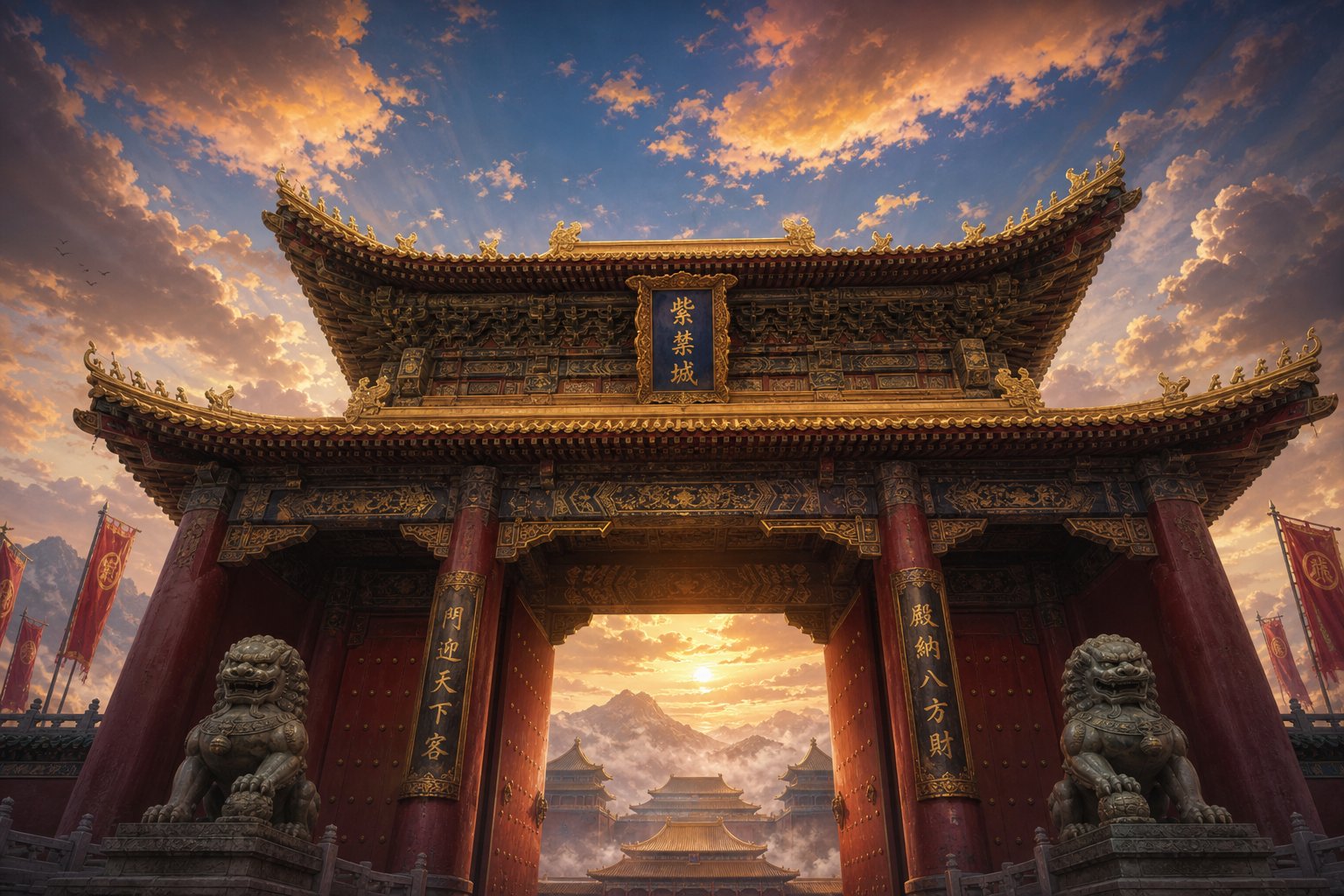
You encounter 天 in recognizable modern landmarks too. Tiananmen (天安门) in Beijing literally means "Gate of Heavenly Peace," though its full original meaning derives from the phrase "receiving the mandate from heaven, and pacifying the dynasty" (受命于天, 安邦治国). First built in 1420 during the Ming dynasty, it served as the entrance to the imperial palace. The city of Tianjin (天津) means "Heavenly Ford" or "Heaven's Crossing," named for the spot where an emperor supposedly crossed a river. These place names are not decorative. They encode the same philosophical claim: political power connects to heaven's authority.
While 天 is sometimes loosely translated as "god," it is worth noting that the chinese character for god in a personal, monotheistic sense is more accurately 神 (shen). The god in chinese symbol traditions is complex: 天 represents cosmic authority and moral order, while 神 refers to spirits, deities, and divine beings. When Chinese speakers say 老天爷 (laotianye, "Old Heaven") in colloquial speech, they are invoking 天 in a way that resembles calling on God, but the underlying concept remains rooted in an impersonal moral force rather than a personal creator.
This philosophical depth is what separates 天 from a simple vocabulary word. It is a window into how Chinese civilization understood power, nature, morality, and humanity's place in the cosmos. And because the character traveled beyond China's borders into Japan, Korea, and Vietnam, that philosophical weight spread across an entire region, carrying slightly different shades of meaning in each new linguistic home.
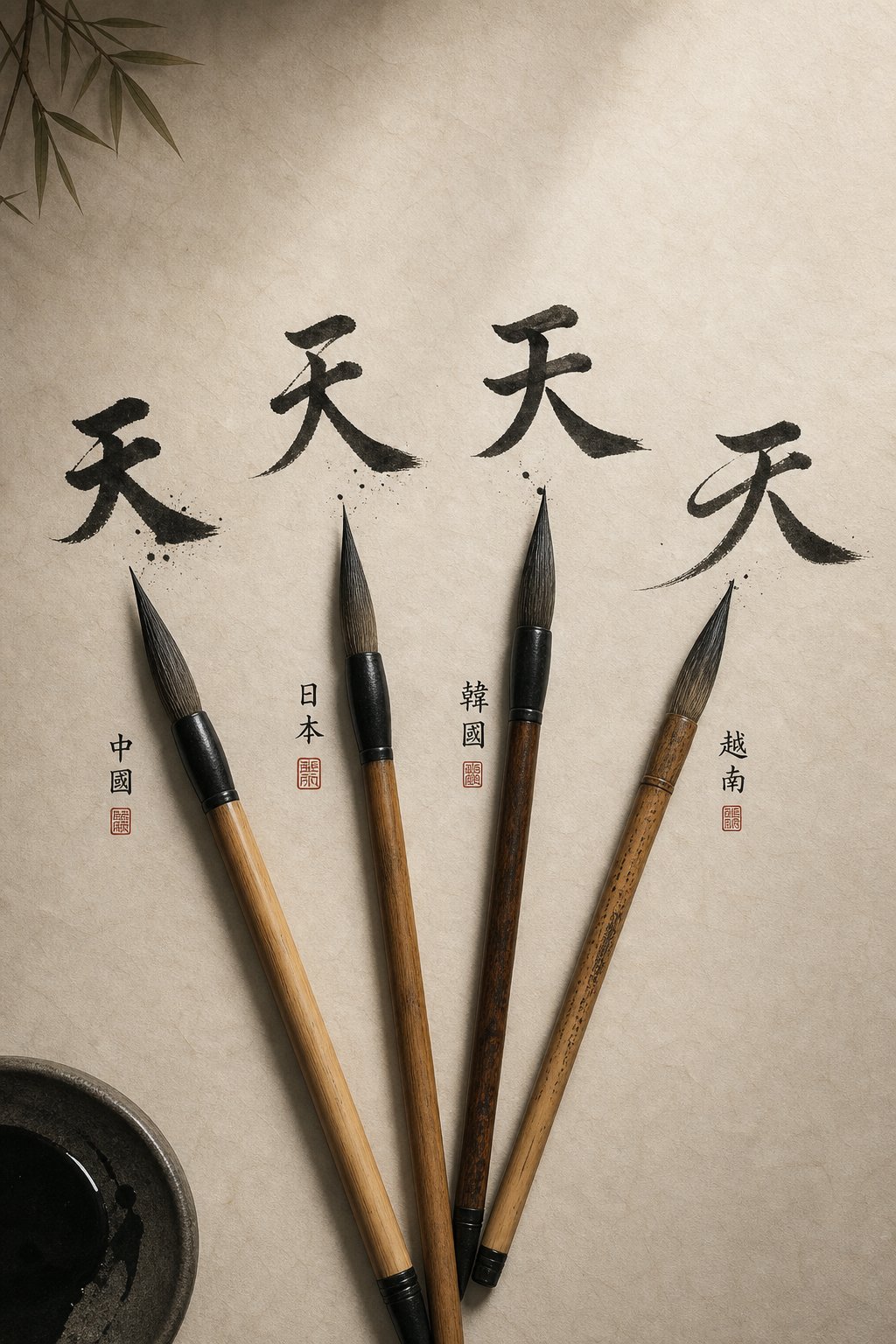
How 天 Travels Across East Asian Languages
Chinese characters did not stay in China. Over centuries of cultural exchange, trade, and scholarship, 天 migrated into the writing systems of Japan, Korea, and Vietnam, carrying its core meanings of sky, heaven, and the divine into each new language. The character looks identical on the page regardless of which language you are reading. What changes is the sound attached to it and the subtle cultural shading each tradition brings.
If you are studying more than one East Asian language, or simply curious about how a single written symbol can be pronounced four completely different ways, this cross-linguistic view reveals just how far one four-stroke character can travel.
天 in Japanese Kanji
In Japanese, 天 is classified as a first-grade kanji, meaning children learn it in their very first year of school. The kanji for sky carries two types of readings depending on context:
- On'yomi (Chinese-derived reading): テン (ten). This is the reading used in most compound words borrowed from or modeled on Chinese vocabulary.
- Kun'yomi (native Japanese reading): あま (ama) or あめ (ame). These older readings appear in native Japanese words and poetic expressions.
The sky kanji shows up in everyday Japanese vocabulary that will look familiar if you already know the Chinese compounds. 天気 (tenki) means weather, just as 天气 (tianqi) does in Mandarin. 天才 (tensai) means genius. 天国 (tengoku) means heaven or paradise. The kanji for heaven also appears in culturally significant terms like 天皇 (Tenno), the title of the Emperor of Japan, which literally translates to "heavenly sovereign."
The native reading "ama" surfaces in more poetic and mythological contexts. 天の川 (Amanogawa) is the Japanese name for the Milky Way, literally "the river of heaven," and it plays a central role in the Tanabata star festival each July. 天照大神 (Amaterasu Omikami), the sun goddess and mythological ancestor of the imperial line, carries the "ama" reading in her name. The japanese symbol for heaven thus connects modern daily vocabulary to ancient Shinto mythology through these two parallel reading systems.
One cultural curiosity: the word 天ぷら (tempura) uses the kanji 天 as phonetic shorthand. The dish name likely came from Portuguese traders in the 16th century, and 天 was applied as ateji (phonetic kanji) rather than for its meaning. So 天丼 (tendon, tempura rice bowl) has nothing to do with the sky. Context, as always, does the sorting.
天 in Korean and Vietnamese
Korean uses 天 as part of its Hanja system, the set of Chinese characters that supplement the native Hangul alphabet. The pronunciation is 천 (cheon), and the character's meaning aligns closely with its Chinese original: sky, heaven, and the divine.
Common Korean words built from this character include 천국 (cheonguk, heaven/paradise), 천재 (cheonjae, genius), and 천연 (cheonyeon, natural). The korean word for heaven, 천국, mirrors the structure of Chinese 天国 (tianguo) almost exactly, with the same characters producing the same meaning through a different sound system. In modern Korean, Hanja characters like 天 appear less frequently in everyday writing than they once did, but they remain essential for understanding formal vocabulary, legal terms, and historical texts.
In Vietnamese, 天 belongs to the Chu Nom and Han Viet traditions. The Sino-Vietnamese reading is "thien" (thiên), and it appears in words like thien duong (thiên đường, paradise), thien su (thiên sứ, angel, literally "heaven's messenger"), and thanh thien (thanh thiên, blue sky/clear sky). Vietnamese largely transitioned to a Latin-based alphabet (Quoc ngu) in the 20th century, so the character itself is no longer used in daily writing. But the vocabulary it generated remains deeply embedded in the spoken language. When a Vietnamese speaker says "thiên đường," they are using a word whose written ancestor is the same 天 that a Chinese, Japanese, or Korean reader would recognize instantly on sight.
What makes this cross-linguistic pattern remarkable is the consistency of meaning. Across four languages, four writing traditions, and four completely different sound systems, 天 retains its core semantic territory: sky, heaven, the divine, and the natural. The pronunciation shifted dramatically as each language adapted the character to its own phonology, but the conceptual payload arrived intact.
| Language | Pronunciation | Sample Words | English Meaning |
|---|---|---|---|
| Chinese (Mandarin) | tian (first tone) | 天空 (tiankong), 天气 (tianqi), 天堂 (tiantang) | Sky, weather, paradise |
| Japanese | ten (on'yomi) / ama, ame (kun'yomi) | 天気 (tenki), 天国 (tengoku), 天の川 (Amanogawa) | Weather, heaven, Milky Way |
| Korean | cheon (천) | 천국 (cheonguk), 천재 (cheonjae), 천연 (cheonyeon) | Heaven, genius, natural |
| Vietnamese | thien (thiên) | thiên đường, thiên sứ, thanh thiên | Paradise, angel, blue sky |
For learners focused on one language, this table offers useful cognate awareness. If you already know 天气 in Mandarin, recognizing 天気 in a Japanese text becomes effortless. If you study Korean and encounter 천재, you can connect it immediately to the Chinese 天才 you already learned. The character functions as a bridge across languages, not just across meanings within a single one.
This shared heritage also means that the philosophical weight of 天, the Mandate of Heaven, the cosmic moral order, the connection between sky and divine authority, traveled with the character into each culture. Japanese, Korean, and Vietnamese intellectual traditions all engaged with these concepts through the same written symbol, adapting them to local political and spiritual contexts while preserving the fundamental link between what is above and what is beyond.
With 天 established as a pan-East Asian concept, the practical question for Mandarin learners becomes more specific: when you want to say "sky" or "heaven" in Chinese, how do you choose between 天 and the other vocabulary options available? The answer depends on register, context, and exactly which shade of meaning you need.
天 vs Related Sky and Heaven Vocabulary
Chinese gives you multiple ways to say "sky" and multiple ways to say "heaven." They are not interchangeable. Picking the wrong one will not cause a misunderstanding in most cases, but it will sound off, like saying "the firmament" when you mean "it's cloudy out." Knowing which term fits which situation is what separates a textbook speaker from someone who sounds natural.
天 vs 天空 vs 空 for Describing the Sky
When you want to talk about the physical sky overhead, you have three options. Each carries a different register and level of specificity:
天 (tian) alone can mean sky, but in modern spoken Mandarin it sounds literary or abstract when used this way. You will find it in poetry, classical texts, and fixed expressions like 天高云淡 (the sky is high and the clouds are light). In everyday conversation, saying just 天 to mean "sky" works mainly in short observations: 天黑了 (it's gotten dark) or 天亮了 (it's light out). Here, 天 refers to the sky's condition rather than the sky as a visible object.
天空 (tiankong) is the standard modern chinese word for heaven in its physical sense, or more precisely, the visible sky as a space you can describe. When you want to say "the sky is blue," "birds are flying across the sky," or "look at the sky," 天空 is the natural choice. It is neutral in register, works in both spoken and written contexts, and carries no philosophical baggage. Think of it as the default word for the physical sky in contemporary Mandarin.
The 空 meaning on its own is "empty" or "void" (kong). In modern Chinese, 空 by itself does not typically mean sky. However, in literary Chinese, Buddhist texts, and certain classical compounds, 空 can refer to the sky or the heavens. The Buddhist concept of 空 (sunyata, emptiness/void) sometimes overlaps with celestial imagery, and in older poetry you may encounter 空 used where modern writers would choose 天空. For practical purposes as a learner, use 天空 for the physical sky and reserve 空 for its primary modern meaning of "empty" or "free/available."
A quick way to remember: if you can point at it and take a photo of it, say 天空. If you are describing a condition or mood of the atmosphere, 天 alone works. If you are reading Tang dynasty poetry or a Buddhist sutra, 空 might mean sky. In all other situations, it means empty.
Choosing Between 天 and 天堂 for Heaven
The heaven in chinese symbol traditions is not a single concept with a single word. Different terms point to different versions of "heaven," and the distinctions matter. Imagine telling a Confucian scholar that 天 and 天堂 mean the same thing. They would politely disagree.
天 (tian) as heaven refers to the philosophical and cosmological concept: the moral cosmic order, the source of the Mandate of Heaven, the impersonal force that governs fate and legitimacy. This is the celestial chinese concept that shaped imperial politics and Confucian ethics. It is not a place you go after death. It is a principle that operates while you are alive.
天堂 (tiantang) is paradise, a place of reward and beauty. In religious contexts, it refers to the afterlife destination for the virtuous, functioning similarly to the Western concept of heaven as paradise. In casual speech, it also works as a metaphor for any wonderful place: 购物者的天堂 (a shopper's paradise). The character 堂 means "hall" or "grand room," so 天堂 literally translates as "heaven's hall."
Beyond these two, you will encounter other heaven-related terms that fill specific niches:
- 上天 (shangtian) - "the heavens above" or "God/Heaven" as an active agent. Used when attributing events to a higher power. Register: semi-formal, slightly literary. Example: 上天是公平的 (Heaven is fair). This is the term closest to a personified deity in non-religious Chinese speech.
- 老天 (laotian) / 老天爷 (laotianye) - colloquial for "heaven" or "God," used in exclamations and complaints. Register: informal, spoken. Example: 老天爷!怎么又下雨了?(Good heavens! It's raining again?) Think of it as the Chinese equivalent of "Oh God" or "for heaven's sake."
- 天堂 (tiantang) - paradise, the afterlife, or any idyllic place. Register: neutral, works in both spoken and written contexts. Example: 这个海滩是冲浪者的天堂 (This beach is a surfer's paradise).
- 天国 (tianguo) - the Kingdom of Heaven. Register: formal, often used in Christian religious contexts or historical writing. Less common in daily speech than 天堂.
- 苍天 (cangtian) - the blue heavens, the vast sky above. Register: literary, poetic, or dramatic. Used in classical-style exclamations or historical fiction.
The symbol heaven concept in Chinese, then, is not one word but a family of related terms, each calibrated to a specific tone and context. A philosopher discussing cosmic order uses 天. A grandmother exclaiming about bad luck says 老天. A travel blogger describing Bali writes 天堂. A pastor preaching about the afterlife might choose 天国. The underlying idea connects them all, but the social register and precise meaning differ significantly.
For learners, the practical takeaway is simple. Use 天空 when you mean the physical sky. Use 天堂 when you mean paradise or a wonderful place. Use 天 when you are speaking philosophically or when it appears inside a fixed compound. And when something surprises you so much that you need to invoke a higher power, 老天 will do the job perfectly in casual conversation. Matching the right word to the right moment is what gives your Chinese texture and precision, the difference between knowing vocabulary and actually communicating.
Frequently Asked Questions About the Chinese Character 天
1. What does the Chinese character 天 (tian) mean?
The character 天 (tian) carries three interconnected meanings in Chinese: the physical sky or atmosphere, heaven as a philosophical and cosmic moral force, and day as a unit of time. Which meaning applies depends entirely on context. In weather expressions like 天气 (tianqi), it refers to the sky. In philosophical terms like 天命 (tianming, Mandate of Heaven), it represents divine cosmic authority. In time words like 今天 (jintian, today) and 明天 (mingtian, tomorrow), it simply means day.
2. How do you write the Chinese character for sky and heaven?
Writing 天 requires only four strokes in a specific order: first, a short horizontal stroke across the top (representing 一, meaning one); second, a longer horizontal stroke through the middle; third, a left-falling diagonal stroke (pie) from the center downward to the left; and fourth, a right-falling stroke (na) from the center downward to the right. The character combines 一 (one) on top with 大 (big/person) below, visually depicting a person standing beneath the vast expanse above.
3. How is 天 pronounced in Mandarin Chinese?
天 is pronounced 'tian' with the first tone in Mandarin, meaning your voice should stay at a high, flat, sustained pitch throughout the entire syllable without rising or falling. A common mistake is letting the pitch drop at the end, which shifts it toward the fourth tone. The first tone remains stable in compound words like 天气 (tianqi) and 天才 (tiancai), making it relatively predictable once you master the level pitch.
4. What is the difference between 天, 天空, and 天堂 in Chinese?
These three terms serve different purposes. 天 alone is literary or abstract when referring to the sky, and philosophical when meaning heaven. 天空 (tiankong) is the standard modern word for the visible, physical sky and works in everyday conversation. 天堂 (tiantang) specifically means paradise or a heavenly afterlife destination, similar to the Western religious concept of heaven. Use 天空 for describing weather or scenery, 天 in fixed expressions or philosophy, and 天堂 for paradise or metaphorically wonderful places.
5. Is the character 天 used in Japanese and Korean too?
Yes, 天 traveled across East Asia and retains similar meanings in multiple languages. In Japanese, it is read as 'ten' (Chinese-derived reading) or 'ama/ame' (native reading) and appears in words like 天気 (tenki, weather) and 天国 (tengoku, heaven). In Korean, it is pronounced 'cheon' (천) and forms words like 천국 (cheonguk, heaven) and 천재 (cheonjae, genius). In Vietnamese, the Sino-Vietnamese reading is 'thien' in words like thien duong (paradise). The character looks identical across all four languages.