The Chinese Character for Spring and Its Layered Meanings
When you search for the spring character in Chinese language, you'll likely encounter a single character that carries far more weight than its nine strokes suggest. That character is 春.
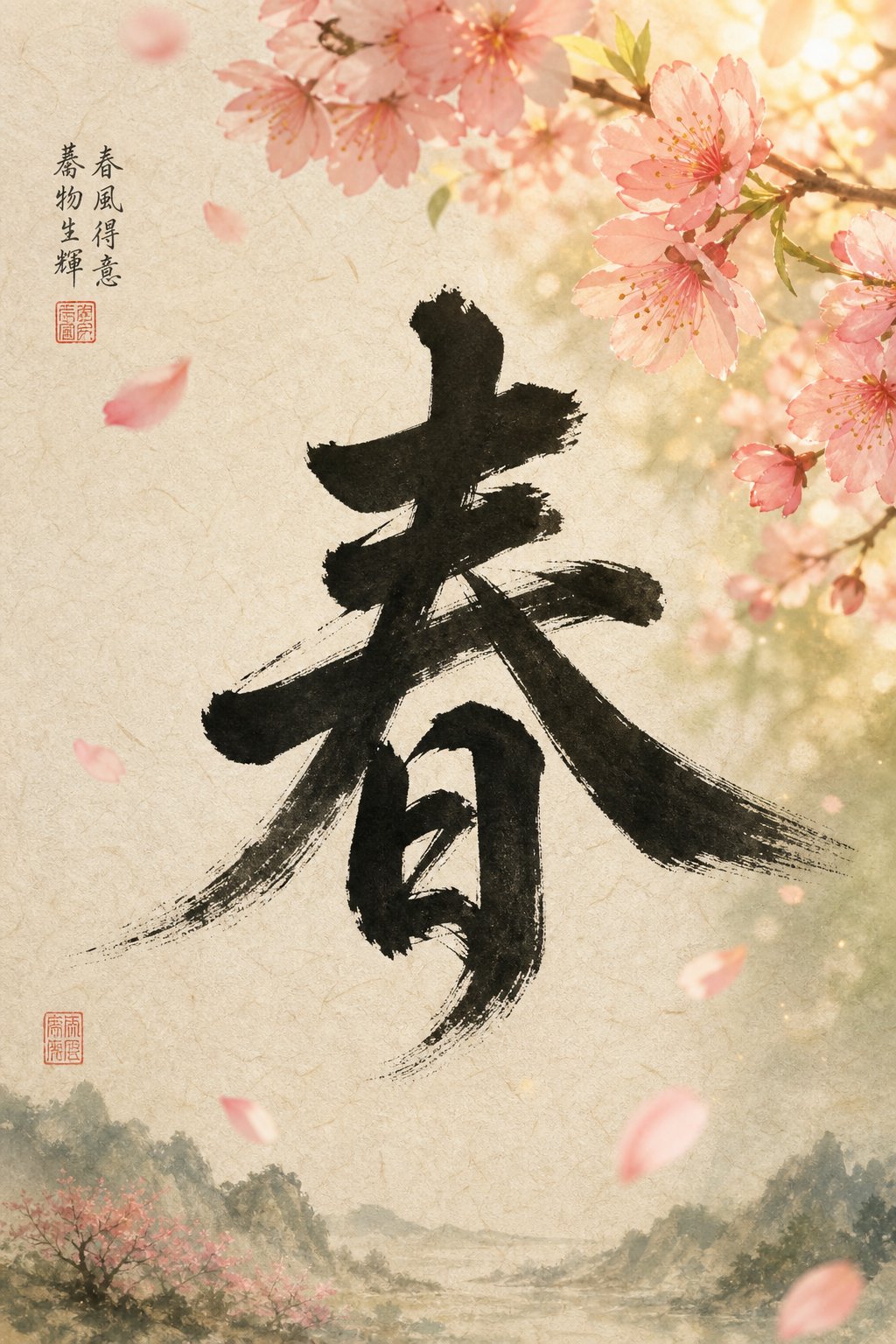
春 (chūn) is the Chinese character for the spring season. Pronounced in the first tone (high and flat), it represents not only the season between winter and summer but also youth, vitality, new beginnings, and life force in Chinese culture.
What 春 Means at a Glance
So what does chun mean in Chinese? At its most basic level, 春 refers to springtime, the season when warmth returns and plants push through the soil. The pronunciation is chūn, spoken in Mandarin's first tone, meaning your voice stays high and level throughout the syllable. If you're wondering how to pronounce 春 in Mandarin, think of a steady, even pitch, like holding a musical note.
The character appears in everyday vocabulary like 春天 (chūntiān), meaning "springtime," and 春节 (chūnjié), the Spring Festival or Chinese New Year. But these common uses barely scratch the surface.
A quick note for searchers: if you're looking for the Chinese word for a water spring (like a natural source of water), that's a different character entirely. 泉 (quán) means "spring" in the water-source sense. The two are unrelated in both form and pronunciation.
Why This Character Carries Deep Significance
The Chinese character for spring season meaning goes well beyond a calendar reference. Over three thousand years of use, 春 has accumulated layers of significance that most learners never discover. Think of it as a character with four distinct meaning layers:
- Literal: the spring season, warmth returning, plants growing
- Extended: youth, vitality, love, and desire in literary contexts
- Philosophical: rising yang energy, the Wood element, cyclical renewal
- Cultural: Spring Festival traditions, poetry, couplets, and decorative art
Each layer builds on the one before it, and together they make 春 one of the most culturally loaded characters in the entire Chinese writing system. Understanding these layers transforms a simple vocabulary word into a gateway for reading classical poetry, grasping philosophical concepts, and participating in living cultural traditions.
The story of how those layers developed begins with the character's ancient origins, where the earliest scribes carved images of sprouting plants and sunlight into oracle bones over three millennia ago.
The Historical Evolution of 春 Through Ancient Scripts
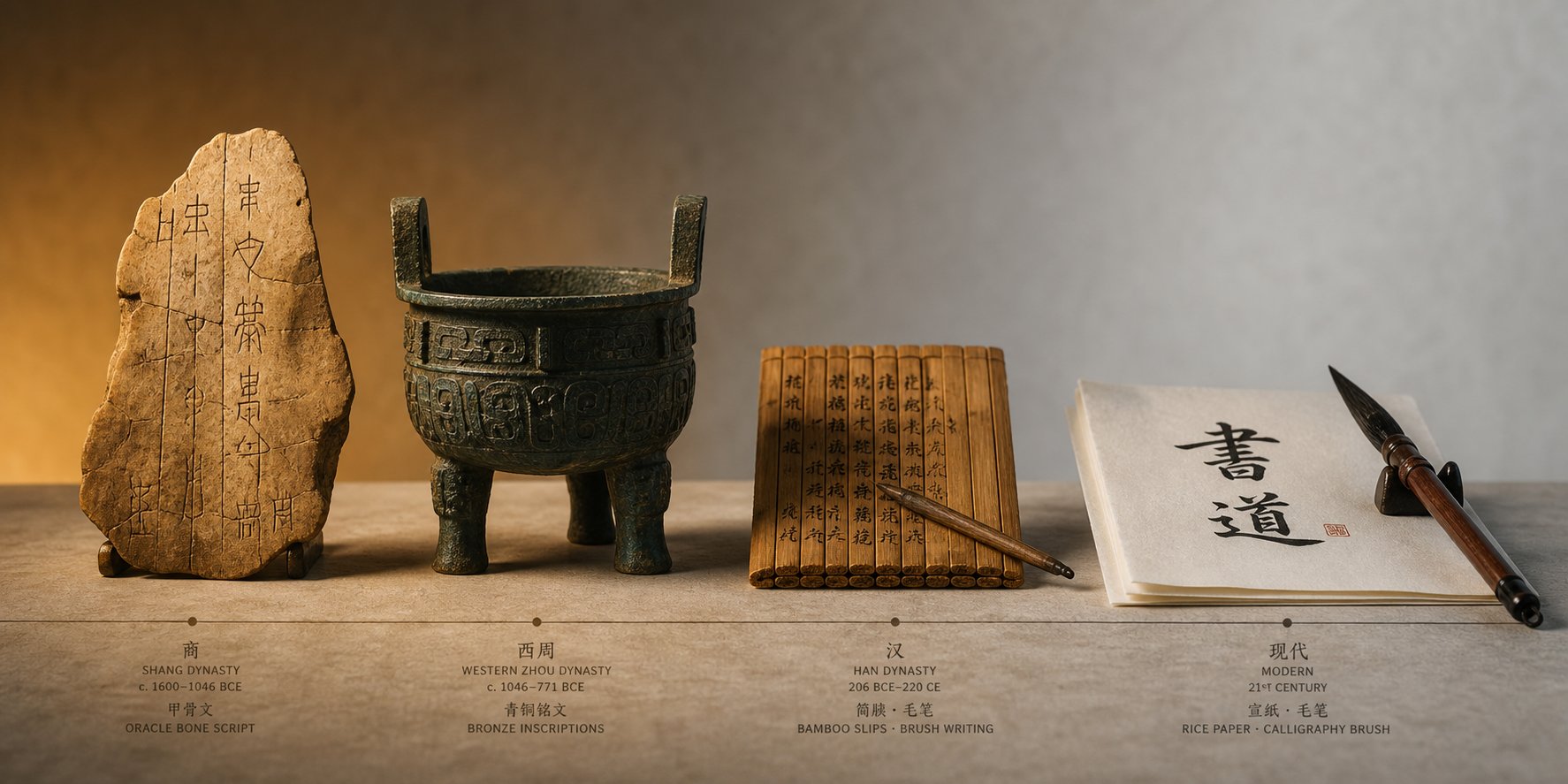
Those earliest scribes weren't drawing an abstract symbol. They were sketching a scene: plants pushing upward under the warmth of the sun. The history of spring character in Chinese writing stretches back over three thousand years, and each era left its mark on how 春 looks and feels on the page.
From Oracle Bone to Modern Script
The etymology of Chinese character 春 begins during the late Shang Dynasty, when diviners carved inscriptions into turtle shells and animal bones. The oracle bone script spring character depicted recognizable pictographic elements: sprouting vegetation alongside the sun. Because carving into bone required simplification, rounded shapes became angular and thick strokes became thin lines, but the core imagery remained clear.
As a phono-semantic compound, 春 combined the semantic element "艸" (grass, representing vegetation) with the phonetic element "屯" (which itself meant "spring" in ancient Chinese). Over centuries, these two components merged into the upper portion of the character we recognize today, while 日 (sun) anchored the bottom.
What Each Historical Form Depicts
Imagine watching a time-lapse of 春 evolving over three millennia. In the Shang period, you'd see something almost like a small drawing: plant shoots flanking a sun symbol. By the Western Zhou, linearization and streamlining had already begun reshaping the character, as thick pictographic strokes gave way to finer, more uniform lines. The Qin unification in 221 BCE brought standardization through small seal script, locking in a formal version. Then clerical script, which evolved from everyday brush writing on bamboo strips, introduced the angular strokes and horizontal emphasis that make the modern form recognizable.
| Script Era | Approximate Date | Visual Description | Key Changes |
|---|---|---|---|
| Oracle Bone Script (甲骨文) | ca. 1350-1046 BCE | Pictographic plant shoots with sun element; angular due to carving | Earliest recorded form; rounded shapes made squarish for bone carving |
| Bronze Script (金文) | ca. 1046-256 BCE | More rounded, pictographic; vegetation and sun elements clearly distinct | Formal script cast on ritual vessels; more detailed and decorative |
| Small Seal Script (小篆) | ca. 221-207 BCE | Standardized, symmetrical; "艸" and "屯" merging above 日 | Qin unification imposed a single standard form across the empire |
| Clerical Script (隶书) | ca. 206 BCE-220 CE | Flattened structure; horizontal strokes emphasized; recognizably modern | Evolved from brush writing on bamboo; curved strokes became angular |
| Regular Script (楷书) | ca. 220 CE-present | The 春 we write today: balanced, nine strokes, 日 clearly at the bottom | Matured during the Tang Dynasty; no major structural changes since |
How 3000 Years Shaped the Character
What's remarkable about how 春 evolved over time is that the core meaning never drifted. Every version, from the earliest oracle bone carvings to the regular script you'd type on a phone today, tells the same visual story: life emerging under sunlight. The pictographic roots survived even as the writing system moved from carved bone to cast bronze to brush on bamboo to printed page.
This persistence matters for learners. When you look at the modern character and see its components, you're not just memorizing arbitrary strokes. You're reading a compressed image that scribes first sketched over thirty centuries ago. Those components, the grass, the phonetic element, and the sun, still sit inside the character waiting to be decoded.
How to Write 春: Stroke Order, Radicals, and Components
Decoding those components is simpler than you might expect. The modern character 春 is built from three visual building blocks, each contributing to the character's meaning like ingredients in a recipe. Once you see how they fit together, the spring Chinese character stroke count of nine strokes stops feeling arbitrary and starts telling a story.
Breaking Down the Components of 春
Look at 春 and you'll notice it splits naturally into two sections: an upper portion and a lower portion.
The upper section contains what evolved from the ancient "grass" and "sprout" elements. In the modern form, you'll see three horizontal strokes at the very top (resembling 三), followed by a downward stroke structure that looks like 人 (person). Together, these strokes represent the original pictographic image of vegetation pushing upward, plants growing and spreading outward. Some teachers describe this upper portion as the phonetic component 屯 (tún, meaning "sprout" or "gather") compressed and simplified over centuries.
The lower section is 日 (rì), the sun radical. It sits at the base of the character like a foundation, representing the warmth and sunlight that drives spring growth. As eChineseLearning explains, sunshine is the essential factor for sprouts growing into plants, which is why 日 serves as the radical of 春.
Put them together and you get a visual narrative: sprouting plants rising above the sun. The character literally illustrates its own meaning.
- Top strokes (三-like shape): represent sprouting grass or emerging vegetation
- Middle strokes (人-like shape): represent growth spreading outward, derived from the phonetic element 屯
- Bottom component (日): the sun, providing warmth for spring growth; also serves as the character's radical
Stroke Order Guide for Writing 春
How many strokes in 春 character? Exactly nine. Getting the order right matters because it affects the character's balance and flow, especially in handwriting. Here's how to write 春 stroke by stroke:
- First horizontal stroke (short, at the top)
- Second horizontal stroke (slightly longer, below the first)
- Third horizontal stroke (longest of the three)
- Left-falling stroke (撇, piě, sweeping down-left)
- Pressing stroke (捺, nà, sweeping down-right, forming the 人-like shape)
- Vertical stroke of 日 (left side)
- Horizontal-turning stroke of 日 (top and right side, written as one connected stroke)
- Inner horizontal stroke of 日 (the short line inside the box)
- Final closing horizontal stroke of 日 (bottom of the box)
Sounds complex? A simple rule helps: always work top to bottom, left to right. The three horizontal strokes come first, then the two diagonal strokes that form the "person" shape, and finally the 日 box at the bottom.
Common mistakes learners make:
- Writing 日 first: Many beginners instinctively start with the sun radical because it looks like a self-contained unit. Resist this urge. Chinese stroke order follows a top-to-bottom rule, so the upper portion always comes first.
- Miscounting strokes: Some learners count 10 or 11 strokes by splitting the 日 component incorrectly. Remember that the top-right corner of 日 is one continuous stroke (横折, héng zhé), not two separate strokes.
- Confusing 日 with 目: The sun radical 日 has one internal horizontal line. The eye radical 目 has two. In 春, you want 日 (four strokes total for the box), not 目.
- Tone errors: This isn't a writing mistake, but it's worth reinforcing. 春 is chūn with the first tone, a high, flat pitch. Dropping into second or fourth tone changes the meaning entirely.
Related Characters That Share Components with 春
One of the most efficient ways to expand your vocabulary is to recognize shared components across characters. Understanding 春 gives you a head start on decoding its "relatives," characters that share either the 屯 phonetic element or the 日 radical.
| Character | Pinyin | Meaning | Shared Component | Connection to 春 |
|---|---|---|---|---|
| 屯 | tún / zhūn | gather, village; sprout | 屯 (phonetic) | Original phonetic element inside 春; ancient meaning "to sprout" |
| 蠢 | chǔn | stupid, clumsy; to wriggle | 春 (full character) | Contains 春 on top with 虫虫 below; originally meant "insects stirring in spring" |
| 椿 | chūn | Chinese toon tree | 春 (phonetic) | Tree (木) + 春 as phonetic; a tree associated with longevity |
| 晴 | qíng | clear weather, sunny | 日 (radical) | Shares the sun radical; meaning relates to sunlight |
| 时 | shí | time, season, hour | 日 (radical) | Sun radical indicates connection to time and seasons |
| 顿 | dùn | pause, meal (measure word) | 屯 (phonetic) | Shares the 屯 phonetic element for sound |
| 纯 | chún | pure, simple | 屯 (phonetic) | Similar pronunciation (chún vs. chūn); 屯 provides the sound |
Notice a pattern? Characters containing 屯 often carry a "chun/tun/dun" sound, while characters containing 日 often relate to time, light, or weather. This is how the Chinese writing system works at scale: shared components create networks of meaning and pronunciation that help you decode unfamiliar characters on sight.
One character worth special attention is 蠢 (chǔn). It literally places 春 above two "insect" radicals (虫虫), and its original meaning was "insects beginning to move in spring." Over time it shifted to mean "stupid" or "clumsy," but the etymology reveals how deeply 春 connects to the idea of stirring, awakening life.
With the structure and stroke order clear, the character's visual logic becomes a foundation for understanding something even richer: the metaphorical meanings that grew from this image of sun-warmed sprouts over thousands of years of literary use.
Beyond the Season: The Figurative Uses of Spring Character in Chinese
A character that pictures sprouts rising under sunlight doesn't stay confined to the calendar for long. Over centuries of literary and everyday use, 春 accumulated metaphorical meanings that most learners never encounter in textbooks. These figurative extensions aren't random. Each one traces back to something the spring season naturally evokes: freshness, warmth, desire, and the unstoppable push of new life.
This pattern, deriving abstract human concepts from observations of nature, runs deep in the Chinese linguistic tradition. Characters for emotions, states of being, and philosophical ideas frequently grow from concrete natural imagery. With 春, that process produced an unusually rich spectrum of meaning.
春 as Youth and Vitality
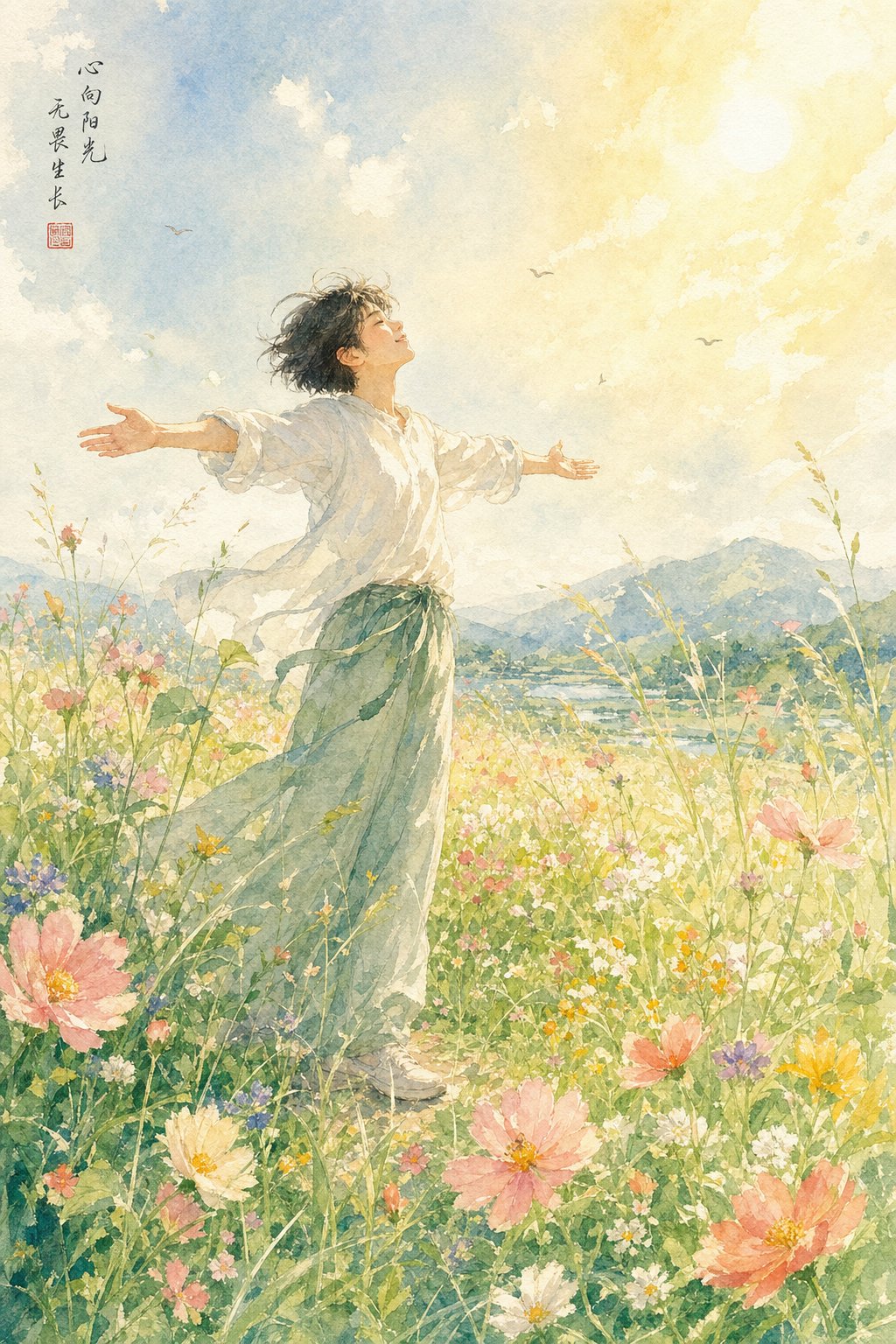
The most common extended meaning of 春 is youth. When you hear someone say 青春 (qīngchūn), they're not talking about the weather. They're talking about that vibrant, irreplaceable period of being young.
The logic is intuitive. Spring is the youngest part of the year, the season when everything is fresh, green, and full of potential energy. So 青春 literally translates as "green spring," and it means youth or the prime of life. You'll encounter it constantly in Chinese songs, films, and everyday conversation.
The connection runs deeper than a simple metaphor. In Chinese thought, spring represents the beginning of a cycle, the moment when dormant energy bursts into visible life. Youth carries the same quality: raw potential, rapid growth, and a sense that everything lies ahead. That parallel made 春 a natural vehicle for expressing vitality and youthful energy across centuries of use.
Related phrases built on this association include:
- 青春期 (qīngchūnqī): adolescence, literally "youth-spring period." Used in both casual and medical contexts to describe the teenage years.
- 青春活力 (qīngchūn huólì): youthful vitality. Describes someone brimming with energy and enthusiasm.
- 回春 (huíchūn): "returning spring," meaning rejuvenation or recovery. Often used in traditional medicine to describe a treatment that restores health, as if bringing someone back to their spring.
Literary and Romantic Connotations of 春
Here's where the symbolism gets more intimate. In classical Chinese literature, 春 frequently carries connotations of love, desire, and romantic longing. This isn't a modern slang development. It's a literary tradition stretching back well over a thousand years.
Why love? Think about what spring does to the natural world. Flowers open. Birds call to mates. The entire landscape seems to pulse with reproductive energy. Chinese poets and writers noticed this connection early, and 春 became a subtle, elegant way to reference romantic feelings without being blunt.
The compound 春心 (chūnxīn), literally "spring heart," means the stirring of romantic desire. When someone's 春心 is touched, they're falling in love. The phrase 春心萌动 (chūnxīn méngdòng) describes that first flutter of a crush, the moment desire begins to sprout, using the same growth imagery embedded in the character itself.
Other phrases in this vein include:
- 春情 (chūnqíng): romantic feelings, amorous sentiments. Used in poetry and literary prose to describe the emotional state of someone in love.
- 春梦 (chūnmèng): literally "spring dream." This carries a double meaning: it can refer to romantic or erotic dreams, but also to any fleeting, beautiful illusion that doesn't last, much like spring itself passes quickly.
- 怀春 (huáichūn): "harboring spring," meaning to yearn for love. Traditionally used to describe a young woman experiencing romantic longing for the first time.
- 春宵 (chūnxiāo): "spring evening." In poetry, this often refers to a wedding night or an intimate evening between lovers. The famous line 春宵一刻值千金 ("one moment of a spring evening is worth a thousand gold") captures how precious such time feels.
These associations aren't crude. In Chinese literary tradition, using 春 to reference love and desire is considered refined, even elegant. The character acts as a kind of poetic filter, transforming direct emotion into something layered with natural beauty.
How Literal Meaning Gave Rise to Figurative Uses
You'll notice a pattern across all these extended meanings. Each one maps a quality of the physical season onto a human experience:
- Newness and beginnings: Spring is the start of the agricultural year. So 春 extends to mean any fresh start, new opportunity, or hopeful beginning. The phrase 春天来了 ("spring has come") is often used metaphorically to mean a difficult period is ending.
- Warmth and kindness: Spring brings gentle warmth after winter's cold. So 春 extends to describe a warm, generous personality. The idiom 春风化雨 (chūnfēng huàyǔ, "spring wind transforms into rain") describes education or guidance delivered with such gentleness that it nurtures growth without force.
- Life force and energy: Spring is when dormant life reawakens. So 春 extends to represent vitality, vigor, and the life force itself. 妙手回春 (miàoshǒu huíchūn, "skilled hands bring back spring") praises a doctor whose treatment restores a patient to health.
- Brevity and preciousness: Spring is the shortest-feeling season, gone before you fully appreciate it. So 春 extends to represent things that are beautiful but fleeting. 春梦 captures this perfectly: a lovely dream that vanishes upon waking.
This isn't unique to 春. Chinese characters rooted in natural phenomena regularly develop figurative meanings through the same process. 秋 (autumn) carries associations with melancholy and maturity. 冬 (winter) connects to hardship and endurance. But 春 arguably has the widest figurative range of any seasonal character, precisely because the qualities of spring, growth, warmth, desire, freshness, map so naturally onto so many dimensions of human experience.
What makes this relevant for learners? When you encounter 春 in a compound word or a line of poetry, the literal translation "spring" often misses the point entirely. Knowing these figurative layers lets you read between the lines, whether you're parsing a Tang Dynasty poem, understanding a modern song lyric, or catching the subtle meaning behind a phrase like 春风满面 (a face full of spring breeze, meaning someone beaming with satisfaction).
These metaphorical meanings don't exist in isolation. They feed directly into the vocabulary Chinese speakers use every day, forming compound words and set phrases that blend the literal and figurative in ways that reward closer study.
Common 春 Compound Words List: Spring Related Chinese Vocabulary
Those figurative layers come alive most clearly in compound words. Chinese builds meaning by combining characters, and 春 appears in dozens of everyday compounds that range from the purely literal ("spring rain") to the deeply metaphorical ("spring dream"). Knowing which ones to learn first, and understanding the logic behind each pairing, gives you a practical vocabulary toolkit and a window into how Chinese speakers think about this character.
The table below organizes the most common Chinese words with 春 character by frequency of use. Start at the top for the phrases you'll encounter most often in conversation, media, and reading. As you move down, the compounds become more literary or specialized, but each one reinforces the meaning layers explored earlier.
Essential 春 Vocabulary for Everyday Use
These are the compounds you'll hear in daily Mandarin. If you're building a study list, prioritize these first:
- 春天 (chūntiān): The default word for "springtime" or "spring season." You'll use this in weather conversations, travel planning, and any discussion about seasons. It's the first spring-related word most textbooks teach.
- 春节 (chūnjié): Spring Festival, China's most important holiday. This term appears in news, invitations, travel advisories, and everyday conversation for weeks surrounding the lunar new year.
- 青春 (qīngchūn): Youth or the prime of life. Extremely common in songs, movies, and casual speech. When someone says 青春一去不复返, they mean "youth, once gone, never returns."
- 春卷 (chūnjuǎn): Spring roll. Yes, the food. You'll see this on menus across China and in Chinese restaurants worldwide. The name connects to the tradition of eating spring rolls during the Spring Festival.
Compound Words Table with Pinyin and Context
| Compound | Pinyin | Literal Breakdown | English Meaning | Usage Context |
|---|---|---|---|---|
| 春天 | chūntiān | spring + day/sky | springtime, spring season | Everyday conversation; weather, travel, and seasonal topics |
| 春节 | chūnjié | spring + festival | Spring Festival (Chinese New Year) | Holidays, greetings, cultural discussions; the most widely used festival term |
| 青春 | qīngchūn | green/young + spring | youth, youthful years | Songs, films, essays, casual speech about being young or nostalgic |
| 春风 | chūnfēng | spring + wind/breeze | spring breeze; gentle kindness | Poetry, idioms, and figurative speech describing warmth or satisfaction |
| 春卷 | chūnjuǎn | spring + roll | spring roll (food) | Menus, food discussions, cooking; associated with Spring Festival eating traditions |
| 春雨 | chūnyǔ | spring + rain | spring rain | Weather, poetry, agriculture; symbolizes gentle nourishment |
| 春联 | chūnlián | spring + couplet | spring couplets (red banners with poetry) | Spring Festival decorations; calligraphy and cultural traditions |
| 春梦 | chūnmèng | spring + dream | fleeting dream; romantic dream | Literary and poetic contexts; describes something beautiful but impermanent |
| 春光 | chūnguāng | spring + light | spring scenery, spring sunshine | Descriptive writing, travel, appreciation of nature; also used figuratively for charm |
| 春季 | chūnjì | spring + season | spring season (formal) | Academic, scientific, and official contexts; more formal than 春天 |
| 春秋 | chūnqiū | spring + autumn | years/age; the Spring and Autumn Period (770-476 BCE) | Historical texts, literary writing; also means "a person's years" or a chronicle |
| 春色 | chūnsè | spring + color/scenery | spring scenery; romantic charm | Poetry and literary prose; can describe landscapes or, figuratively, alluring beauty |
| 春耕 | chūngēng | spring + plowing | spring plowing/planting | Agriculture, rural life, news about farming seasons |
| 春运 | chūnyùn | spring + transport | Spring Festival travel rush | News and travel; refers to the massive annual migration around Chinese New Year |
| 立春 | lìchūn | establish + spring | Start of Spring (solar term) | Traditional calendar; one of the 24 solar terms marking the beginning of spring |
A few patterns emerge from this list. Compounds where 春 pairs with a concrete noun (天, 雨, 风, 卷) tend to carry straightforward, literal meanings. Compounds where 春 pairs with more abstract characters (梦, 色, 秋) often carry figurative or literary weight. Recognizing this pattern helps you gauge a compound's register before you even look it up.
Take 春运 (chūnyùn) as an example. This term didn't exist in classical Chinese. It's a modern compound describing the annual travel chaos when hundreds of millions of people journey home for Spring Festival. The word blends the traditional (春, the festival season) with the modern (运, transportation), showing how the character continues generating new vocabulary to match contemporary life.
Or consider 春秋 (chūnqiū). Literally "spring and autumn," it refers to the passage of years, a person's age, or the historical Spring and Autumn Period. It also names the Confucian classic Spring and Autumn Annals. A single two-character compound that spans personal time, dynastic history, and philosophical literature, all built from two season characters.
The chuntian meaning in Chinese is the one most learners master first, and rightly so. But treating 春天 as the endpoint means missing compounds like 春联 and 春运 that connect directly to living cultural practices. The Spring Festival vocabulary alone, 春节, 春联, 春卷, 春运, forms a cluster that unlocks an entire holiday's worth of conversation.
These compounds don't just sit in dictionaries. They appear in philosophical frameworks, festival traditions, and classical poetry where 春 carries the full weight of its accumulated meanings, connecting seasonal observation to some of the deepest ideas in Chinese thought.
春 in Chinese Philosophy and Spring Festival Culture
In Chinese thought, seasons aren't just weather patterns. They're expressions of cosmic forces. And 春 sits at a pivotal position within two of China's most influential philosophical systems: yin-yang theory and the Five Elements (五行, wǔxíng). These frameworks give the spring character a weight that goes far beyond marking a date on the calendar.
春 in Chinese Philosophy and Seasonal Theory
Imagine the year as a cycle of energy. Winter represents maximum yin: cold, stillness, contraction, darkness. Spring is the moment yang energy begins its ascent. Not the peak of yang (that belongs to summer), but the turning point, the first surge of warmth, movement, and expansion after months of dormancy.
This is why 春 in Chinese philosophy connects to yin yang so directly. The character doesn't just name a season. It names a dynamic shift, the moment when passive, stored energy transforms into active, visible growth. In traditional Chinese medicine, spring corresponds to the liver, the organ responsible for the smooth flow of qi (vital energy) throughout the body. When spring arrives, qi is supposed to rise and spread outward, just like the sprouting plants depicted in the character itself.
The five elements spring wood connection in Chinese cosmology reinforces this idea. Each season aligns with one of the five elements:
- Spring: Wood (木, mù), representing growth, flexibility, and upward movement
- Summer: Fire (火, huǒ), representing peak energy and expansion
- Late Summer: Earth (土, tǔ), representing stability and transition
- Autumn: Metal (金, jīn), representing contraction and harvest
- Winter: Water (水, shuǐ), representing storage and stillness
Wood is the element of trees pushing upward, roots spreading outward, branches reaching for light. It's the element of beginnings and potential. In Daoist philosophy, this cyclical pattern reflects the Dao itself: the eternal return of life after dormancy, creation after rest, movement after stillness. Spring isn't just one season among four. It's the proof that the cycle continues, that renewal is built into the structure of reality.
These philosophical associations explain why 春 carries such emotional and spiritual resonance for Chinese speakers. When someone writes the character on red paper and hangs it on their door, they're invoking more than pleasant weather. They're calling on the cosmic principle of renewal itself.
The Role of 春 in Spring Festival Traditions
That act of writing 春 on red paper and displaying it isn't a metaphor. It's a living tradition practiced by hundreds of millions of people every lunar new year. The spring character appears in Chinese New Year decorations as both a word and a symbol, bridging the philosophical and the festive.
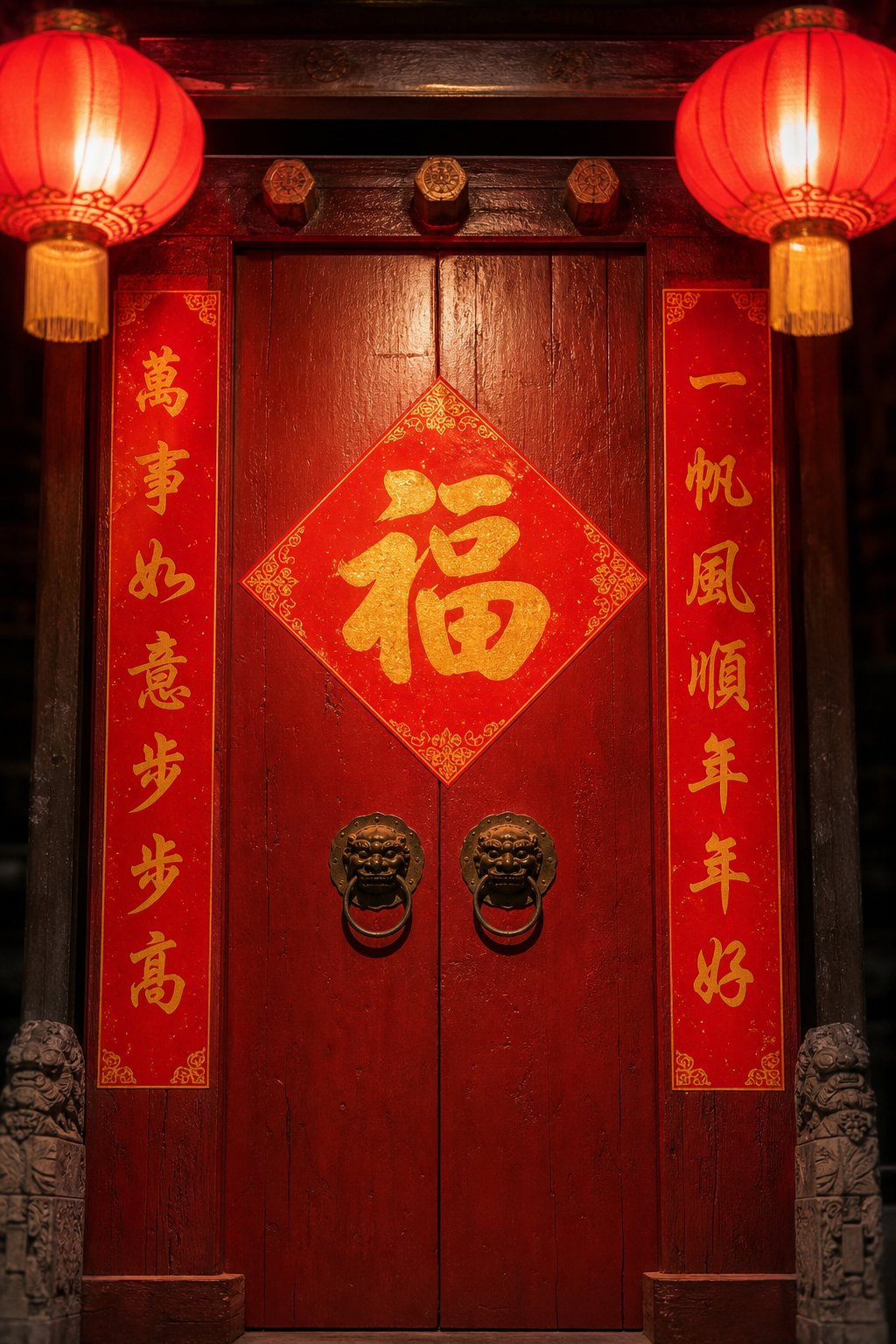
春节 (chūnjié), the Spring Festival, is China's most important annual celebration. The character 春 is everywhere during this period: on doorframes, walls, windows, and gift packaging. Sometimes it appears as part of 春联 (spring couplets), and sometimes it stands alone as a single decorative character, often printed or painted in gold on a red diamond-shaped paper and pasted onto doors.
Here are the key festival customs where 春 plays a central role:
- 春联 (chūnlián), spring couplets: Paired lines of poetry written on red paper and pasted on each side of the doorframe. A typical set includes two vertical lines of seven characters each, plus a four-character horizontal scroll (横批, héngpī) across the top. The couplets express wishes for prosperity, health, and good fortune in the coming year. Families either write their own or purchase printed versions.
- Single 春 character displays: The character itself, written large on red paper, is hung on doors and walls. Like the related character 福 (fortune), 春 is sometimes displayed upside down. The word for "upside down" (倒, dào) is a homophone of "to arrive" (到, dào), so an inverted 春 symbolizes "spring has arrived."
- 春卷 (chūnjuǎn), spring rolls: Eating spring rolls during the festival connects food to seasonal symbolism. The golden, cylindrical shape resembles gold bars, symbolizing wealth for the new year.
- 春运 (chūnyùn), the Spring Festival travel rush: The largest annual human migration on Earth, as hundreds of millions of workers travel home for family reunions. The term itself embeds 春 into modern infrastructure vocabulary.
- New Year greetings featuring 春: Phrases like 春风得意 (riding the spring breeze, meaning success and satisfaction) and wishes that reference spring warmth appear in cards, messages, and spoken blessings throughout the holiday period.
Spring Couplets and Decorative Uses of the Character
The tradition of 春联 deserves special attention because it represents one of the most direct intersections of calligraphy, poetry, and folk belief in Chinese culture. A spring couplet set consists of two vertical scrolls that match in length, rhythm, and meaning, accompanied by a horizontal banner. The red paper symbolizes good luck and is believed to ward off evil spirits, while the black or gold ink carries the blessings forward into the new year.
What makes 春联 remarkable is their blend of accessibility and artistry. The couplets are written in classical Chinese, a language rich in compressed meaning, yet their messages are universal: health, wealth, family harmony, career success. Some families still handwrite their couplets, treating the process as a communal activity that brings generations together around a shared cultural practice. Others purchase printed versions, but the intent remains the same: inviting good fortune and marking the threshold between old year and new.
The choice of red paper isn't arbitrary. Red is the color of joy, celebration, and protection in Chinese culture. Combined with the character 春 or the blessings written in couplet form, these decorations transform doorways into symbolic gateways between the hardships of the past year and the promise of renewal ahead.
This is where philosophy meets daily life. The same cosmic principle of cyclical renewal that Daoist thinkers described in abstract terms becomes something tangible: red paper, black ink, a character pasted on a door. Every household that displays 春 during the festival is, in a sense, participating in the same philosophical tradition that connected spring to rising yang energy and the Wood element thousands of years ago. The vocabulary may be festive rather than academic, but the underlying idea is identical: spring returns, life renews, and the cycle continues.
That philosophical and cultural depth also flows into another domain where 春 has left an indelible mark: classical poetry and the four-character idioms that distill centuries of literary wisdom into compact, memorable phrases.
春 in Classical Poetry and Chinese Idioms
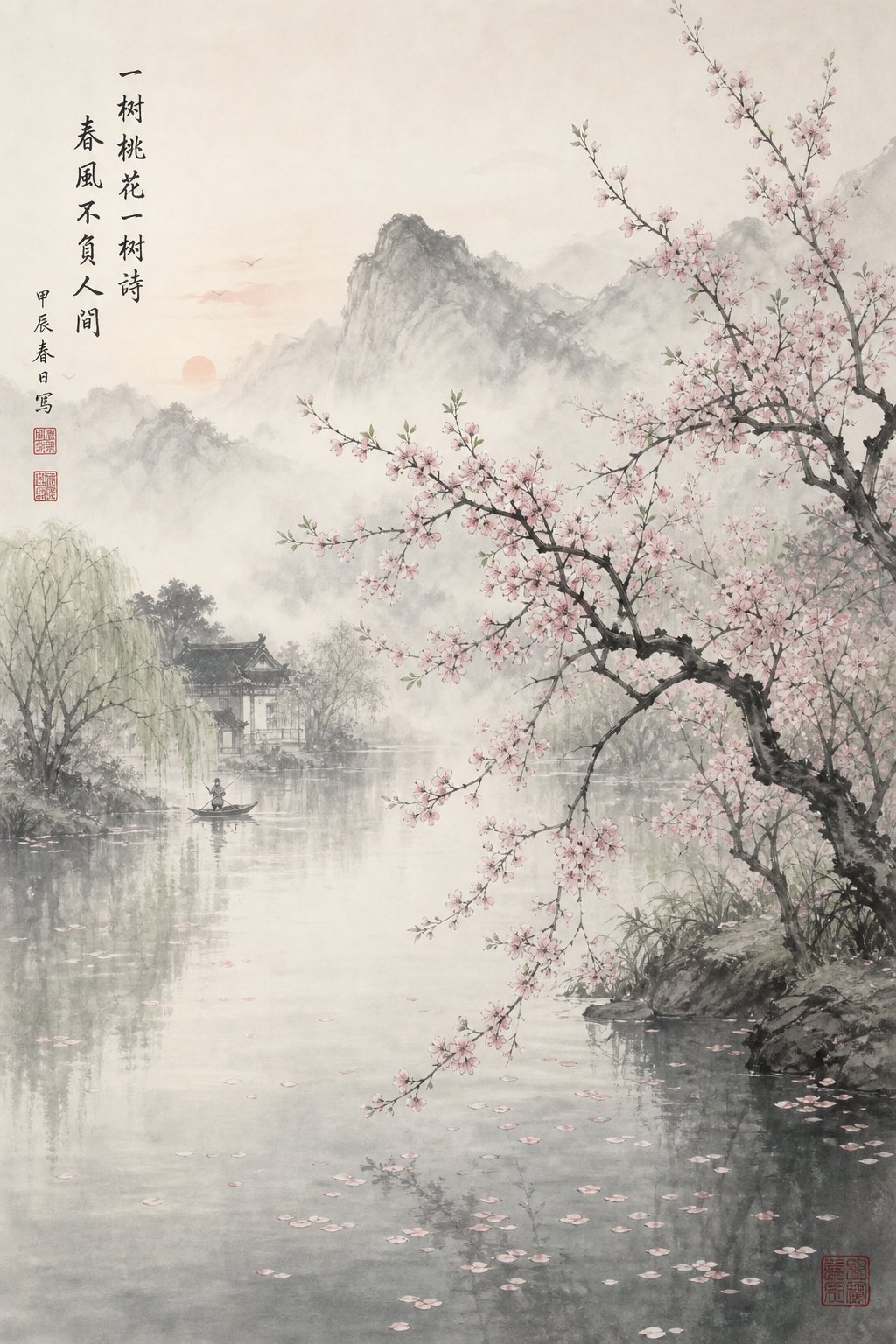
Poets have always been drawn to spring. But in classical Chinese poetry, 春 does more than set a scene. It carries emotional weight, philosophical resonance, and layers of allusion that a single English word like "spring" can never capture. Tang Dynasty poets in particular used 春 as a vehicle for expressing renewal, longing, the passage of time, and the bittersweet awareness that beauty fades. Understanding how they deployed this character unlocks some of the most celebrated verses in the Chinese literary canon.
春 in Classical Chinese Poetry
The Tang Dynasty (618-907 CE) is widely considered the golden age of Chinese poetry, and spring was one of its most beloved subjects. Two poems stand out for how directly they showcase the character 春 and its emotional range.
"Spring Dawn" (春晓) by Meng Haoran (孟浩然, 689-740)
This is one of the first poems Chinese children memorize. In just twenty characters, it captures the fleeting quality of a spring morning:
春眠不觉晓,处处闻啼鸟。夜来风雨声,花落知多少。
Line by line, here's what the poet is saying:
- 春眠不觉晓 (chūn mián bù jué xiǎo): "In spring sleep, unaware of dawn." The warmth of spring makes sleep so deep that morning arrives unnoticed. 春 here sets both the season and the mood: comfort, ease, surrender to nature's rhythm.
- 处处闻啼鸟 (chùchù wén tí niǎo): "Everywhere, one hears birds singing." The poet wakes to birdsong filling every direction, a sensory marker of spring's fullness.
- 夜来风雨声 (yè lái fēng yǔ shēng): "Last night came the sound of wind and rain." A shift in tone. The storm passed while the poet slept, and now he wonders about its consequences.
- 花落知多少 (huā luò zhī duōshǎo): "How many flowers have fallen, who can know?" This final line transforms the poem from a pleasant morning sketch into a meditation on impermanence. The flowers, symbols of spring's beauty, have been scattered by the storm. 春 here carries its figurative weight: beauty is brief, and loss happens while we sleep.
The genius of this poem lies in how 春 operates on multiple levels simultaneously. It's the literal season, the reason for deep sleep, and the source of both beauty (birdsong, blossoms) and loss (fallen petals). Translator Evan Mantyk renders the final line as "How many flowers did the downpour smite?" capturing that blend of wonder and regret.
"Joyful Rain on a Spring Night" (春夜喜雨) by Du Fu (杜甫, 712-770)
Where Meng Haoran's poem mourns spring's fragility, Du Fu celebrates its generosity. Written during his years in Chengdu around 760 CE, this poem personifies spring rain as a wise, benevolent force:
好雨知时节,当春乃发生。随风潜入夜,润物细无声。
The opening couplet places 春 at the heart of the poem's logic:
- 好雨知时节 (hǎo yǔ zhī shíjié): "The good rain knows its season." Rain is personified as having wisdom, knowing exactly when to arrive.
- 当春乃发生 (dāng chūn nǎi fāshēng): "When spring comes, it brings life." Here 春 isn't just a time marker. It's the trigger for creation itself. The rain "knows" that spring is the moment for nurturing growth.
- 随风潜入夜 (suí fēng qián rù yè): "Following the wind, it slips quietly into the night." The rain arrives without fanfare, humble and unobtrusive.
- 润物细无声 (rùn wù xì wú shēng): "Moistening all things, fine and silent." This line has become a standalone idiom in modern Chinese, describing any gentle, nurturing influence that works without calling attention to itself.
As literary analysis of this poem notes, the quiet rain mirrors Confucian ideals of gentle governance and Daoist reverence for nature's wisdom. Du Fu uses 春 to anchor a philosophical statement: the best forces in life, like the best leaders, act at the right moment and nurture without demanding recognition.
The poem's final couplet imagines dawn revealing flowers heavy with rain across "Brocade City" (锦官城, an ancient name for Chengdu). Spring rain doesn't destroy the blossoms here. It makes them heavier, richer, more vivid. It's a fundamentally optimistic vision of 春 as a season of abundance rather than loss.
Four-Character Idioms Featuring 春
Chinese idioms (成语, chéngyǔ) compress centuries of literary wisdom into four-character phrases. They function like cultural shorthand, instantly evoking a story, a feeling, or a principle. Several of the most commonly used chengyu feature 春, and each one reveals a different facet of the character's meaning.
| Idiom | Pinyin | Literal Translation | Figurative Meaning | Modern Usage |
|---|---|---|---|---|
| 春暖花开 | chūn nuǎn huā kāi | Spring warms, flowers bloom | A time of prosperity, happiness, or favorable conditions | Describing good times ahead; used in encouragement, travel writing, and optimistic contexts |
| 满面春风 | mǎn miàn chūn fēng | Face full of spring breeze | Beaming with joy and satisfaction; looking radiant | Describing someone visibly happy or successful; common in narrative writing and daily speech |
| 春华秋实 | chūn huá qiū shí | Spring flowers, autumn fruit | Effort in youth yields results in maturity; process leads to outcome | Praising someone's long-term dedication; used in speeches, essays, and educational contexts |
| 春风化雨 | chūn fēng huà yǔ | Spring wind transforms into rain | Gentle education or guidance that nurtures growth | Praising a teacher or mentor whose influence is subtle but transformative |
| 春色满园 | chūn sè mǎn yuán | Spring colors fill the garden | A scene of thriving vitality; things flourishing everywhere | Describing a vibrant environment, whether a literal garden or a thriving organization |
Let's look at the three most important ones more closely.
春暖花开 (chūn nuǎn huā kāi)
The 春暖花开 chengyu meaning is straightforward on the surface: when spring brings warmth, flowers naturally open. But in practice, Chinese speakers use it to describe any situation where conditions become favorable and good things begin to happen. A student struggling through a difficult semester might be told 春暖花开的日子就要来了, meaning "the days of spring warmth and blooming flowers are coming," a way of saying better times are ahead. It's one of the most optimistic idioms in the language, and its power comes from treating human fortune as a natural cycle, just like the seasons.
满面春风 (mǎn miàn chūn fēng)
Imagine someone walking into a room after receiving great news. Their face is relaxed, glowing, radiating warmth. That's 满面春风: a face so full of contentment it feels like a spring breeze to everyone around them. The idiom works because 春风 (spring breeze) is the gentlest, most pleasant wind of the year. It doesn't overwhelm. It simply makes everything feel better. You'll hear this in everyday conversation: "She walked in 满面春风, so I knew the interview went well."
春华秋实 (chūn huá qiū shí)
This idiom captures the full arc of effort and reward. Flowers bloom in spring (华 is an older form of 花, meaning flower), and fruit ripens in autumn. The message: what you plant and nurture in your "spring" (youth, early career, beginning of a project) will bear fruit in your "autumn" (maturity, later years, completion). It's frequently used in graduation speeches, retirement tributes, and any context where someone's long dedication has finally produced visible results. The four character idioms using 春 often carry this kind of life-wisdom, connecting seasonal observation to human experience in a single compact phrase.
What connects these Tang Dynasty poems about spring to the chengyu is a shared literary instinct: using 春 not merely as a season label but as an emotional and philosophical lens. Meng Haoran's fallen petals, Du Fu's silent rain, the beaming face of 满面春风, the patient arc of 春华秋实, all of them treat spring as something felt rather than simply observed. For learners, recognizing this pattern transforms reading comprehension. When 春 appears in a text, it's rarely just about the weather.
That literary richness, however, can also create confusion. Learners who encounter 春 in poetry, idioms, and compound words sometimes struggle with the character itself, mixing up tones, misidentifying radicals, or confusing it with visually similar characters. A few targeted strategies can prevent those stumbling blocks from slowing your progress.
Learning Tips and Common Mistakes Writing Spring Character
Knowing the poetry and philosophy behind 春 is rewarding, but it won't help much if you keep writing the character wrong on a quiz. Practical mastery requires attention to a handful of specific pitfalls that trip up learners at every level. The good news? Most of these mistakes follow predictable patterns, and once you see them clearly, they're easy to fix.
Common Mistakes Learners Make with 春
If you've studied Chinese characters for any length of time, you know that similar-looking components are the real challenge, not learning new shapes from scratch. With 春, the most common errors fall into four categories:
- Tone confusion: 春 is chūn, first tone, a high flat pitch held steady. Learners sometimes slip into second tone (chún, which means "pure" as in 纯) or third tone (chǔn, which means "stupid" as in 蠢). The difference between sounding like you're talking about spring and accidentally calling something stupid is just a tone shift. When practicing pronunciation, exaggerate the flat, high pitch until it feels automatic.
- Mixing up 日 and 目: The bottom component of 春 is 日 (sun), which has one horizontal line inside the box. The character 目 (eye) has two internal lines. Writing 目 instead of 日 produces a nonexistent character. A quick check: count the internal horizontals. One line means sun. Two lines means eye. 春 always takes the sun.
- Incorrect stroke count: 春 has exactly nine strokes. The most common miscounting happens when learners split the top-right corner of 日 into two separate strokes. That corner is one continuous stroke (横折, héng zhé), a horizontal that turns downward without lifting the pen. Counting it as two gives you ten strokes, which signals something went wrong.
- Confusing 春 with 奏 or 泰: At a glance, especially in small font sizes, 春 can resemble 奏 (zòu, "to play music") or the upper portion of 泰 (tài, "great, peaceful"). The distinguishing feature is always the bottom component. If you see 日 at the base, it's 春. If you see 天 or 大, you're looking at a different character entirely.
Memory Techniques and Mnemonics
Rote repetition alone doesn't solve these problems. As experienced learners note, understanding why a character looks the way it does is far more effective than writing it fifty times without thinking. Here are mnemonics that stick:
The "three sprouts under the sun" story: Picture three seeds (the three horizontal strokes at the top) sending shoots outward (the two diagonal strokes forming the 人 shape), all warmed by the sun below (日). You're watching a time-lapse of spring happening inside the character. This mnemonic for 春 character Chinese learners find useful because it maps directly onto the character's actual etymology.
The tone anchor: Associate chūn's first tone with the flat horizon line at sunrise. Spring begins when the sun rises flat and steady on the horizon. High and flat, just like the tone.
The "sun on the ground" rule: In 春, the sun sits at the bottom because in spring, warmth comes from the ground warming up. This helps you remember that 日 goes below, not above, and prevents the common mistake of writing the sun component first.
Component networking: Link 春 to characters you already know. If you've learned 日 (sun), 三 (three), and 人 (person), you already know every visual piece of 春. You're just stacking them in a new arrangement. This approach, connecting new characters to familiar components, is what makes the difference between memorizing and understanding.
Practice Tips for Mastering the Character
Knowing the pitfalls is step one. Building reliable recall requires a structured routine. Here's a practice sequence that moves from recognition to production:
- Identify before you write. Look at 春 in three different fonts (a standard textbook font, a handwritten style, and a decorative calligraphic version). Confirm you can recognize it in each. Fonts vary more than you'd expect: in some handwritten styles, the three top strokes merge into a flowing shape, and the 人 element becomes a single sweeping motion.
- Trace the stroke order slowly. Write the character once at large scale, saying each stroke's name aloud: horizontal, horizontal, horizontal, left-falling, right-pressing, vertical, horizontal-turn, inner horizontal, closing horizontal. Speed comes later.
- Write from memory immediately. Cover the model and write 春 from recall. Compare. If anything is off, don't just rewrite it. Identify which specific stroke or component went wrong and why.
- Say the full package aloud. As you write, say "chūn, first tone, spring" to reinforce the sound-meaning-form connection simultaneously. This triple encoding (visual, auditory, semantic) builds stronger memory traces than any single channel alone.
- Test in context. Write a compound word like 春天 or 春风 rather than the character in isolation. Context forces your brain to retrieve 春 as part of a meaning network, not just a standalone shape.
- Review after a gap. Come back the next day and write 春 cold, without warming up. If you get it right without hesitation, the character is moving into long-term memory. If you hesitate, repeat steps 2 through 5.
One more tip that often gets overlooked: practice reading 春 in different visual contexts. The character looks slightly different on a restaurant menu, a phone screen, a handwritten note, and a calligraphy scroll. In handwritten Chinese, the three top horizontals often connect fluidly, and the 人 strokes may appear as a single curved sweep. Exposing yourself to these variations builds flexible recognition rather than rigid dependence on one font style.
These 春 character learning tips for beginners work equally well for intermediate students who've been writing the character on autopilot without fully internalizing its structure. The goal isn't perfection on day one. It's building the kind of deep familiarity where you never confuse 春 with 奏, never accidentally write 目 instead of 日, and never waver on that first tone. Once the character sits firmly in your memory, it becomes a reliable anchor for everything else: the compounds, the idioms, the poetry, and the cultural knowledge that make 春 one of the most rewarding characters to know well.
Understanding 春 as a Gateway to Chinese Culture
A single character, nine strokes, and over three thousand years of accumulated meaning. That's what 春 offers when you move past the textbook definition and into its deeper layers. Season, metaphor, philosophy, living tradition: each dimension feeds the others, creating a character that rewards every level of study.
Why 春 Is More Than Just a Character
Most learners encounter 春 as a vocabulary item: "spring, first tone, nine strokes, move on." But as this exploration shows, understanding spring character cultural significance means engaging with Chinese thought at multiple levels simultaneously. You're reading oracle bone imagery when you recognize the sprouting plants above the sun. You're accessing literary tradition when you catch the romantic undertones of 春心. You're participating in philosophical cosmology when you connect the character to rising yang energy and the Wood element. And you're joining a living cultural practice every time you see 春 pasted in gold on a red diamond during the new year.
Few individual characters open this many doors at once. Learning 春 deeply, rather than superficially, builds the kind of cultural literacy that transforms how you read poetry, understand festivals, and interpret everyday conversation.
春 is not just a word to memorize. It's a lens for understanding how Chinese culture connects nature, language, philosophy, and daily life into a single coherent system. Master this one character fully, and you've gained a framework for approaching hundreds of others.
Your Next Steps in Understanding Chinese Characters
The approach that works for 春 works for other culturally rich characters too. Consider exploring 秋 (autumn) for its associations with maturity and melancholy, 福 (fortune) for its role in festival traditions, or 道 (the Way) for its philosophical depth. Each one rewards the same layered investigation: etymology, components, compounds, figurative meanings, and cultural context.
Start with the characters that share components with 春. The table of related characters earlier in this article gives you a ready-made study list. From there, branch into the compound words and idioms that interest you most. Every connection you build strengthens your ability to decode unfamiliar characters on sight and read Chinese texts with genuine comprehension rather than word-by-word translation.
The next steps for learning Chinese characters after 春 aren't about memorizing more flashcards. They're about applying the same depth-first approach: pick a character, trace its history, break down its components, learn its figurative extensions, and see how it lives in poetry, philosophy, and daily speech. That's how individual characters stop being isolated data points and start forming a connected map of Chinese culture.
Frequently Asked Questions About the Spring Chinese Character 春
1. What does 春 (chūn) mean in Chinese?
春 (chūn) is the Chinese character for the spring season, pronounced in the first tone (high and flat). Beyond its literal seasonal meaning, it carries extended meanings including youth and vitality (as in 青春, qīngchūn), romantic longing in literary contexts, new beginnings, and life force. In Chinese philosophy, it represents rising yang energy and aligns with the Wood element in Five Elements theory. It is one of the most culturally significant characters in the Chinese writing system.
2. How many strokes does the Chinese character 春 have and what is the correct stroke order?
春 has exactly nine strokes. The correct order follows the top-to-bottom rule: three horizontal strokes at the top (short, medium, longest), then a left-falling stroke and a right-pressing stroke forming a person-like shape, followed by the four strokes of the 日 (sun) component at the bottom. A common mistake is writing the 日 radical first or miscounting strokes by splitting the top-right corner of 日 into two separate strokes when it should be one continuous horizontal-turning stroke.
3. What is the difference between 春 (chūn) and 泉 (quán) in Chinese?
These two characters represent completely different meanings of the English word 'spring.' 春 (chūn) refers exclusively to the spring season and its associated metaphorical meanings like youth and renewal. 泉 (quán) means a natural water spring or source. They share no etymological connection, have different pronunciations, different radicals, and different stroke counts. If you are searching for the seasonal meaning, 春 is the correct character.
4. Why is the character 春 displayed upside down during Chinese New Year?
During Spring Festival, families sometimes paste the character 春 upside down on their doors as a wordplay tradition. The Chinese word for 'upside down' (倒, dào) sounds identical to the word for 'to arrive' (到, dào). So an inverted 春 symbolically means 'spring has arrived' or 'renewal has come.' This practice applies the same logic used with the character 福 (fortune) and reflects how Chinese culture embeds meaning through homophones and visual symbolism in everyday traditions.
5. What are the most common Chinese idioms (chengyu) that use the character 春?
Several widely used four-character idioms feature 春. 春暖花开 (chūn nuǎn huā kāi) means 'spring warmth, flowers bloom' and describes favorable conditions or good times ahead. 满面春风 (mǎn miàn chūn fēng) means 'face full of spring breeze' and describes someone beaming with joy. 春华秋实 (chūn huá qiū shí) means 'spring flowers, autumn fruit' and conveys that early effort yields later results. 春风化雨 (chūn fēng huà yǔ) describes gentle, nurturing guidance, like a teacher's subtle influence on students.